English

0%

Table of Contents

The significance of the compressor housing turbo extends far beyond the realm of engine performance. It’s a critical component influencing efficiency, power output, and overall reliability across a diverse range of industries. Understanding the intricacies of these housings – their materials, designs, and manufacturing processes – is crucial for engineers, technicians, and anyone involved in the design, operation, or maintenance of turbocharged systems. The demand for optimized compressor housing turbo designs is continuously growing alongside advancements in engine technology and the pursuit of greater fuel efficiency and reduced emissions.

Globally, the automotive, aerospace, marine, and power generation sectors are heavily reliant on turbocharging, and therefore, on robust and efficient compressor housing turbo. Statistics from the International Organization of Motor Vehicle Manufacturers (OICA) reveal consistent growth in global vehicle production, with a significant portion now employing turbocharger technology. This trend, coupled with increasingly stringent emissions regulations worldwide, underscores the importance of continually innovating and improving compressor housing turbo designs.

The evolving landscape presents challenges such as the need for lighter materials, improved thermal management, and reduced manufacturing costs. Addressing these challenges is vital to maintaining a competitive edge and meeting the demands of a rapidly changing market.

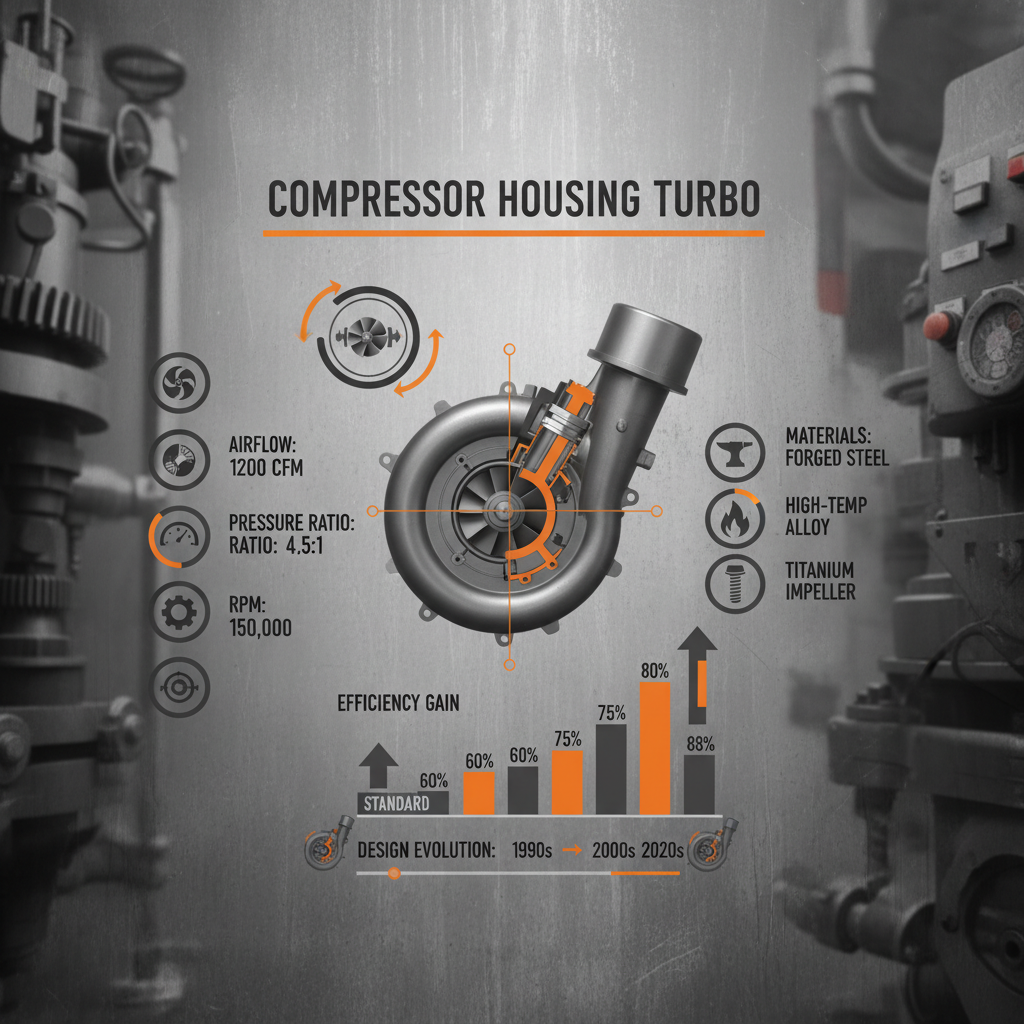
Optimizing Turbocharger Performance with Advanced Compressor Housing Turbo Designs

Introduction to compressor housing turbo

Optimizing Turbocharger Performance with Advanced Compressor Housing Turbo Designs

The compressor housing turbo is a vital element within a turbocharger system, serving as the protective enclosure for the compressor wheel and playing a crucial role in directing airflow. Its design directly influences the efficiency and performance characteristics of the entire turbocharging setup. Without a properly engineered compressor housing turbo, the benefits of turbocharging – increased power and fuel efficiency – would be severely compromised.

Beyond its structural function, the compressor housing turbo contributes significantly to managing airflow dynamics, minimizing turbulence, and optimizing pressure recovery. These factors are paramount in achieving a smooth and efficient compression process, ultimately leading to improved engine response and performance.

Defining compressor housing turbo

A compressor housing turbo is the volute-shaped component that surrounds the compressor wheel within a turbocharger. It’s responsible for collecting air from the air filter and directing it to the compressor wheel at an optimal angle. The shape of the housing, along with its internal passages, is meticulously designed to ensure smooth and efficient airflow, minimizing turbulence and maximizing pressure recovery.

Its connection to modern industry is undeniable. Turbocharging, powered by a functioning compressor housing turbo, has become the standard for maximizing power output and fuel efficiency in internal combustion engines. This is particularly relevant as manufacturers strive to meet ever-tightening emissions regulations and consumer demand for more sustainable transportation.

The housing isn’t merely a static enclosure; it’s an integral part of the aerodynamic system. Proper design and material selection are critical to withstanding the high temperatures and pressures generated during turbocharger operation, ensuring longevity and reliable performance.

Key Components of compressor housing turbo

Several key factors determine the effectiveness of a compressor housing turbo. First, Material Selection plays a vital role. Common materials include cast iron, aluminum alloys, and increasingly, advanced materials like titanium alloys, chosen for their strength, heat resistance, and weight characteristics. The correct material is selected based on the specific application and the expected operating conditions.

Next is Volute Shape. The geometry of the volute – the spiral-shaped passage within the housing – is critical for efficient airflow. Optimizing the volute shape minimizes turbulence and maximizes pressure recovery, improving the overall compression efficiency of the turbocharger. Computational Fluid Dynamics (CFD) is frequently employed to refine these designs.

Then there's Surface Finish. The internal surface finish of the compressor housing turbo affects airflow smoothness. A smoother finish reduces frictional losses and minimizes turbulence, contributing to increased efficiency. Surface coatings are also used to enhance durability and reduce corrosion.

Global Applications of compressor housing turbo

The applications of compressor housing turbo are widespread. In the Automotive Industry, they are central to enhancing the performance of both gasoline and diesel engines, enabling smaller engines to deliver greater power and improved fuel economy. This is evident across passenger vehicles, trucks, and high-performance sports cars.

The Aerospace Sector utilizes turbochargers, and thus compressor housing turbo, in aircraft engines to improve altitude performance and efficiency. Smaller, more efficient turbochargers are particularly valuable in unmanned aerial vehicles (UAVs) and regional aircraft.

Even in Marine Applications, compressor housing turbo play a critical role in powering large diesel engines used in cargo ships, tankers, and ferries. The increased power and efficiency offered by turbocharging are essential for reducing fuel consumption and emissions in these large-scale operations.

Compressor Housing Turbo Performance Metrics


Advantages and Value of compressor housing turbo

The benefits of utilizing a well-designed compressor housing turbo are multifaceted. In terms of Cost Efficiency, turbocharging allows manufacturers to downsize engines without sacrificing power, leading to reduced material costs and improved fuel economy. This translates to lower operating costs for end-users.

Improved Performance is a primary advantage, delivering increased horsepower and torque. Furthermore, a robust compressor housing turbo contributes to the overall reliability and longevity of the turbocharger system, minimizing downtime and maintenance costs.

Future Trends in compressor housing turbo

Future developments in compressor housing turbo technology are focused on several key areas. Additive Manufacturing (3D printing) is poised to revolutionize housing design, allowing for the creation of complex geometries and optimized airflow paths previously unattainable with conventional manufacturing methods.

Advanced Materials, such as ceramic matrix composites (CMCs), are being explored for their exceptional heat resistance and lightweight properties. These materials will enable turbochargers to operate at higher temperatures, further improving efficiency.

Challenges and Solutions in compressor housing turbo

One significant challenge is managing Thermal Stress. The extreme temperatures generated during turbocharger operation can lead to material fatigue and failure. Solutions include advanced cooling strategies, improved material selection, and optimized housing designs that promote heat dissipation.

Another hurdle is Manufacturing Complexity. Producing housings with intricate internal geometries can be challenging and expensive. Additive manufacturing offers a promising solution, but it requires further development to reduce costs and ensure consistent quality.

Finally, Aerodynamic Noise can be a concern. Innovative housing designs and internal flow control features are being implemented to minimize noise levels and improve the overall acoustic performance of the turbocharger system.

Summary of compressor housing turbo Challenges and Solutions

Challenge Severity (1-10) Potential Solution Implementation Cost (1-10)
Thermal Stress 8 Advanced Cooling Systems 6
Manufacturing Complexity 7 Additive Manufacturing 7
Aerodynamic Noise 5 Optimized Housing Geometry 4
Material Fatigue 6 Advanced Material Selection 8
Pressure Drop 4 Streamlined Volute Design 5
Corrosion Resistance 5 Protective Coatings 3

FAQS

What are the primary materials used in manufacturing a compressor housing turbo?

Compressor housings are typically constructed from materials chosen for their durability, heat resistance, and cost-effectiveness. Common materials include cast iron, aluminum alloys, and increasingly, advanced alloys like titanium. The selection depends on the specific application and the operating temperatures and pressures the housing will encounter. The material must withstand centrifugal forces and resist corrosion. New materials are continually being evaluated to optimize weight and performance.

How does the shape of the compressor housing impact turbocharger performance?

The shape of the compressor housing, specifically the volute, is crucial for efficient airflow. A properly designed volute minimizes turbulence and maximizes pressure recovery. This results in improved compressor efficiency, increased boost pressure, and a faster response time. Computational Fluid Dynamics (CFD) is extensively used to optimize volute geometry for specific engine applications, ensuring smooth and efficient air delivery to the turbine.

What is the role of surface finish on the inside of the compressor housing?

The internal surface finish of the compressor housing directly affects airflow smoothness. A smoother finish reduces frictional losses and minimizes turbulence, contributing to increased compressor efficiency. Rough surfaces can create flow separation and energy losses. Often, manufacturers employ specialized coating processes to achieve a consistent and optimal surface finish, improving overall performance and durability of the turbocharger.

What are the potential failure modes of a compressor housing turbo?

Common failure modes include cracking due to thermal stress, erosion from particulate matter in the intake air, and corrosion. Cracking is often caused by rapid temperature fluctuations. Erosion is exacerbated by inadequate air filtration. Corrosion can occur in harsh operating environments. Regular inspection and proper maintenance, including ensuring adequate air filtration, are vital to prevent these failures and prolong the life of the turbocharger.

How is additive manufacturing changing the design of compressor housings?

Additive manufacturing, or 3D printing, is enabling the creation of compressor housings with incredibly complex internal geometries that were previously impossible to produce with conventional methods. This allows for optimized airflow paths, reduced weight, and integrated features like cooling channels. While currently more expensive, additive manufacturing is becoming increasingly viable and promises to revolutionize turbocharger design and performance. It's also facilitating rapid prototyping and customization.

What are the benefits of using ceramic materials in compressor housings?

Ceramic materials offer exceptional heat resistance, allowing turbochargers to operate at higher temperatures and improve efficiency. They are also significantly lighter than traditional metal alloys, contributing to reduced weight and improved engine performance. While more brittle than metals, advances in ceramic technology are addressing these limitations, making them increasingly attractive for high-performance turbocharger applications. They can also reduce thermal inertia.

Conclusion

In conclusion, the compressor housing turbo is a deceptively complex component, vital to the efficient and reliable operation of modern turbocharged engines. Its design, material selection, and manufacturing processes all play a critical role in determining overall performance, durability, and cost-effectiveness. Ongoing innovations in materials, manufacturing techniques, and aerodynamic design are continually pushing the boundaries of what’s possible with turbocharger technology.

Looking ahead, the continued development of advanced materials, such as ceramics and titanium alloys, combined with the increasing adoption of additive manufacturing, promises to unlock even greater performance gains and efficiency improvements. Investing in research and development in this area is crucial for meeting the demands of a rapidly evolving automotive and aerospace landscape and achieving a more sustainable future.

Joseph Baker

Joseph Baker

Joseph Baker is a Project Engineer at Hebei Yuanda Trade Co., Ltd., dedicated to managing customized metal part projects from initial inquiry to final delivery. He works closely with customers to understand their specific requirements and translates those needs into detailed manufacturing specifications. Joseph is particularly knowledgeable in molten mold
Previous The Crucial Role of Aluminium End Caps in Modern Industries
Next Optimizing Performance with Advanced Casing in Centrifugal Pump Systems