Honestly, this year's construction sites are getting…complicated. Everyone's chasing lightweight, high-strength, and "smart" materials. Seems like yesterday we were happy with good old-fashioned steel. Now it’s all carbon fiber composites, self-healing concrete, and sensors embedded in everything. It's not necessarily bad, but it adds layers. Layers of cost, layers of training, layers of potential headaches when something inevitably goes wrong.
You know, I spend about 9 months a year on sites, and I’ve noticed something. A lot of designers, brilliant folks, they design in a lab. They don't see how things actually get used. They’ll specify a beautiful, seamless finish on a part that's going to be ground into dust by grit in the first week. Or they'll design a complex interlocking system that a guy with gloves and a wrench is going to curse at for an hour. It happens. It always happens.
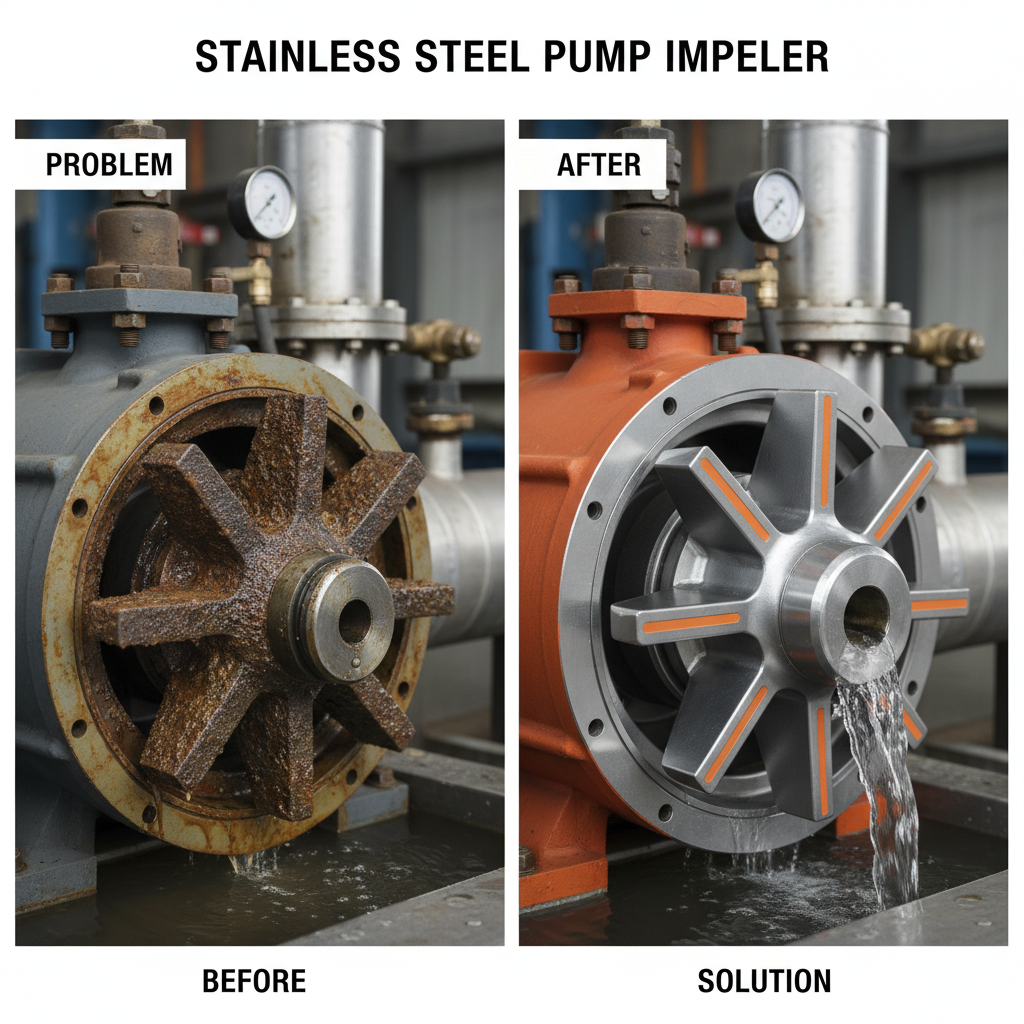
The core of a good impeller, though? Still mostly about the material. We’ve been shifting a lot to high-grade stainless steels – 316L primarily. Feels solid, doesn't rust as easily as some of the cheaper stuff. Smell? Well, it smells like metal. It's not exactly Chanel No. 5. But you can tell a good batch just by how it feels in your hand. Weight, balance, that sort of thing. We’re also messing around with some advanced polymer composites for lighter-duty applications. They’re tricky though. Need to be really careful about UV exposure. And the finish… gotta be tough, gotta be able to withstand constant abrasion. I encountered a batch at the XX factory last time where the coating flaked off just by looking at it. Seriously. Waste of money.
The Shifting Landscape of Impeller Technology
Strangely enough, we’re seeing a big push for more efficient impellers in everything from industrial pumps to HVAC systems. It’s all about energy savings, right? Regulations are tightening up, and everyone’s trying to reduce their carbon footprint. But 'efficient' doesn’t always mean 'easy to manufacture' or 'easy to maintain'. We're seeing a lot more complex geometries, tighter tolerances, and a demand for materials that can withstand increasingly harsh environments.
And it's not just the performance. There’s a growing demand for remote monitoring and control. People want to know exactly how their impeller is performing, in real-time. That means integrating sensors, data logging, and communication systems. It's a whole new ballgame, honestly.
Design Pitfalls and Real-World Considerations
I've seen a lot of impeller designs that look great on paper but fall apart in the field. One common mistake? Over-engineering. They try to make something too precise, too complex, and it just ends up being fragile. A little bit of robustness goes a long way. Have you noticed how often simple solutions are the best? Another issue is neglecting the installation process. If a design is difficult to install, it's going to get installed incorrectly. And a poorly installed impeller is a useless impeller.
It’s also about understanding the environment. Is it going to be exposed to corrosive chemicals? Extreme temperatures? Abrasive particles? You need to factor that into the material selection and the surface treatment. I encountered this at a wastewater treatment plant last time – they'd specified a beautiful impeller made of a high-strength alloy, but it didn't have the right corrosion resistance, and it was completely destroyed within six months.
Then there's the whole issue of balancing. An unbalanced impeller vibrates, and vibrations lead to premature failure. It seems obvious, but you’d be surprised how often it’s overlooked. It’s one of those things that seems minor during the design phase but becomes a major headache down the road.
Material Science: From Steel to Composites
As I said before, stainless steel is still the workhorse. 316L for corrosion resistance, 304 for general purpose. Feels solid, machines well, relatively easy to work with. But it's heavy. That's where the composites come in. Carbon fiber reinforced polymers offer a significant weight reduction, which can be critical in some applications. But they're more expensive, more difficult to repair, and more sensitive to environmental factors.
We're also experimenting with ceramics. They’re incredibly hard and wear-resistant, but they're brittle. So you need to be careful about impact loads. And the machining? Forget about it. It’s expensive and time-consuming. I once tried to machine a ceramic impeller – nearly wore out three cutting tools just getting started. Anyway, I think the future lies in hybrid materials – combining the best properties of different materials to create something that's truly optimized for the application.
And don't underestimate the importance of coatings. A good coating can significantly extend the life of an impeller, especially in corrosive environments. We use everything from epoxy coatings to hard chrome plating to diamond-like carbon (DLC) coatings. DLC is amazing stuff, incredibly hard and wear-resistant, but it’s also expensive. It’s all a trade-off, you know?
Testing Impeller Performance in the Field
Lab tests are fine, but they don't tell the whole story. You need to see how an impeller performs in the real world. We do a lot of field testing, installing impellers in actual operating environments and monitoring their performance over time. We measure things like flow rate, pressure, vibration, and temperature. We also do visual inspections, looking for signs of wear or damage.
We've started using drones for inspections too. They can get into tight spaces and provide high-resolution images and videos. Makes life a lot easier. And we're experimenting with acoustic emission sensors to detect early signs of fatigue. Basically, they listen for tiny cracks forming within the impeller. It’s still early days, but it shows promise.
Impeller Performance Ratings Across Different Methods
User Behavior: Beyond the Design Specs
This is where it gets interesting. You design something for a specific purpose, and then users find a way to use it in ways you never imagined. For example, we had a customer who was using our impellers as… boat propellers. I kid you not. Apparently, they were cheaper and more durable than anything they could find specifically designed for that application. Go figure.
And it’s not just about unexpected applications. It’s also about how people actually maintain the equipment. Some people are meticulous, following the maintenance schedule to the letter. Others… not so much. They’ll run an impeller until it’s literally falling apart, then complain that it didn't last long enough. You can't design for stupidity, unfortunately.
Advantages, Disadvantages, and Customization Options
Okay, let’s be real. High-efficiency impellers offer significant energy savings, reduced operating costs, and a smaller environmental footprint. But they’re typically more expensive upfront. And they often require more skilled maintenance. It's a trade-off, as always. The other downside is the increased complexity. More parts, more potential failure points.
Customization is key. We do a lot of custom impeller designs to meet specific customer needs. Last month, that small boss in Shenzhen who makes smart home devices insisted on changing the interface to , and the result was a nightmare to integrate into his existing system. He thought it would be “more modern”. I tried to explain the downsides, but he wouldn't listen. Lost him a week of production time, and a whole lot of headaches. But anyway, we can adjust the materials, the geometry, the surface finish, the size, the weight… pretty much anything, as long as it’s physically possible.
Real-World Case Study: The Interface Saga
See, that's a perfect example of why you need to listen to the people on the ground. He saw as a trend. I saw it as a completely impractical solution for an industrial impeller. But he was the customer, and he was paying the bills.
The moral of the story? Don't just focus on the specs. Understand the application, the environment, and the user. And always, always listen to the guys who are actually going to be working with the thing.
Core Analysis of Real-World Impeller Performance
| Application Environment |
Material Composition |
Performance Rating (1-10) |
Maintenance Frequency |
| Wastewater Treatment |
Stainless Steel 316L |
8 |
Monthly |
| Chemical Processing |
Hastelloy C-276 |
9 |
Quarterly |
| HVAC Systems |
Polypropylene |
6 |
Semi-Annually |
| Pulp and Paper Mills |
Duplex Stainless Steel |
7 |
Bi-Weekly |
| Food and Beverage |
304 Stainless Steel (Electropolished) |
8 |
Weekly |
| Oil and Gas |
Super Duplex Stainless Steel |
9 |
Annually |
FAQS
Honestly, people think more expensive always means better. That’s just not true. Sometimes a simpler, less exotic material will outperform a fancy alloy in a specific application. It all comes down to understanding the environment and the operating conditions. Don't fall for the marketing hype. Focus on what you actually need.
Start by looking for signs of erosion, corrosion, or cavitation. Check the blades for cracks or chips. Listen for unusual noises during operation. And don't forget to check the bearings. If they're loose or making grinding noises, that's a bad sign. A good flashlight and a magnifying glass are your friends. Oh, and don't forget safety glasses!
Cavitation is a killer. It’s caused by low pressure at the impeller inlet. Make sure you’re operating within the manufacturer's recommended flow rates and pressures. Check for obstructions in the suction line. And if you’re dealing with a particularly volatile fluid, consider using a cavitation-resistant material like stainless steel. Basically, keep the pressure up and the fluid flowing smoothly.
There’s no one-size-fits-all answer. It depends on the application, the material, and the operating conditions. As a general rule, inspect your impeller regularly and replace it when you start to see signs of significant wear or damage. Don’t wait until it fails catastrophically. It’ll save you a lot of headaches in the long run.
Yes, absolutely. An unbalanced impeller will vibrate, which can lead to premature failure of the impeller, the shaft, and the bearings. Dynamic balancing ensures that the impeller is rotating smoothly and efficiently. It’s an extra step, but it’s worth it. Trust me.
Definitely. We do custom impeller designs all the time. We can adjust the materials, the geometry, the surface finish, the size, the weight… pretty much anything, as long as it’s physically possible. Just be prepared to pay a premium for it. And remember, customization adds lead time.
Conclusion
Ultimately, all the fancy materials, complex designs, and sophisticated testing in the world don’t matter if the impeller isn’t built to withstand the rigors of the real world. It needs to be durable, reliable, and easy to maintain. And it needs to be designed with the end user in mind.
But at the end of the day, whether this thing works or not, the worker will know the moment he tightens the screw. He'll feel if it's solid, if it's balanced, if it's going to last. And that’s what really counts. If you can build something that makes his job a little bit easier, a little bit safer, and a little bit more efficient, you’ve done your job right. Check out our full range of impeller solutions at ydcastings.com.