English

0%

Table of Contents

Impeller types are the heart of any system that moves fluids – think pumps, fans, mixers, and even jet engines. They're not glamorous, but they're absolutely critical. Understanding the different impeller types and what makes them tick is vital for engineers, technicians, and anyone involved in designing, maintaining, or operating these systems. From ensuring a reliable water supply to optimizing industrial processes, the right impeller makes all the difference. Getting it wrong can mean wasted energy, system failures, and costly downtime. impeller types are everywhere, influencing countless aspects of our daily lives.

The global market for pumps and related equipment – where impellers are a key component – is massive and steadily growing. Reports from organizations like the World Bank and UN-Habitat highlight the increasing demand for efficient water management solutions, particularly in developing nations. This translates to a significant need for reliable and cost-effective pumping systems, and by extension, optimized impeller designs. It's not just about large-scale infrastructure; smaller, specialized applications, from medical devices to HVAC systems, also rely heavily on precisely engineered impellers. The challenges are clear: increasing efficiency, reducing environmental impact, and improving reliability.

Simply put, an impeller is a rotating component designed to transfer energy to a fluid, increasing its velocity and pressure. It's the workhorse that drives fluid movement. While designs vary widely, the core principle remains the same: use rotational kinetic energy to impart energy to the fluid. Impeller types aren’t just about moving liquids; they're fundamental to processes that impact human health, sanitation, and industrial productivity. In a world facing increasing resource constraints, efficient fluid handling, enabled by thoughtful impeller design, is becoming ever more important.
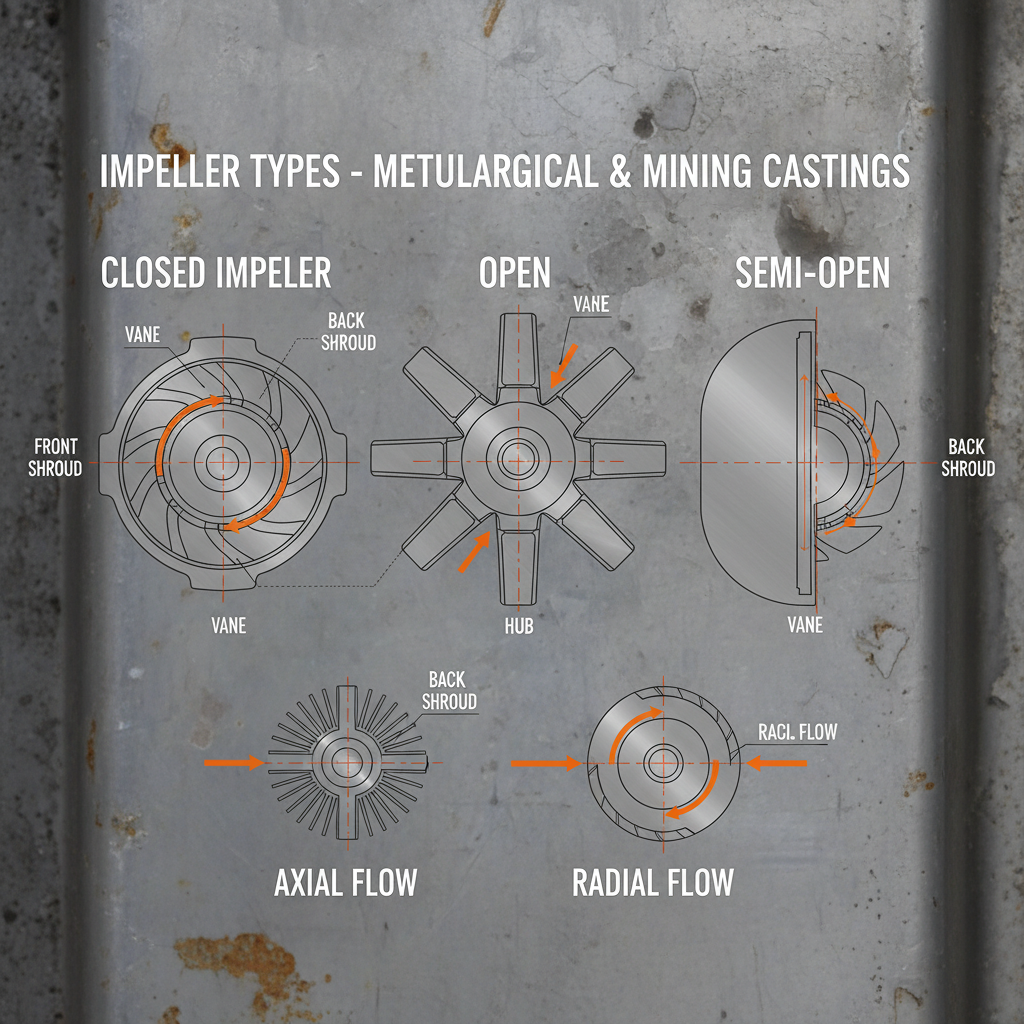

Understanding Diverse Impeller Types for Optimal Fluid Handling Systems

Key Characteristics of impeller types

Understanding Diverse Impeller Types for Optimal Fluid Handling Systems

One of the most critical characteristics of any impeller is its hydraulic design. This encompasses things like blade angle, blade shape, and impeller diameter, all of which influence the pump's head, flow rate, and efficiency. We spend a lot of time on site looking at how the fluid actually behaves with different designs. It's not always what the simulations predict. Then there's the rotational speed – higher speeds generally mean higher flow rates, but also increased wear and tear. impeller types often need to be customized to the specific fluid properties; viscosity, density, and even the presence of solids all impact performance.

Another crucial factor is the impeller's mechanical strength. We’re not just talking about surviving the rotational forces; it’s about handling corrosion, erosion, and potential cavitation. I've seen impellers completely fail in less than a year because the material wasn't chosen with the fluid’s chemistry in mind. Proper sealing is vital too – leakage isn’t just wasteful, it can be dangerous. You need to consider things like shaft seals and wear rings to ensure a long service life.

The Impact of Material Selection on impeller types

Choosing the right material for an impeller is huge. It’s not just about cost, though that’s definitely a factor. It’s about the fluid being pumped, the operating temperature, and the presence of any abrasive particles. Stainless steel is a common choice for its corrosion resistance, but there are dozens of different grades, each with its own strengths and weaknesses. Cast iron is still widely used for water applications, but it’s susceptible to corrosion in harsh environments. I’ve seen guys try to save a buck on materials, and it always comes back to bite them.

Then you have more exotic materials like titanium, duplex stainless steel, and even polymers for specialized applications. These can offer superior corrosion resistance or wear resistance, but they come with a higher price tag. We're seeing more and more interest in composite materials, which can offer a good balance of strength, weight, and corrosion resistance. Understanding the electrochemical compatibility between the impeller material and the fluid is critical to prevent galvanic corrosion.

The manufacturing process also plays a role. A poorly cast impeller, even if made from the right material, will be prone to failure. We work closely with foundries to ensure they’re using proper techniques and quality control measures. It’s a whole ecosystem, from the raw material to the finished product.

Balancing Cost and Performance in impeller types

Let's be real, cost is always a consideration. Clients want the best performance, but they also have a budget to stick to. It’s our job to find that sweet spot – the impeller design and materials that deliver the required performance at a reasonable price. Sometimes that means compromising on certain features, or opting for a slightly less expensive material. It's about understanding the application and prioritizing the most important factors. impeller types have seen a lot of innovation in manufacturing recently, which is helping to drive down costs.

We also look at the total cost of ownership. A cheaper impeller might save money upfront, but if it needs to be replaced more frequently, it will end up costing more in the long run. Considering maintenance costs, energy consumption, and potential downtime is crucial. It’s a holistic approach to value engineering.

Performance Metrics for Evaluating impeller types

There are a few key metrics we use to evaluate impeller performance. Head – that’s the height the pump can lift the fluid – is a big one. Flow rate, or the volume of fluid moved per unit of time, is another. But it's not just about those two numbers. Efficiency is critical; how much energy is required to achieve a given head and flow rate? We always look for impellers with high hydraulic efficiency.

Net Positive Suction Head Required (NPSHr) is something a lot of folks overlook, but it’s super important. If the NPSHr isn't met, you'll get cavitation, which can quickly destroy an impeller. We also look at things like hydraulic losses, vibration levels, and the impeller’s susceptibility to erosion and corrosion.

Performance Comparison of impeller types Methods


Real-World Applications of impeller types

You see these things everywhere. In municipal water treatment plants, impellers are used to pump water through filters and distribution systems. In oil and gas, they’re essential for moving crude oil and refined products. Chemical processing plants rely heavily on impellers to handle corrosive and hazardous fluids. Even in food processing, impellers play a role in mixing and transferring ingredients.

We’ve been involved in projects ranging from small-scale irrigation systems in rural areas to large-scale industrial facilities. Each application presents its own unique challenges. Sometimes it's about handling highly viscous fluids, other times it’s about dealing with abrasive solids. We’ve even worked on projects involving seawater desalination, which requires impellers that are highly resistant to corrosion.

Long-Term Benefits and Sustainability of impeller types

The long-term benefits of choosing the right impeller go beyond just cost savings. A more efficient impeller means lower energy consumption, which reduces your carbon footprint. A more durable impeller means less downtime and reduced maintenance costs. These factors contribute to a more sustainable operation overall.

We’re seeing a growing demand for eco-friendly impeller designs. This includes using recycled materials, optimizing impeller geometry to minimize energy losses, and developing impellers that are easier to repair and maintain. The goal is to create a more circular economy where resources are used more efficiently and waste is minimized.

Future Trends and Innovations in impeller types

Additive manufacturing, or 3D printing, is starting to revolutionize impeller design. It allows us to create complex geometries that were previously impossible to manufacture. This opens up new possibilities for optimizing impeller performance and reducing weight. We’re also seeing advancements in computational fluid dynamics (CFD) modeling, which allows us to simulate impeller performance with greater accuracy.

Smart impellers, equipped with sensors and data analytics, are another emerging trend. These impellers can monitor their own condition, detect potential problems, and even adjust their performance to optimize efficiency. We're excited about the potential of these technologies to improve reliability and reduce operating costs.

The focus is shifting toward predictive maintenance – using data to anticipate when an impeller needs to be serviced before it fails. This reduces downtime and minimizes the risk of catastrophic failures. It’s a whole new level of proactive maintenance.

Summary of impeller types Analysis

Impeller Type Typical Application Material of Construction Expected Lifespan (Years)
Centrifugal Water Supply, HVAC Cast Iron, Stainless Steel 10-20
Axial Flow Large Volume, Low Head Aluminum, Composite 8-15
Mixed Flow Irrigation, Drainage Stainless Steel, Bronze 12-18
Vortex Sewage, Solids Handling Cast Iron, Polymer 5-10
Positive Displacement Viscous Fluids, Metering Stainless Steel, Alloy 15-25
Propeller Circulation, Cooling Plastic, Bronze 7-12

FAQS

What is the most efficient impeller type for high-volume water transfer?

For high-volume water transfer, axial flow impellers are generally the most efficient. Their design excels at moving large volumes of fluid at relatively low heads. However, efficiency can be affected by the specific operating conditions and fluid properties. Careful consideration of the system's requirements is essential to determine the optimal impeller type, as sometimes a mixed flow design might offer a better compromise between flow and head.

How does impeller wear impact pump performance?

Impeller wear directly reduces pump performance. As the impeller erodes, its hydraulic efficiency declines, leading to decreased flow rate and increased energy consumption. Wear can also alter the impeller's geometry, creating imbalances and vibrations. Regular inspections and appropriate material selection are crucial to mitigate wear and maintain optimal performance. Replacing worn impellers promptly is key to avoiding costly downtime.

What are the signs that an impeller needs to be replaced?

Several signs indicate an impeller may need replacement. These include reduced flow rate, increased energy consumption, unusual noise or vibration during operation, and the presence of debris in the pumped fluid. A decline in the pump’s overall efficiency is also a strong indicator. It's crucial to schedule regular inspections to identify these issues early and prevent further damage.

What considerations should I make when selecting an impeller material for corrosive fluids?

When handling corrosive fluids, material selection is paramount. Stainless steel alloys, particularly those with higher molybdenum content, offer good corrosion resistance. For extremely corrosive environments, consider more exotic materials like titanium or specialized polymers. Carefully analyze the fluid’s chemical composition, temperature, and concentration to ensure compatibility with the chosen impeller material. Consulting with a materials engineer is highly recommended.

How does cavitation affect impeller life, and what can be done to prevent it?

Cavitation is the formation and collapse of vapor bubbles within the impeller, caused by low pressure. It’s incredibly damaging, eroding the impeller material and reducing performance. To prevent it, ensure adequate Net Positive Suction Head Available (NPSHa) exceeds the NPSHr. Proper system design, minimizing flow restrictions, and maintaining a stable inlet pressure are also vital preventative measures.

Can impeller design be optimized for specific fluid viscosities?

Absolutely. Impeller design must be tailored to the fluid viscosity. Higher viscosity fluids require impellers with larger blade angles and slower rotational speeds to generate sufficient force. Specialized impeller designs, such as those incorporating larger flow passages, are often used to handle viscous fluids efficiently. Computational fluid dynamics (CFD) modeling can be used to optimize impeller geometry for specific viscosity ranges.

Conclusion

Understanding impeller types is far more than just knowing the names of different designs. It's about appreciating the complex interplay of hydraulic principles, material science, and real-world application. From boosting water supplies to powering critical industrial processes, impellers are the unsung heroes of countless systems. Choosing the right impeller, considering its material, and understanding its performance characteristics is vital for efficiency, reliability, and sustainability.

As technology advances, we'll continue to see innovation in impeller design and manufacturing. Additive manufacturing, smart impellers, and advanced materials will undoubtedly play a key role in shaping the future of fluid handling. The key is to stay informed, embrace new technologies, and always prioritize a holistic approach to system design. For more information on specific impeller types and their applications, visit our website.

Daniel Green

Daniel Green

Daniel Green is a Sales and Application Engineer at Hebei Yuanda Trade Co., Ltd. with a strong focus on the American market. He possesses a deep understanding of pump casing, valve body, motor casing, auto parts and engineering castings applications. Daniel excels at identifying customer needs and recommending the most
Previous Reliable Bulkhead Connector Solutions for Construction and Industrial Applications
Next The Vital Role of a Reliable cap end pipe in Modern Infrastructure Systems