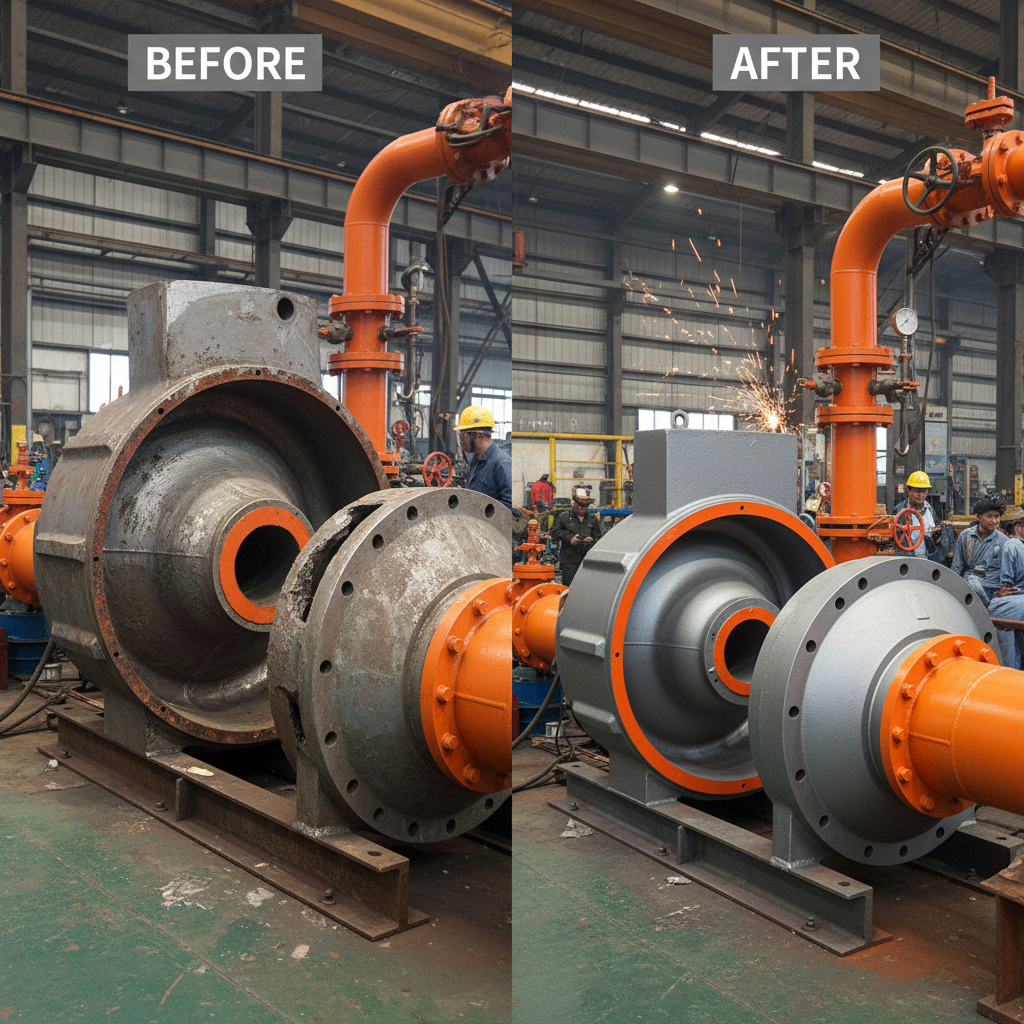
Volute casing and vortex casing are crucial components in a wide range of fluid handling systems, particularly in centrifugal pumps and turbines. Their efficient design and construction directly impact the performance and reliability of these machines, which are essential for industries like water management, power generation, and chemical processing. Understanding the nuances between these two casing types, their applications, and evolving technologies is vital for engineers, operators, and researchers seeking to optimize fluid flow and energy transfer.
Globally, the demand for efficient fluid handling solutions is continually increasing, driven by population growth, urbanization, and the need for sustainable resource management. The United Nations estimates that global water demand will exceed supply by 40% by 2030, placing significant stress on water infrastructure and necessitating advanced pumping technologies. Effective casing designs, like those employing volute and vortex principles, are central to minimizing energy consumption and maximizing water delivery efficiency.
Beyond water management, the power sector heavily relies on volute and vortex casings in turbines, contributing to energy production from renewable sources like hydropower and geothermal energy. Furthermore, industries dealing with corrosive or abrasive fluids require casings engineered for durability and resistance, showcasing the broad applicability and importance of these components in modern industrial operations.
Introduction to volute casing and vortex casing
Volute casing and vortex casing designs represent fundamental approaches to collecting and channeling fluid discharged from a pump or turbine impeller. The choice between these designs hinges on the specific application’s requirements, balancing factors like efficiency, head, flow rate, and the fluid’s characteristics. Properly designed casings minimize energy losses and ensure optimal system performance.
The evolution of casing technology has been driven by the need for greater efficiency, reduced noise, and improved reliability. From the early days of simple volute designs to the more complex geometries incorporating vortex principles, continuous advancements in computational fluid dynamics (CFD) and materials science have enabled engineers to create casings tailored for demanding applications.
Defining Volute and Vortex Casings
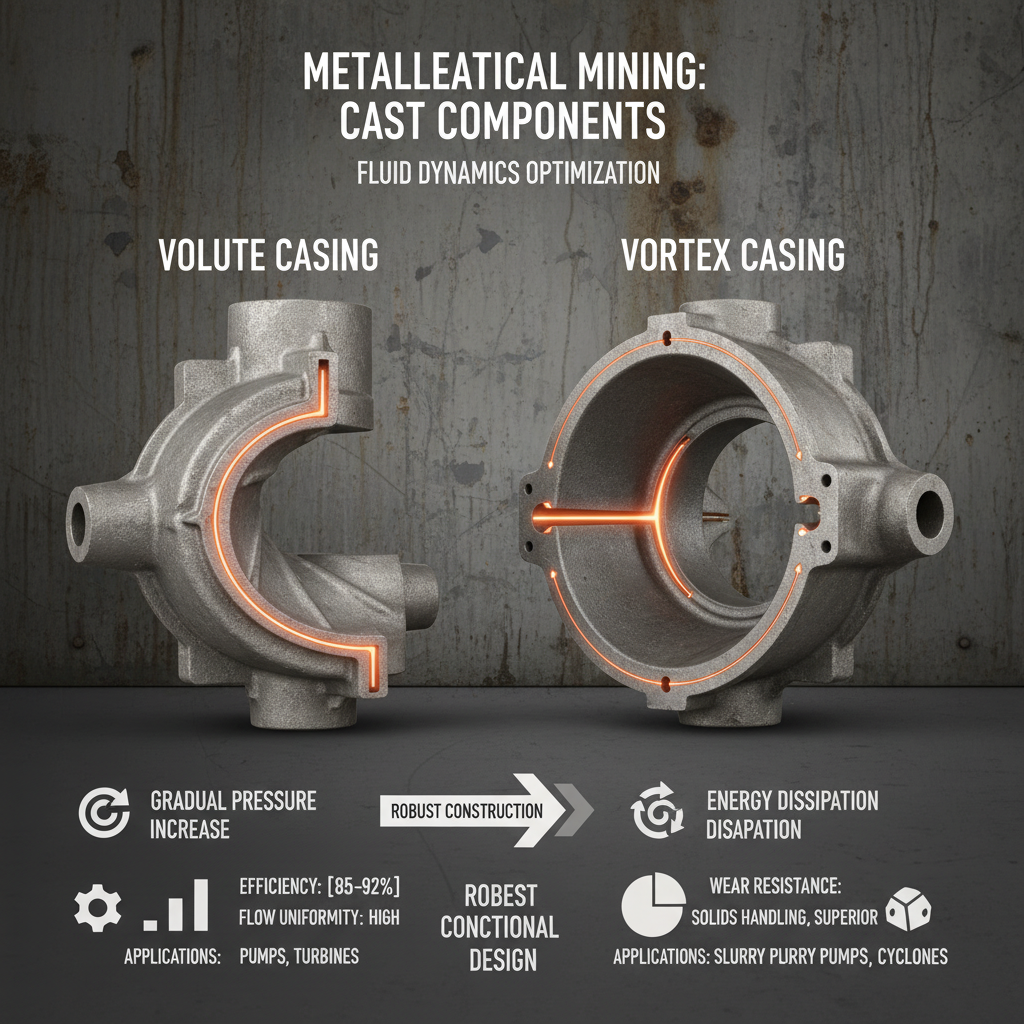
A volute casing is a progressively expanding spiral channel that surrounds the pump or turbine impeller. Its primary function is to collect the fluid discharged from the impeller and convert its velocity energy into pressure energy. The increasing cross-sectional area of the volute allows the fluid to slow down, resulting in a pressure rise. Volute casings are widely used due to their simplicity and relatively high efficiency across a broad range of operating conditions.
In contrast, a vortex casing utilizes a series of guide vanes to create a swirling motion (a vortex) in the fluid as it exits the impeller. This swirling motion effectively recovers kinetic energy that would otherwise be lost in a conventional volute casing, particularly at off-design flow rates. Vortex casings are often favored in applications where maintaining efficiency across a wider operating range is critical, such as variable-speed pumps.
Understanding these fundamental differences is key to selecting the appropriate casing type for a given application. volute casing and vortex casing designs each have unique strengths and weaknesses that must be carefully considered during the design process.
Core Characteristics of volute casing and vortex casing
One of the key characteristics of volute casings is their smooth, spiral shape, meticulously designed to minimize flow separation and turbulence. This smooth flow path is essential for maximizing energy transfer and reducing noise levels. The shape and dimensions of the volute are carefully calculated based on the impeller geometry and the desired operating conditions.
Vortex casings, conversely, are defined by their strategically positioned guide vanes. These vanes induce a swirling motion in the fluid, creating a low-pressure zone near the impeller outlet, which enhances the recovery of kinetic energy. The angle and spacing of the vanes are critical parameters influencing the casing’s performance and efficiency.
Both casing types are typically constructed from materials resistant to corrosion and erosion, such as cast iron, stainless steel, or specialized alloys. Material selection is heavily influenced by the properties of the fluid being handled and the operating environment. The mechanical strength of the casing material is also crucial for withstanding the internal pressure and external loads.
Performance Factors in volute casing and vortex casing
The hydraulic efficiency of both volute and vortex casings is a critical performance metric. Hydraulic efficiency represents the ratio of the useful energy delivered to the fluid to the energy input by the impeller. Factors influencing efficiency include the casing geometry, surface roughness, and the presence of flow obstructions.
Another important performance factor is the head-capacity curve, which illustrates the relationship between the pressure head developed by the pump or turbine and the flow rate. Volute casings typically exhibit a more gradual head-capacity curve, while vortex casings can offer a flatter curve, providing more stable performance over a wider range of flow rates.
Comparison of volute casing and vortex casing Performance
Global Applications of volute casing and vortex casing
Volute casings find widespread application in municipal water supply systems, providing the necessary pressure to distribute water to homes and businesses. They are also commonly used in agricultural irrigation, where reliable pumping is crucial for crop production. Furthermore, volute casings are integral to industrial processes requiring fluid transfer, such as chemical processing and manufacturing.
Vortex casings, with their enhanced efficiency at off-design conditions, are particularly valuable in applications involving variable flow rates. This includes wastewater treatment plants, where flow rates fluctuate significantly depending on rainfall and usage patterns. They are also employed in cooling water systems for power plants and industrial facilities, where maintaining stable performance is essential for efficient operation.
Advantages and Long-Term Value of volute casing and vortex casing
The long-term value of using well-designed volute and vortex casings extends beyond initial cost savings. Reduced energy consumption translates into lower operating expenses and a smaller carbon footprint. The durability and reliability of these casings minimize maintenance requirements and downtime, improving overall system availability. The ability to optimize fluid flow also contributes to improved process efficiency and product quality.
Moreover, by reducing noise and vibration, these casings enhance workplace safety and comfort. Choosing the appropriate casing type demonstrates a commitment to sustainability, responsible resource management, and operational excellence. A robust and efficient fluid handling system builds trust with stakeholders and strengthens a company's reputation.
Future Trends in volute casing and vortex casing Technology
Ongoing research and development efforts are focused on optimizing casing designs using advanced CFD simulations and additive manufacturing techniques. This allows engineers to create more complex geometries that maximize efficiency and minimize energy losses. The use of lightweight materials, such as composites, is also gaining traction, reducing casing weight and improving performance.
The integration of smart sensors and data analytics is another emerging trend. These sensors can monitor casing performance in real-time, providing valuable insights into operating conditions and enabling predictive maintenance. This proactive approach can prevent costly failures and extend the lifespan of the equipment.
Further innovations in surface coatings and materials are targeting improved resistance to corrosion, erosion, and fouling, extending casing life in challenging environments. These advancements collectively point towards a future of more efficient, reliable, and sustainable fluid handling solutions utilizing optimized volute and vortex casing designs.
Summary of Future Trends in volute casing and vortex casing
| Trend Category |
Technology Focus |
Potential Impact |
Implementation Timeline |
| Computational Fluid Dynamics |
Advanced simulation algorithms |
Improved casing geometry optimization |
Currently implemented |
| Additive Manufacturing |
3D printing of complex casing shapes |
Reduced manufacturing costs and lead times |
5-10 years |
| Smart Sensors |
Real-time performance monitoring |
Predictive maintenance and reduced downtime |
2-5 years |
| Lightweight Materials |
Carbon fiber reinforced polymers |
Reduced casing weight and increased efficiency |
5-10 years |
| Surface Coatings |
Advanced anti-corrosion and anti-fouling coatings |
Extended casing lifespan and reduced maintenance |
Currently implemented |
| Data Analytics |
Machine learning for performance optimization |
Improved operational efficiency and cost savings |
2-5 years |
FAQS
Generally, volute casings offer higher efficiency at design flow rates, while vortex casings maintain efficiency better across a wider range of flow rates. This makes vortex casings suitable for applications with variable flow demands, such as wastewater treatment. The choice depends on the specific operating conditions and performance priorities. The vortex casing can better handle fluctuations in flow while maintaining efficiency, although the peak efficiency is often slightly lower than a properly designed volute casing at the design point.
Material selection is critical for longevity. Corrosion and erosion are major concerns, so materials like stainless steel, duplex stainless steel, or specialized alloys are often used for handling corrosive fluids. For abrasive fluids, hard coatings or erosion-resistant materials are preferred. Proper material selection minimizes maintenance and extends the lifespan of the casing, reducing overall lifecycle costs. Regular inspections and preventative maintenance are also crucial, regardless of the material.
Yes, vortex casings are generally more complex to manufacture than volute casings due to the intricate geometry of the guide vanes. Manufacturing requires tighter tolerances and more sophisticated machining techniques. This increased manufacturing complexity can result in higher initial costs, but the improved performance and wider operating range can justify the investment in certain applications.
Vortex casings excel in applications with fluctuating flow rates, such as wastewater treatment, variable speed pumping systems, and cooling water circuits. Their ability to maintain efficiency across a wide range of operating conditions makes them ideal for these scenarios. They are also beneficial when a stable head is required despite variations in flow.
Computational Fluid Dynamics (CFD) analysis allows engineers to simulate fluid flow within the casing, identify areas of high turbulence or energy loss, and optimize the geometry to improve efficiency. CFD can be used to refine the volute shape, vane angles, and inlet/outlet configurations. It provides a virtual testing environment, reducing the need for costly physical prototypes.
Volute casings are typically less expensive to manufacture due to their simpler design. Vortex casings have higher manufacturing costs due to the complexity of the guide vanes. However, the long-term operating costs can be lower with a vortex casing if it results in significant energy savings due to its wider operating range. A thorough lifecycle cost analysis is recommended when making the decision.
Conclusion
In conclusion, both volute casing and vortex casing technologies play critical roles in modern fluid handling systems. Volute casings offer simplicity and high efficiency at design flow rates, making them suitable for a wide range of applications. Vortex casings excel in scenarios demanding stable performance across fluctuating flow rates, providing a robust solution for demanding operating conditions. Understanding the unique characteristics and benefits of each design is crucial for selecting the optimal solution for specific engineering needs.
As we move towards a future focused on sustainability and energy efficiency, continued innovation in casing technology will be essential. Advancements in materials science, additive manufacturing, and data analytics will drive further improvements in performance, reliability, and cost-effectiveness. For more information about volute casing and vortex casing solutions, and to explore how we can help optimize your fluid handling systems, visit our website today.