English

0%

Table of Contents

The pump volute casing is a critical component in centrifugal pumps, playing a vital role across numerous industries. Its efficient design directly impacts a pump’s performance, influencing flow rate, pressure, and overall energy efficiency. Understanding the intricacies of the pump volute casing is crucial for engineers, technicians, and anyone involved in fluid handling systems. The global reliance on pumping systems – for everything from water supply and wastewater treatment to oil & gas and power generation – highlights the significant impact of optimizing this essential component.

Globally, the demand for efficient and reliable pumps continues to grow, driven by factors such as increasing population, industrialization, and the need for sustainable resource management. According to the World Bank, investments in water infrastructure alone will require trillions of dollars over the coming decades. The ISO standards governing pump performance underscore the importance of precision engineering and component quality, with the volute casing being a key area of focus. This growing demand, coupled with increasingly stringent environmental regulations, creates a constant need for innovative pump volute casing designs.

The pump volute casing acts as a collecting chamber for the fluid discharged by the impeller. It’s designed to gradually increase in cross-sectional area as it wraps around the impeller, converting kinetic energy (velocity) into potential energy (pressure). This process is essential for effectively transferring fluid power. The effectiveness of this energy conversion directly correlates to a pump's overall efficiency and suitability for its intended application, making a properly designed and manufactured pump volute casing absolutely necessary for modern industry and vital for addressing critical humanitarian needs, such as providing clean water access.

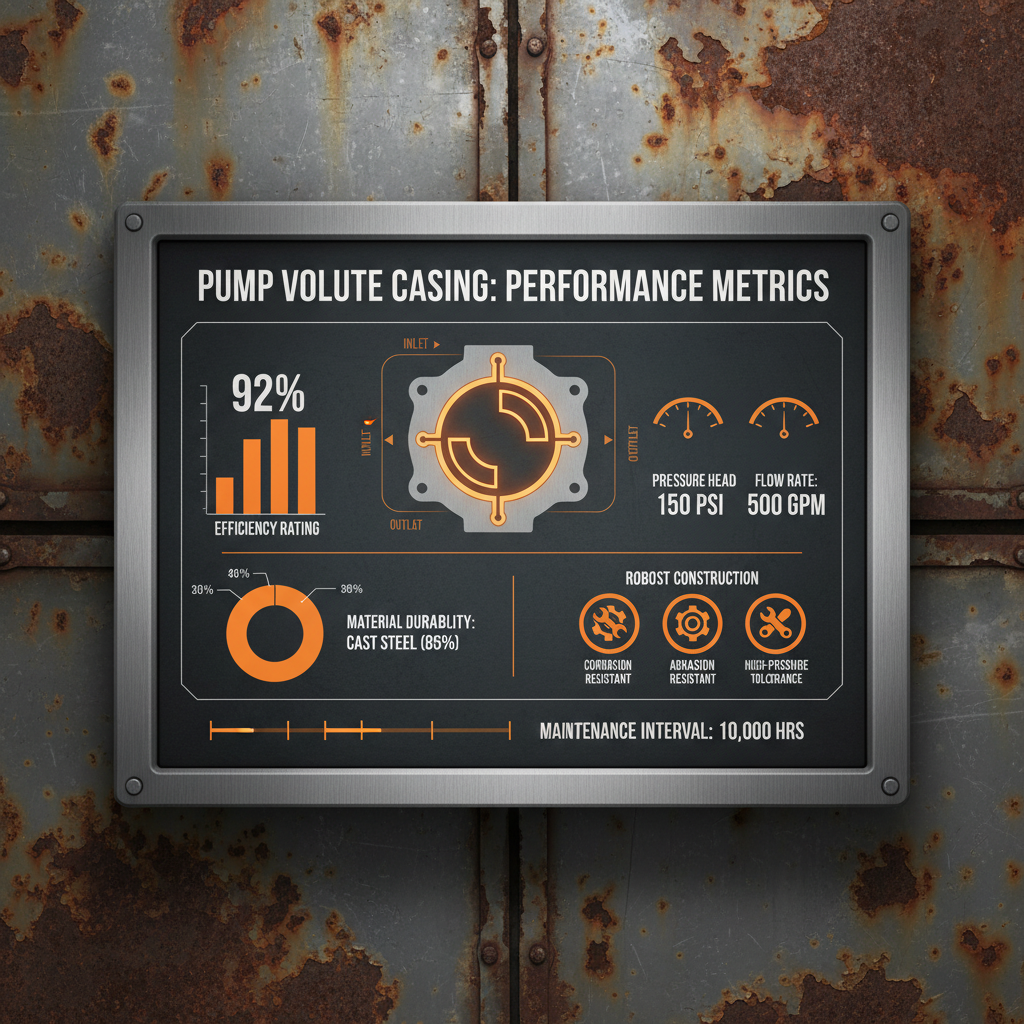
Optimizing Pump Performance with Advanced Pump Volute Casing Designs

Introduction to Pump Volute Casings

Optimizing Pump Performance with Advanced Pump Volute Casing Designs

A well-engineered pump volute casing contributes significantly to the overall efficiency and longevity of a centrifugal pump. Factors like the casing’s geometry, material selection, and manufacturing tolerances all play a crucial role in minimizing energy losses and preventing premature failure. Choosing the right pump volute casing is therefore not simply a matter of cost, but a strategic investment in operational efficiency and reliability.

The design of the volute impacts the pressure distribution around the impeller, which in turn affects the pump’s hydraulic performance. Understanding these relationships allows engineers to tailor the casing to specific application requirements, maximizing output and minimizing energy consumption. Increasingly, computational fluid dynamics (CFD) modeling is used to optimize volute designs for different flow rates and pressures.

Defining the Pump Volute Casing

The pump volute casing is the stationary, spiral-shaped component that surrounds the pump impeller. Its primary function is to collect the fluid discharged by the impeller and gradually slow it down, converting kinetic energy into pressure energy. This conversion process is essential for increasing the fluid’s pressure and enabling it to be efficiently transported through the piping system.

Unlike a diffuser, which uses a series of stationary vanes to slow the fluid, the volute casing relies on its gradually expanding cross-sectional area to achieve this effect. The shape of the volute is carefully designed to ensure a smooth and uniform flow of fluid, minimizing turbulence and energy losses. The efficient operation of the casing is inextricably linked to the pump's overall performance.

The volute casing’s design connects directly to the critical functions in modern industrial processes and is vital to humanitarian efforts. From supplying potable water to communities lacking access, to enabling large-scale irrigation for food production, the reliable operation of pumps, and consequently the pump volute casing, is essential for sustaining life and driving economic development.

Core Characteristics of Pump Volute Casings

Durability is a paramount characteristic of a high-quality pump volute casing. Casings are often exposed to corrosive fluids, high pressures, and abrasive particles, making material selection crucial. Common materials include cast iron, stainless steel, and various alloys, each offering different levels of resistance to corrosion and wear. A robust casing minimizes the risk of leaks and failures, leading to reduced downtime and maintenance costs.

Hydraulic efficiency is a key performance indicator. A well-designed volute casing minimizes hydraulic losses, ensuring a maximum conversion of energy from the impeller to the fluid. The smooth, spiral shape minimizes turbulence and flow separation, contributing to higher overall pump efficiency. Optimizing the volute geometry is a complex process that often involves CFD analysis.

Manufacturing precision significantly impacts performance. Even minor imperfections in the casing's surface finish or geometry can introduce turbulence and reduce efficiency. Modern casting and machining techniques are used to ensure tight tolerances and a smooth, consistent surface finish. Quality control measures throughout the manufacturing process are essential for delivering a reliable pump volute casing.

Practical Applications of Pump Volute Casings

Pump volute casings are extensively used in water and wastewater treatment plants. They are crucial components of pumps responsible for moving water through various stages of treatment, from intake to discharge. Their reliability is paramount to maintaining a consistent and safe water supply for communities.

In the oil and gas industry, pump volute casings are utilized in a wide range of applications, including pipeline transportation, refinery operations, and offshore drilling. These casings must withstand harsh conditions, including high pressures, corrosive fluids, and extreme temperatures. Special alloys and coatings are often used to enhance their durability.

Pump Volute Casing Efficiency Comparison


Advantages and Long-Term Value

The primary advantage of a well-designed pump volute casing lies in its ability to maximize pump efficiency, leading to significant cost savings through reduced energy consumption. Improved efficiency also translates to a lower carbon footprint, contributing to more sustainable operations.

Beyond cost savings, a durable and reliable volute casing minimizes downtime and maintenance requirements, increasing overall operational uptime. This is particularly crucial in critical applications where pump failure could have severe consequences, such as in power plants or emergency water systems.

Future Trends and Innovations

Additive manufacturing (3D printing) is emerging as a promising technology for producing complex pump volute casing geometries with increased precision and customization. This enables engineers to optimize casing designs for specific applications, further enhancing performance.

The development of new materials, such as advanced polymers and composite materials, is also driving innovation in pump volute casing design. These materials offer improved corrosion resistance, reduced weight, and enhanced durability, leading to longer service life and reduced maintenance costs.

Digitalization and the use of AI-powered predictive maintenance are becoming increasingly common. Sensors embedded within the pump system can monitor casing performance in real-time, allowing for early detection of potential problems and preventing catastrophic failures.

Challenges and Solutions

One common challenge is cavitation, which can occur when the pressure within the casing drops too low, forming vapor bubbles that implode and damage the casing. Solutions include optimizing the casing geometry to minimize pressure drops and selecting materials with high cavitation resistance.

Corrosion and erosion are also significant concerns, particularly in applications involving abrasive fluids or harsh chemical environments. Employing corrosion-resistant materials, applying protective coatings, and implementing regular inspection and maintenance programs can mitigate these risks.

Another challenge lies in balancing cost and performance. While advanced materials and manufacturing techniques can enhance performance, they often come at a higher price. Finding the optimal balance between cost and performance requires careful consideration of the specific application requirements and lifecycle costs.

Summary of Common Pump Volute Casing Challenges & Solutions

Challenge Impact on Casing Mitigation Strategy Cost/Complexity
Cavitation Surface erosion, reduced efficiency Optimize geometry, resistant materials Medium/Medium
Corrosion Material degradation, leaks Corrosion-resistant alloys, coatings High/Medium
Erosion Wear and tear, dimensional changes Hardened materials, wear-resistant liners Medium/Medium
Manufacturing Defects Reduced structural integrity, leaks Strict quality control, non-destructive testing Low/High
High Pressure Stress and potential failure Robust design, thicker walls, material selection Medium/Medium
Thermal Stress Expansion/contraction, material fatigue Thermal expansion compensation, material selection Low/Medium

FAQS

What materials are most commonly used in pump volute casing construction?

The most prevalent materials include cast iron, due to its cost-effectiveness and machinability, and various stainless steels (like 304 and 316) for superior corrosion resistance. Alloy steels are also used in demanding applications requiring high strength and wear resistance. Material choice depends heavily on the fluid being pumped and the operating environment. Ultimately, choosing the right pump volute casing material is crucial for long-term reliability and minimal downtime.

How does the volute shape influence pump efficiency?

The volute's gradually expanding cross-sectional area is meticulously designed to convert the kinetic energy of the fluid discharged by the impeller into pressure energy. A well-optimized shape minimizes turbulence and flow separation, ensuring a smoother, more efficient energy transfer. Computational Fluid Dynamics (CFD) is often used to refine the volute's geometry for maximum performance in specific applications.

What are the signs of wear or damage in a pump volute casing?

Common signs include reduced pump performance (lower flow rate or pressure), increased vibration, unusual noises (like grinding or rattling), and visible signs of corrosion, erosion, or cracking. Regular inspections, including visual checks and non-destructive testing, are crucial for early detection and prevention of major failures. Addressing these issues promptly can extend the lifespan of the casing.

Can pump volute casings be repaired, or is replacement always necessary?

Depending on the extent and type of damage, repair may be a viable option. Minor cracks or erosion can often be addressed through welding or coating processes. However, severe damage, such as extensive corrosion or significant cracking, typically necessitates replacement to ensure continued safe and reliable operation. A thorough inspection by a qualified technician is essential to determine the best course of action.

What role does surface finish play in pump volute casing performance?

A smooth surface finish minimizes friction and turbulence within the casing, contributing to higher pump efficiency. Rough surfaces can create areas of flow separation, leading to energy losses and increased wear. High-quality castings and machining processes are used to achieve a consistent, smooth surface finish that optimizes hydraulic performance. Ensuring a proper surface finish is vital for the longevity of the pump volute casing.

How do I select the correct pump volute casing for my application?

Selecting the right casing involves considering several factors, including the fluid being pumped (corrosiveness, abrasiveness), the operating pressure and temperature, the required flow rate and head, and the pump's overall duty cycle. Consulting with a pump specialist or utilizing vendor selection tools can help ensure that the chosen casing is appropriately sized and constructed for your specific application needs.

Conclusion

In conclusion, the pump volute casing is a critical component in centrifugal pumps, directly impacting efficiency, reliability, and overall system performance. Understanding its design principles, material considerations, and potential failure modes is essential for engineers, operators, and anyone involved in fluid handling applications. Selecting the appropriate pump volute casing and implementing preventative maintenance strategies are key to maximizing operational uptime and minimizing long-term costs.

Looking forward, advancements in materials science, additive manufacturing, and digital technologies will continue to drive innovation in pump volute casing design. Embracing these advancements will be crucial for meeting the increasing demands for efficient, sustainable, and reliable pumping solutions. Further research and development in areas such as cavitation mitigation and corrosion resistance will be vital for ensuring the long-term viability of these essential components. Visit our website at www.ydcastings.com to learn more.

Robert Miller

Robert Miller

Robert Miller is a seasoned Mechanical Engineer at Hebei Yuanda Trade Co., Ltd., with over 15 years of experience in the metal casting industry. He specializes in sand casting and lost foam casting for pump and automotive applications. Robert is instrumental in bridging the gap between customer specifications and our
Previous Advancements in Vortex Casing Technology for Efficient Fluid Handling Systems
Next Centrifugal Pump Volute Casing Design Applications and Future Trends