Check Valve Rubber: A Comprehensive Guide for Reliable Fluid Control Systems
For import managers, brand owners, and sourcing agents procuring fluid control components, finding a check valve rubber seal that offers consistent durability, precise sealing, and cost-effective supply is a critical challenge. This guide details how specialized manufacturers address common industry failures—such as premature cracking, chemical degradation, and seal deformation—through material science, rigorous quality assurance, and integrated OEM/ODM design support, enabling reliable backflow prevention in water, chemical, and HVAC applications.
Industry Challenges in Sourcing Durable Check Valve Seals
Procurement professionals face significant hurdles when sourcing rubber components for check valves. These pain points directly impact operational efficiency and product reliability:
- Inconsistent Material Properties: Off-spec rubber compounds lead to seals that swell, crack, or lose elasticity under variable pressure and temperature, causing valve failure.
- Extended Lead Times: Delays in mold development and production disrupt inventory planning and project timelines for wholesalers and brand owners.
- Compliance Gaps: Components lacking verifiable certifications (e.g., FDA for potable water, REACH for chemicals) create regulatory risks for market entry.
- High MOQ Barriers: Large minimum order quantities from standard product lines limit flexibility for custom projects and prototype development.
- Supply Chain Opacity: Lack of transparency in manufacturing processes and quality control protocols erodes trust in component longevity.
Engineering Solutions: The Anatomy of a High-Performance Rubber Check Valve Seal
Addressing these challenges requires a technical, solution-oriented approach. A high-performance check valve rubber component is not a commodity but an engineered part.
Material Selection & Compound Design
The core of performance lies in the rubber compound. Selection is based on the specific media and operating environment:
| Base Elastomer | Key Properties | Typical Application Scenarios |
|---|---|---|
| EPDM (Ethylene Propylene Diene Monomer) | Excellent ozone, weather, and steam resistance; good water and chemical resistance. | Potable water systems, HVAC, automotive cooling, low-pressure chemical lines. |
| NBR (Nitrile Butadiene Rubber) | Superior resistance to oils, fuels, and greases; good abrasion resistance. | Fuel handling systems, hydraulic oil circuits, industrial machinery. |
| Silicone | Wide temperature range (-60°C to 225°C), flexible, FDA compliant grades available. | Medical equipment, food & beverage processing, high-temperature gaskets. |
| FKM (Fluorocarbon/Viton®) | Exceptional resistance to high temperatures, fuels, oils, and aggressive chemicals. | Chemical processing, semiconductor, aerospace, and automotive fuel systems. |
*Material performance data is for reference. Specific compound formulations and final properties should be confirmed with technical datasheets for your application.
Critical Technical Parameters for Specification
Beyond material, precise engineering ensures functionality. Key specs to validate with your supplier include:
- Hardness (Shore A): Typically ranges from 50 to 80. Affects sealing force and flexibility.
- Tensile Strength & Elongation: Indicators of the material's durability and tear resistance.
- Compression Set: Measures the seal's ability to recover after prolonged compression—critical for long-term leak prevention.
- Temperature Range: Minimum and maximum continuous operating temperatures.
- Pressure Rating: Maximum working pressure (PSI/Bar) the seal is designed to withstand.
Why Partner with a Specialized Industrial Manufacturer?
Choosing a partner like Hebei Yuanda Trade Co., Ltd. (founded in 2006) moves the relationship from transactional purchasing to strategic sourcing. The advantages are rooted in integrated capabilities.
Integrated Quality Assurance & Compliance Framework
Trust is built on verifiable processes. A capable supplier operates with a structured quality management system, often underpinned by ISO 9001:2015 certification. For check valve rubber components, this translates to:
- Batch Testing: Incoming raw material inspection and finished product testing for critical parameters like hardness, dimensions, and density.
- Compliance Support: Production of compounds that meet international standards such as:
- FDA CFR 177.2600: For seals in contact with food and potable water.
- REACH / RoHS: Restriction of hazardous substances for the EU market.
- NSF/ANSI 61: For drinking water system components (upon project request).
- Traceability: Documentation linking production batches to specific compound formulas and test reports.
OEM/ODM Design & Customization Capability
Standard parts rarely fit optimized designs. A powerful factory with in-house mold design and machining (supported by a 5000 m² facility) enables true customization:
- Reverse Engineering: Creating a matching seal from an existing sample valve.
- Collaborative Design: Optimizing lip geometry, cross-section, or flange design for improved flow characteristics or easier assembly.
- Prototyping Service: Producing small batches for functional testing and validation before full-scale production.
- Material Development: Tweaking compound formulas to achieve a specific balance of cost, chemical resistance, or physical properties.
Supply Chain Efficiency: MOQ, Lead Time & Logistics
Predictability in logistics is as important as product quality. Transparent commercial terms are essential for procurement planning.
- Flexible MOQ: While standard items may have set MOQs, for OEM/ODM projects, manufacturers often work with lower minimums to support development, sometimes as low as 500-1,000 pieces for custom designs.
- High-Speed Delivery Timeline: A typical production cycle for a custom rubber check valve seal, including mold fabrication, can range from 25 to 40 days. For standard items, lead times can be shorter, leveraging China's efficient supply chain network.
- Packaging & Shipping: Components are typically packaged in anti-corrosion bags and organized in cartons or pallets to prevent deformation. Standard trade terms like FOB (Free On Board) or CIF (Cost, Insurance, and Freight) are offered, with support for door-to-door logistics upon request.
*All MOQ, lead time, and pricing details are project-dependent. Final terms are specified in the formal order confirmation.
Voices from the Field: Verified Customer Feedback
Direct feedback from professionals highlights the real-world impact of a reliable supply partnership.
"We source EPDM seals for our line of irrigation check valves. After facing consistency issues with two previous suppliers, we partnered with Yuanda. Their technical team worked with us to adjust the compound for better UV resistance. The first production batch passed our 2000-hour accelerated aging test. The consistent quality over the last three order cycles has significantly reduced our incoming inspection overhead." – Michael R., Procurement Director, an irrigation systems manufacturer in Texas, USA.
"As a sourcing agent for European plumbing wholesalers, compliance is non-negotiable. We needed a supplier who could provide clear documentation for WRAS-like standards. They provided comprehensive test reports on the compound's suitability for potable water. Their communication on production milestones is excellent, which helps me manage my clients' expectations perfectly." – Sophie L., Sourcing Agent, based in the UK, serving EU clients.
"Our project involved a custom-sized check valve diaphragm for a chemical dosing pump. The ODM support was crucial—they not only replicated the size but suggested a switch from standard NBR to a more resistant FKM blend after reviewing our media list. The prototypes were delivered within 4 weeks, and the final parts have been performing without failure for over 18 months in a tough environment." – David K., Engineering Manager, industrial pump OEM, Canada.
Ready to Specify Your Check Valve Rubber Component?
Transition from solving recurrent seal failures to securing a reliable component supply. To initiate a technical discussion or request a quotation:
Next Step: Prepare your requirements, including a sample, CAD drawing, or detailed specification (material, dimensions like ID/OD/thickness, operating environment, and compliance needs). Contact our technical sales team via email or WhatsApp for a preliminary engineering review and a competitive quotation tailored to your volume.
Contact Hebei Yuanda Trade Co., Ltd.:
Tel: +86-311-808-126-83
WhatsApp: +8619333738338 (Ben) / +8619333736198 (Linda)
Email: info@ydcastings.com
Or visit our Contact Page.
Frequently Asked Questions (FAQ)
Q1: What information do I need to provide to get an accurate quote for a custom rubber check valve seal?
A: For the most efficient quote, please provide: 1) A sample, detailed drawing, or sketch with critical dimensions; 2) The operating media (e.g., water, oil, specific chemicals); 3) Temperature and pressure ranges; 4) Any required certifications (FDA, RoHS, etc.); and 5) Your estimated annual usage or project quantity.
Q2: Can you produce check valve seals that comply with FDA and NSF standards for drinking water?
A: Yes. We regularly compound specific grades of EPDM and Silicone rubber that are formulated to meet the requirements of FDA CFR 177.2600 for indirect food contact. While we supply the compliant material, formal NSF/ANSI 61 certification of the final assembled valve is typically pursued by the valve manufacturer. We provide all necessary material documentation to support your certification process.
Q3: What is your typical lead time for a new custom mold and first sample batch?
A: The lead time varies based on mold complexity. For a standard check valve diaphragm or seal mold, expect approximately 15-20 days for mold manufacturing. Following mold approval, initial samples can be produced in 5-7 days. Therefore, a complete prototyping cycle generally takes 25 to 30 days.
Q4: How do you ensure batch-to-batch consistency in rubber compound properties?
A: Consistency is maintained through a controlled process: We source raw polymers from reputable suppliers, use precise internal mixing formulas, and conduct key tests (like hardness, specific gravity) on each compound batch before release to production. This data is recorded for traceability.
Q5: Do you offer support for material selection if I'm unsure about the best elastomer for my application?
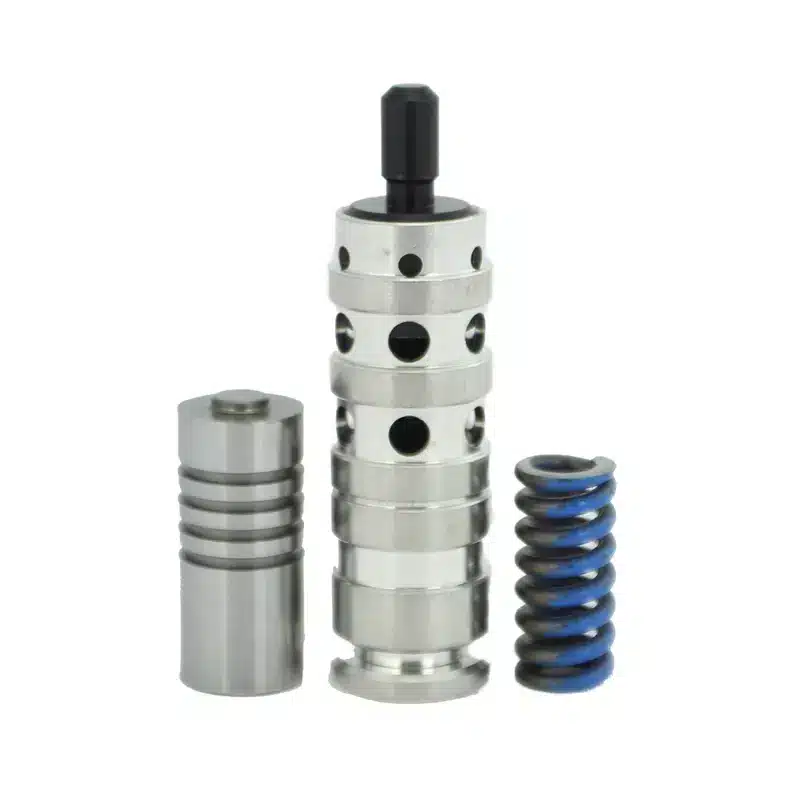
check valve internals Check Valve Oil y check valve
A: Absolutely. Our technical sales team has extensive experience in material application. By reviewing your operating environment—including media, temperature, pressure, and cycle frequency—we can recommend the most cost-effective and durable elastomer option, such as EPDM for water/steam or FKM for aggressive chemicals.

About the Author: Thomas Reynolds
Thomas is a mechanical engineer and sourcing specialist with over 12 years of experience in the global procurement of fluid power and sealing components. Having worked with manufacturers across North America and Asia, he focuses on bridging technical requirements with supply chain realities. He contributes insights to help procurement professionals make informed decisions on custom industrial parts. The views expressed are based on industry knowledge and practical sourcing experience.
Image Alt Text Suggestions for this Page:
- cross-section-check-valve-with-rubber-seal.jpg (Alt: Cross-section diagram of a swing check valve highlighting the EPDM rubber seal)
- custom-rubber-check-valve-diaphragms-odm.jpg (Alt: Assorted custom rubber check valve diaphragms and seals on a white background)
- rubber-compound-testing-hardness-meter.jpg (Alt: Quality control technician testing rubber compound hardness with a Shore durometer)
- check-valve-rubber-seal-application-hvac.jpg (Alt: Rubber check valve seals installed in a commercial HVAC system piping)
- factory-mold-making-cnc-machining.jpg (Alt: CNC machining of a steel mold for producing custom rubber valve components)
Structured Data Hint (FAQ Schema): This page contains a FAQ section with questions and answers about check valve rubber specifications, compliance, lead times, and material selection, which is suitable for FAQPage JSON-LD markup.
Disclaimer: All product specifications, performance data, lead times, and MOQs provided in this article are for informational purposes and represent common industry practices. They are not a formal offer or guarantee. Final specifications, pricing, and terms for any order will be explicitly stated in the official quotation and sales contract issued by Hebei Yuanda Trade Co., Ltd. Customers are advised to validate all technical and compliance requirements for their specific application.