Your Complete Guide to Valve Class Ratings for Industrial & Commercial Applications
Meta Title: Valve Class Explained: Pressure Ratings, Materials & Sourcing | Hebei Yuanda Trade
Meta Description: Confused by valve class ratings (150#, 300#, etc.)? Our guide explains pressure ratings, material specs, and applications. Source reliable, certified valves from a trusted factory with OEM/ODM support. Get your quote today.
If you're an import manager, brand owner, or sourcing agent specifying valves, you've likely encountered the term "Valve Class" (e.g., Class 150, Class 300). This rating is not just a number—it's the critical determinant of a valve's pressure and temperature capabilities, directly impacting system safety, performance, and total cost of ownership. Misunderstanding it can lead to costly failures, project delays, and compliance issues. This guide cuts through the complexity, explaining valve class standards, material implications, and how to reliably source valves that match your exact pressure rating and application requirements from a qualified manufacturing partner.
The Procurement Challenge: Navigating Valve Specifications and Supply Chain Uncertainty
Specifying and sourcing industrial valves involves navigating a maze of technical standards. For professionals managing procurement, common pain points include:
- Specification Confusion: Uncertainty about how valve class relates to actual working pressure (PSI/bar) at different temperatures, leading to under-specification (safety risk) or over-specification (unnecessary cost).
- Inconsistent Quality: Receiving valves where material grade, casting integrity, or final machining does not truly meet the claimed class standard, jeopardizing system integrity.
- Prototyping & Branding Hurdles: Difficulty finding suppliers who can efficiently support OEM/ODM design for custom valve bodies, trims, or private labeling without prohibitive MOQs or extended lead times.
- Supply Chain Delays: Unpredictable production schedules and long delivery times disrupting project timelines, especially for non-standard or customized metal castings.
The root of these issues often lies in selecting a supplier focused on transaction over partnership—one lacking the engineering support, quality assurance rigor, and supply chain transparency needed for critical fluid handling components.
Decoding Valve Class: Pressure Ratings, Standards, and Material Selection
Valve Class (commonly noted as 150#, 300#, 600#, 900#, 1500#, 2500#) is defined primarily by ASME B16.34 and other related standards (API, MSS). It designates the pressure-temperature rating of the valve body. It's crucial to understand that the class rating indicates the maximum allowable non-shock pressure at a given temperature.
Key Standards and What They Mean for Your Project
- ASME B16.34: The foundational American standard for valve design, wall thickness, and pressure-temperature ratings.
- API 600/API 602/API 603: Standards for specific valve types (gate, globe, check) in steel and stainless steel, detailing design, material, and testing requirements.
- Material Specifications: The valve class must be supported by the correct material grade (e.g., A216 WCB for Carbon Steel, A351 CF8/CF8M for Stainless Steel). The class defines the pressure capability; the material defines corrosion resistance and temperature limits.
- Testing & Certification: Valves should be produced under a ISO 9001:2015 quality management system and tested per relevant standards (shell test, seat test). Common end-market certifications include CE, PED (for pressure equipment in Europe), and API Monogram for oil & gas applications.
Valve Class Pressure Rating Reference Table
| Valve Class | Typical Max Working Pressure (at -20°F to 100°F) PSI / bar |
Common Valve Types | Typical Applications |
|---|---|---|---|
| Class 150 (150#) | 275 PSI / 19 bar | Gate, Globe, Check, Ball | Low-pressure steam, water lines, general plant utility services |
| Class 300 (300#) | 720 PSI / 50 bar | Gate, Globe, Check | Process lines, intermediate steam, oil & gas utility |
| Class 600 (600#) | 1440 PSI / 99 bar | Gate, Globe, Check | High-pressure process, power generation, refinery services |
| Class 1500 (1500#) | 3600 PSI / 248 bar | Gate, Globe | High-pressure/temperature steam, ammonia, urea services |
Disclaimer: The above pressure ratings are for reference based on carbon steel materials at ambient temperature. Actual pressure ratings decrease at elevated temperatures and vary by material. Final specifications must be confirmed with engineering data and project requirements.
A Sourcing Solution: Partnering with an Integrated Metal Casting & Valve Specialist
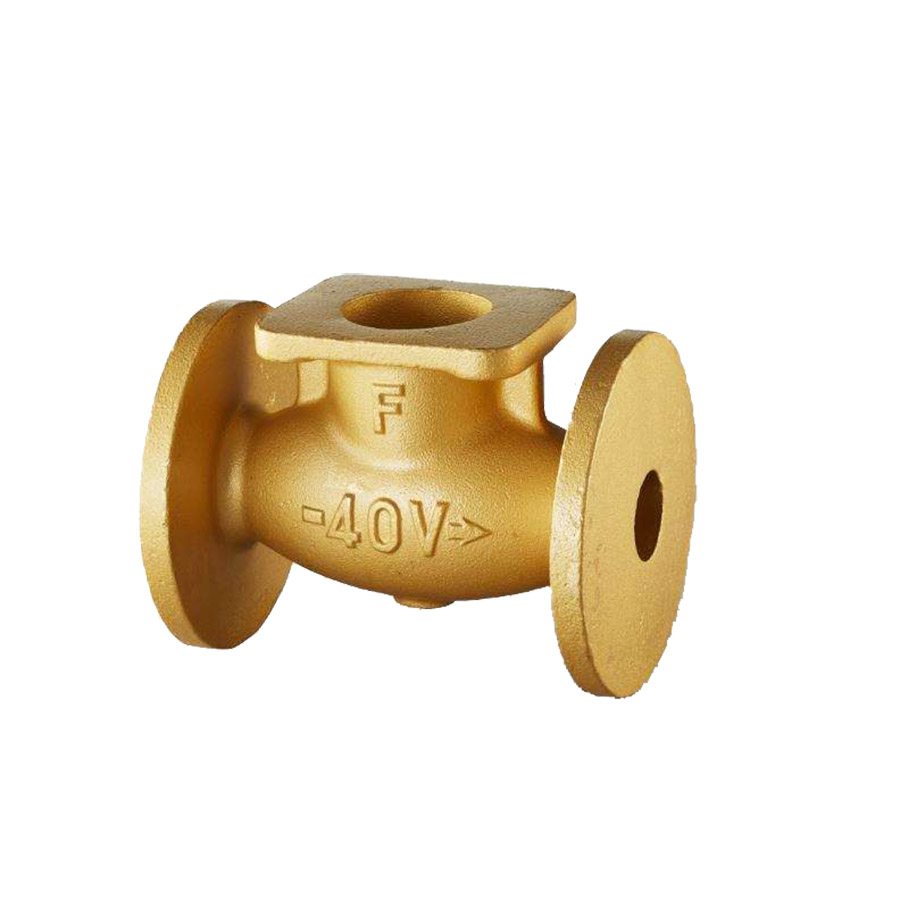
Addressing the specification and supply chain challenges requires a partner with control over the foundational process: the metal casting. This is where a manufacturer like Hebei Yuanda Trade Co., Ltd. provides a distinct advantage. Founded in 2006 and operating from a 5,000 m² facility, YD integrates foundry resources with machining and assembly, offering a vertical solution for valve bodies and components.
Core Capabilities for Reliable Valve Procurement
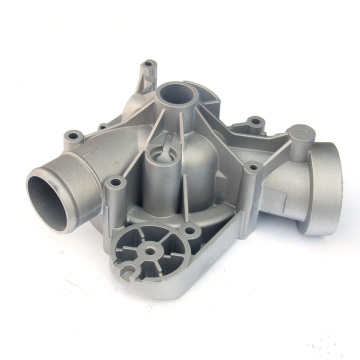
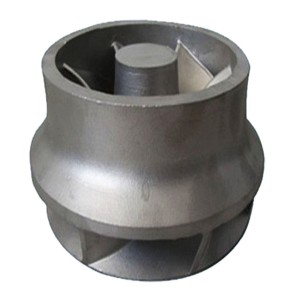
- Material & Process Flexibility: Capability to produce valve bodies and components via sand casting (ideal for larger, complex shapes like gate valve bodies), investment casting (for precision parts like trim components), and die casting (for high-volume aluminum parts). Materials include Cast Iron (Gray, Ductile), Carbon Steel, Stainless Steel (304, 316, etc.), and Aluminum Alloys.
- Engineer-to-Order & OEM/ODM Support: A dedicated technical team can work from your drawings, samples, or concepts to develop valve castings that meet specific valve class requirements. Support for private labeling and custom packaging is standard.
- Quality Assurance Embedded in the Process: Quality control begins at the pattern-making stage. The process includes chemical composition analysis, mechanical property testing, dimensional inspection, and non-destructive testing (NDT) like magnetic particle or liquid penetrant inspection as required. Production follows a ISO 9001 framework.
- Supply Chain Efficiency & Transparency: Leveraging China's integrated supply chain for raw materials, tooling, and logistics allows for competitive lead times. A structured project management process provides regular updates from pattern approval to shipment.
Trust and Verification: What Partners Are Saying
Independent feedback from global buyers underscores the value of a technically competent and reliable manufacturing partner.
"We sourced Class 300 stainless steel gate valve bodies for a chemical plant expansion. YD's engineers caught a potential stress concentration area in our initial design during the review phase. Their proactive approach and the quality of the final sand castings prevented a field issue. Lead time was 10% faster than our previous European supplier."
– Michael R., Procurement Director, Industrial Equipment Distributor, USA
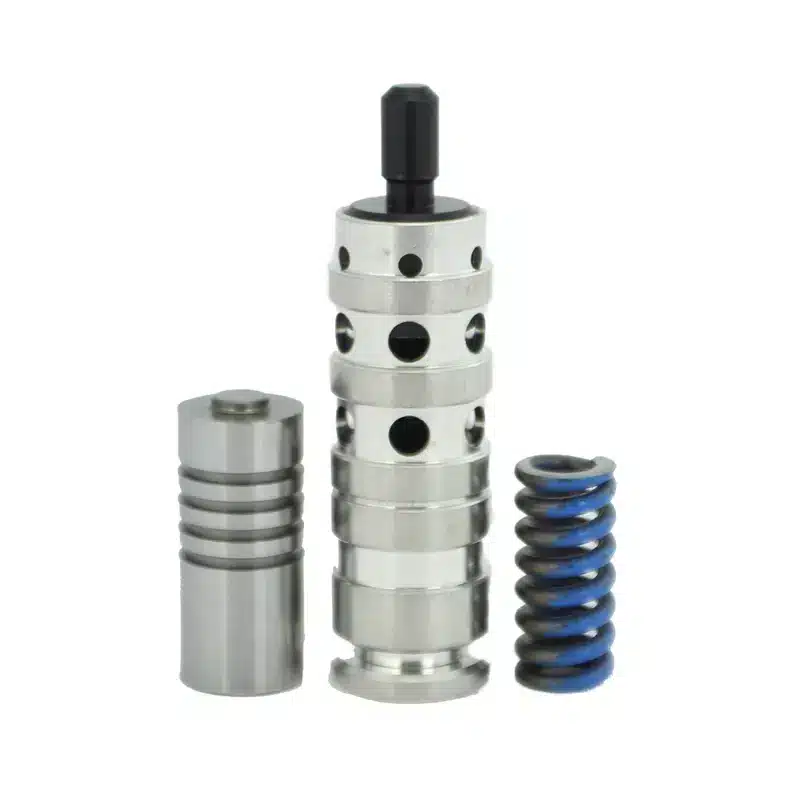
"As a small brand owner, finding a foundry for low-MOO custom bronze valve parts was tough. YD offered a feasible solution for our ODM project. They delivered the first sample batch perfectly to spec, which allowed us to test the market. Their communication via WhatsApp is very efficient."
– Sarah L., Brand Owner, Specialty Plumbing Fittings, Australia
"We have a long-standing order for ASTM A216 WCB carbon steel castings for valve manufacturers. Consistency is key for our business. Over the past four years, YD has maintained a rejection rate of well under 0.5% at our receiving inspection, which speaks to their process control."
– David K., Import Manager, Valve Assembler, Germany
Your Next Steps: From Specification to Quotation
To move forward with a precise and competitive quote for your valve components, having the following information ready will streamline the process:
- Detailed Drawings: PDF or CAD files with full dimensions, tolerances, and geometric dimensioning & tolerancing (GD&T).
- Material Specification: Required ASTM/EN/DIN material grade and any supplementary requirements (heat treatment, impact testing).
- Valve Class & Standards: Target valve class (e.g., Class 300) and governing standards (ASME B16.34, API 600, etc.).
- Quantity & Timeline: Annual volume, project MOQ, and required delivery schedule.
- Surface Finish & Testing: Requirements for machining, coating/painting, and any specific NDT (X-ray, ultrasonic).
Standard Commercial Terms
- MOQ (Minimum Order Quantity): Varies by project complexity. For standard valve body designs, MOQ can start from 50-100 pieces. Prototype/sample orders are welcomed.
- Lead Time: Typically 30-45 days for standard items after drawing confirmation, subject to order volume and complexity. Prototype samples can be delivered in 15-25 days.
- Delivery Terms: Standard terms are FOB main Chinese port (e.g., Tianjin, Shanghai). CIF to major destination ports can also be arranged.
- Payment Terms: Commonly 30% deposit with order, 70% before shipment. Terms are negotiable based on order value and partnership history.
- After-Sales: Comprehensive documentation including material certificates, test reports, and shipping documents provided. Support for quality claims per signed purchase agreement.
Ready to Source Precision Valve Castings with Confidence?
Stop juggling multiple suppliers for casting, machining, and quality documentation. Partner with a single-point source that controls the process from molten metal to finished component.
Submit your drawings and specifications today for a detailed engineering review and a formal quotation. Our team is ready to help you navigate valve class requirements and deliver components that meet your performance and budgetary goals.
Contact Our Team:
Tel: +86-311-808-126-83
WhatsApp: +8619333738338 (Ben) / +8619333736198 (Linda)
Email: info@ydcastings.com
Visit Contact Page for Quick Form
Hebei Yuanda Trade Co., Ltd. | Founded in 2006 | No.563 Xinhua Road, Shijiazhuang City, Hebei Province, P.R. China

About the Author: Alex Morgan
Alex is a mechanical engineer with over 15 years of experience in the fluid handling and valve manufacturing industry. Having worked on specification and procurement for major industrial projects in North America and Europe, he now focuses on bridging technical requirements with global manufacturing capabilities. His writing aims to demystify complex engineering standards for procurement professionals.