Steel Belts for Chemical Processing: A Guide to Durability, Compliance & Supply
For import managers, brand owners, and sourcing agents procuring industrial components, selecting the right steel belts for chemical processing is critical. This guide addresses core questions about material specifications, corrosion resistance, compliance certifications (like FDA, CE), OEM/ODM capabilities, and how a specialized supplier from China's robust supply chain can ensure reliable performance, quality assurance, and high-speed delivery for your operations.
Critical Challenges in Chemical Processing Conveyor Systems
Conveyor belts in chemical plants face environments most industrial components cannot withstand. Procurement professionals must navigate a complex set of pain points that directly impact operational efficiency and total cost of ownership.
- Corrosion & Contamination: Exposure to acids, alkalis, solvents, and salts can rapidly degrade standard belts, leading to particulate contamination and product spoilage.
- High-Temperature Stress: Processes involving drying, curing, or sintering demand belts that maintain structural integrity and dimensional stability under sustained heat.
- Precision & Hygiene Requirements: Inconsistent belt tracking or surface imperfections can disrupt automated weighing, coating, or cutting processes. For food-grade or pharmaceutical-adjacent chemicals, cleanability is non-negotiable.
- Unexpected Downtime: Belt failure in a continuous process line can halt production for hours, incurring significant financial losses.
- Global Sourcing Complexities: Balancing cost-effectiveness with verifiable quality, clear compliance documentation, and reliable lead times remains a persistent challenge.
Engineered Solutions: The Anatomy of a High-Performance Steel Belt
Addressing these challenges requires a product built with intent. Modern steel belts for chemical applications are not commodity items but precision-engineered systems.
Material & Construction Specifications
The core of performance lies in material science and manufacturing precision. Key parameters include:
| Component | Common Options | Typical Application |
|---|---|---|
| Base Material | AISI 304, 316, 316L Stainless Steel; Carbon Steel with specialized coatings | 316L for high-chloride environments; Coated carbon steel for specific abrasive non-corrosive processes. |
| Surface Finish | 2B, BA (Bright Annealed), Satin, Polished, Perforated | Polished for easy cleanability and product release; Perforated for airflow in drying applications. |
| Edge Design | Butt Joint, Welded Overlap, Machined Guided Edge | Machined guided edges for critical tracking precision in automated systems. |
| Thickness & Width | 0.5mm to 3.0mm thickness; Widths up to 3000mm+ (customizable) | Thicker gauges for heavy-load applications; Custom widths to match existing machinery. |
Note: All specifications are for reference. Final material grade and dimensions should be confirmed based on a detailed analysis of your specific chemical environment and mechanical load.
Compliance & Certification: Navigating International Standards
For global procurement, certifications are not just paperwork but a risk mitigation tool. Reliable suppliers should provide material traceability and compliance statements. Relevant standards for steel belts in chemical processing include:
- ISO 9001:2015: Certifies a consistent Quality Management System in manufacturing.
- FDA CFR Title 21: For belts contacting chemicals used in food-grade or pharmaceutical applications.
- EU Machinery Directive / CE Marking: Indicates the product meets EU health, safety, and environmental requirements.
- Material Test Certificates (MTC): Mill certificates verifying the chemical composition and grade of stainless steel used.
The Hebei Yuanda Trade Co., Ltd. (YD) Value Proposition
Founded in 2006, Hebei Yuanda Trade Co., Ltd. leverages its deep integration within North China's industrial manufacturing ecosystem to provide tailored solutions for metal components, including specialized steel belts. Our approach is built on transparency and technical collaboration.
Core Operational Advantages for B2B Buyers
1. Technical Consultation & OEM/ODM Design Support: We begin with your application parameters. Our engineering team can advise on material selection, edge design, and surface treatment to optimize belt life and performance for your specific chemical process.
2. Integrated Quality Assurance: With a factory covering 5000 m² and a focus on casting and metal fabrication, we implement quality checks at raw material intake, in-process fabrication (welding, finishing), and final inspection. Dimensional accuracy and surface quality are rigorously controlled.
3. Balanced Production Capacity & Flexibility: Our network allows for efficient production runs. While we benefit from the scale of China's supply chain for raw materials like certified stainless steel coils, we maintain flexibility for custom and lower-volume orders that larger mills may not accommodate.
4. Streamlined Logistics & Delivery: We have extensive experience in packaging steel belts for overseas shipment to prevent transit damage. Clear communication on lead times (typically 4-8 weeks for custom orders, subject to order complexity) and flexible trade terms (FOB, CIF) are standard.
Transparent Commercial Terms
- MOQ (Minimum Order Quantity): Flexible, often starting from a single belt for prototype or replacement purposes. Volume discounts apply for larger quarterly or annual contracts.
- Lead Time: Ranges from 4 weeks for standard specifications to 8-10 weeks for complex ODM designs requiring new tooling. A firm timeline is provided with every order confirmation.
- Customization Capability: Full support for OEM/ODM. We can work from your technical drawings, CAD files, or a sample belt to produce a match or an improved version.
- After-Sales & Warranty: Comprehensive documentation accompanies shipments. We offer support for installation guidance and provide a warranty against material and manufacturing defects, subject to standard terms and conditions.
Voices from the Field: Feedback from Global Partners
"We sourced a custom-width, perforated 316L belt for our chemical drying line. The technical communication was precise, and the belt's flatness and consistent perforation have exceeded our previous European supplier's standard. Downtime for belt-related issues has dropped by over 60% in the first year."
– Michael R., Plant Manager
Specialty Chemicals Manufacturer, Texas, USA
"As a sourcing agent for several mid-sized European chemical companies, reliability is key. Hebei Yuanda has provided stainless steel belts for five different clients. Their ability to handle small-batch, custom-edge specifications with full certification paperwork makes them a go-to partner."
– Elena V., Sourcing Director
Industrial Procurement Agency, Hamburg, Germany
"We needed a food-grade compliant belt for a chemical precursor used in packaging. The project required tight collaboration on material documentation and a polished finish. The team was responsive, and the belts arrived on schedule, perfectly fitting our existing machinery."
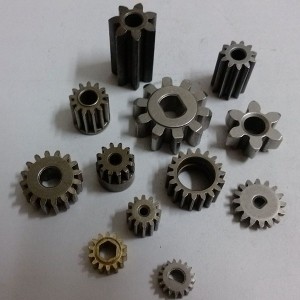
Pulley Belts belt chain conveyor toothed belts
– David L., Import & Logistics Manager
Consumer Goods Brand Owner, Ontario, Canada
Your Next Step: From Inquiry to Operational Upgrade
Optimizing your chemical processing line with the right steel belt is a tangible improvement to your bottom line. It reduces unplanned maintenance, improves product quality, and enhances safety.
We invite you to start a technical dialogue. To receive a quotation or engineering consultation:
- Share your existing belt specifications or machinery model.
- Describe the primary chemical environment (type of substances, concentration, temperature range).
- Provide key dimensions (width, length, thickness) and any special features required (edges, holes, surface finish).
Request a Detailed Technical Quote or Design Consultation
Contact our specialized team directly for a response within 24 hours.
Email: info@ydcastings.com | WhatsApp: +86 19333738338 (Ben) / +86 19333736198 (Linda)
Visit our Contact Page for more details.
Frequently Asked Questions (FAQs)
Q1: What is the main difference between 304 and 316L stainless steel for chemical belts?
A: 316L contains molybdenum, which significantly increases its resistance to pitting and crevice corrosion in chloride environments (e.g., from salts, bleach, seawater aerosols). For most harsh chemical processing, 316L is the recommended choice. 304 is suitable for milder organic chemicals or general-purpose use.
Q2: Can you manufacture belts to replace a specific brand/model (e.g., Sandvik, Berndorf)?
A: Yes, we regularly provide OEM replacement belts. Please provide the original part number, technical drawing, or a sample belt. We will reverse-engineer and match or improve upon the original specifications, ensuring compatibility with your system.
Q3: What packaging is used for overseas shipping to prevent damage?
A: Belts are typically coiled onto a sturdy wooden reel, wrapped in waterproof plastic, and secured within a wooden crate. This method prevents bending, edge damage, and exposure to moisture during transit. We provide clear handling labels and documentation.
Q4: Do you provide installation guidance or on-site support?
A: We provide detailed installation manuals and are available for remote video support during the initial installation. For complex system integrations, on-site engineer support can be arranged separately, subject to travel regulations and project scope.
Q5: How do you ensure consistent quality across production batches?
A: Our process is anchored by a certified ISO 9001 quality system. We use traceable raw materials with Mill Test Certificates, employ standardized welding and finishing procedures, and conduct final inspections on flatness, dimensional accuracy, and surface quality before release.
Author:  Alex Chen, Senior Technical Solutions Manager at Hebei Yuanda. With over 12 years in industrial metal component engineering and supply chain management, Alex specializes in matching material properties to demanding operational environments for global clients.
Disclaimer: The technical data, application examples, and performance estimates provided in this article are for informational purposes. They are based on typical industry practices and should not be considered a substitute for a professional assessment of your specific application. Final product specifications, performance, pricing, and lead times are subject to change and will be confirmed upon order agreement. Always consult with a qualified engineer for critical applications.
Company: Hebei Yuanda Trade Co., Ltd. | Tel: +86-311-808-126-83 | Email: info@ydcastings.com | Add: No.563 Xinhua Road, Shijiazhuang City, Hebei Province, P.R. China.