Modular Skid Systems: A Strategic Procurement Guide for Streamlined Operations
Are you searching for reliable, modular skid solutions to reduce on-site installation time, control project budgets, and ensure consistent quality? This guide details how pre-assembled, factory-tested skid-mounted systems address critical industry challenges, supported by technical specifications, compliance standards, and procurement insights tailored for import managers, brand owners, and sourcing professionals.
Identifying Core Challenges in Traditional Equipment Deployment
Procuring and deploying industrial process equipment often involves a complex, high-risk chain: multiple vendors, protracted on-site assembly, unpredictable labor costs, and potential integration failures. For managers overseeing international supply chains, these pain points translate directly into project delays, budget overruns, and operational downtime.
- Extended Field Installation Timelines: On-site construction can take weeks or months, subject to weather, labor availability, and site coordination issues.
- Inconsistent Quality & Safety Compliance: Field welding and assembly may not meet the same rigorous standards as controlled factory environments, risking leaks, failures, or non-compliance with international codes.
- Complex Logistics & High Total Cost: Coordinating shipment of hundreds of individual components increases freight costs, customs complexity, and the risk of lost or damaged parts.
- Scalability & Reconfiguration Difficulties: Fixed, site-built systems are difficult and costly to modify or relocate in response to changing production needs.
The Modular Skid Solution: Engineered for Predictability and Performance
A modular skid, or skid-mounted package, is a fully integrated system where pumps, valves, piping, instrumentation, and controls are pre-assembled onto a single structural frame. This unit is then factory-tested as a complete system before shipment. This methodology transforms the procurement model from a construction project to a product delivery.
Primary Applications Across Industries
Modular skids are deployed in sectors where reliability, cleanliness, and process efficiency are non-negotiable:
- Water & Wastewater Treatment: Chemical dosing skids, membrane filtration units, disinfection systems.
- Oil & Gas: Fuel gas skids, chemical injection packages, wellhead control units.
- Food & Beverage / Pharmaceuticals: CIP (Clean-in-Place) systems, process blending skids, utility distribution modules compliant with FDA, 3-A, or GMP standards.
- Chemical Processing: Batch reaction skids, solvent distribution, and heat exchange units.
Advantages of Partnering with an Integrated Manufacturer
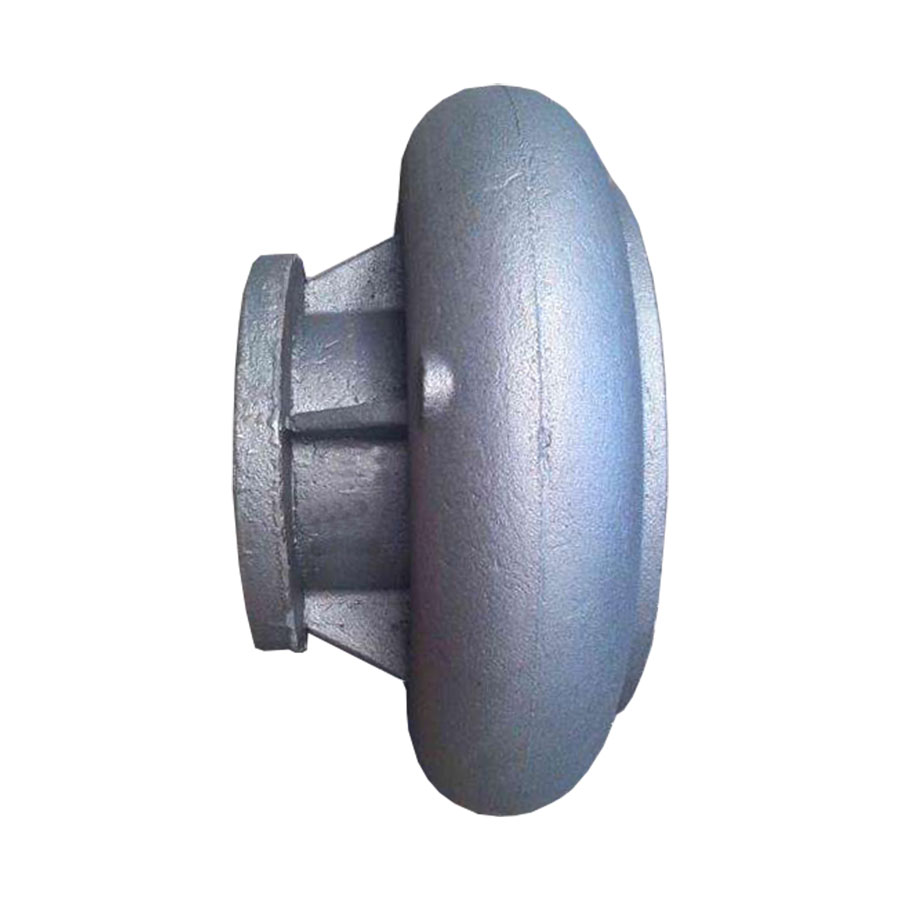
Hebei Yuanda Trade Co., Ltd. (YD), leverages over 19 years of metal casting and fabrication expertise since 2006, combined with a 5000 m² production facility, to offer a distinct approach to skid-mounted equipment manufacturing.
1. Vertical Integration & Quality Assurance
Controlling the core fabrication process—from pattern making and casting (iron, aluminum, stainless steel) to machining and welding—ensures material traceability and dimensional accuracy for critical pressure components. Our ISO 9001:2015 certified quality management system governs each stage.
2. Flexible OEM/ODM Design Support
We operate on an OEM/ODM basis. You can supply complete P&IDs and specifications for precise replication, or we can collaborate with your engineering team to adapt a standard design to your specific duty points, site conditions, and compliance requirements (e.g., CE, ASME, FDA).
3. High-Speed Delivery Leveraging Supply Chain Efficiency
Our location within a concentrated industrial region in Northern China provides streamlined access to a vetted network of subsystem suppliers (pumps, valves, PLCs). This integration, with proactive project management, often allows for competitive lead times. Standard skid lead times typically range from 8-12 weeks ex-works, depending on complexity and component sourcing.
| Parameter | Standard Range | Notes |
|---|---|---|
| Minimum Order Quantity (MOQ) | 1 Unit | Prototype and small-batch orders are acceptable for custom designs. |
| Standard Lead Time | 8-12 Weeks | From final drawing approval to ex-works readiness. Subject to design complexity. |
| Key Material Standards | ASTM, DIN, JIS, GB | Material certificates (MTC) provided for pressure-bearing parts. |
| Common Certifications | ISO 9001, CE PED, Pressure Vessel Design | Specific certifications are project-dependent and quoted accordingly. |
| Standard Testing | Hydrostatic, Pneumatic, Functional Run-Test | Comprehensive FAT (Factory Acceptance Test) documentation provided. |
Note: All parameters and specifications are for reference. Final terms, including pricing, lead time, and technical details, will be confirmed in the formal project quotation and order agreement.
Building Trust Through Verification and Feedback
Independent verification and client feedback are critical in B2B procurement. Our process includes documented Factory Acceptance Tests (FAT), and we welcome pre-shipment inspections from third-party agencies.
What Clients Are Saying
"We sourced a custom chemical dosing skid for a project in Texas. YD's engineers were responsive to our ASME B31.3 requirements. The FAT was thorough, and the skid arrived ready to connect. It saved us at least three weeks of field labor."
– Michael R., Project Engineer at a Water Treatment Solutions Provider, USA.
"As a sourcing agent for European clients, consistency is key. We've ordered four identical CIP skids from Hebei Yuanda over 18 months. The quality has been uniform, and the documentation (CE, pressure test reports) is always in order, making customs clearance smooth."
– Sofia L., Procurement Specialist at a Trading Firm, Germany.
"Our startup needed a compact, skid-mounted blending system. Their ODM team worked with our rough concept to deliver a functional design at a viable cost point. Good partner for turning an idea into a shippable product."
– David K., Co-founder of a Craft Beverage Brand, Canada.
Clear Path to Procurement: Terms and Next Steps
We aim to make international procurement transparent and manageable.
- Quotation & Contract: Based on your process flow diagrams (PFDs), piping & instrumentation diagrams (P&IDs), or performance specifications.
- Payment Terms: Typically 30-50% deposit with order, balance before shipment. Secure payment methods (T/T, L/C) are accepted.
- Shipping & Logistics: We handle inland transportation and port formalities. Standard terms are FOB Tianjin/Xingang or CIF to your nearest major port. Skids are crated in export-grade, IPPC-marked timber for ocean freight.
- After-Sales Support: Includes comprehensive operation & maintenance manuals, parts lists, and as-built drawings. Remote support is available for commissioning.
Ready to Optimize Your Equipment Deployment?
Submit your skid system requirements or request a preliminary design consultation. Provide your specifications to receive a detailed project analysis, including compliance mapping and a timeline estimate.
Contact Directly: Tel: +86-311-808-126-83 | WhatsApp: +8619333738338 (Ben) | Email: info@ydcastings.com
Frequently Asked Questions (FAQ)
Q1: What is the main advantage of a modular skid over traditional field erection?
A: The primary advantage is risk reduction. By completing up to 80-90% of assembly and testing in a controlled factory environment, you minimize costly and unpredictable on-site work, ensure higher quality standards, and significantly compress the overall project schedule from order to operation.
Q2: Can you work with our provided components (e.g., a specific brand of pump or valve)?
A: Yes. We regularly integrate client-supplied or specified components (CFC). Our role is to design the structural frame, piping manifold, and control system to host these components effectively, ensuring the entire package functions as intended.
Q3: How do you handle compliance with regulations like the Pressure Equipment Directive (PED) for the EU market?
A: Compliance is addressed at the design stage. We will identify the necessary category for your equipment under directives like PED or ASME Boiler and Pressure Vessel Code. We can then manufacture according to these design and material standards, and arrange for third-party notified body inspection and certification if required. This is a factored element in the project scope and cost.
Q4: What information do you need to provide an initial quote?
A: To provide a meaningful preliminary quote, we typically require: 1) Process Flow Diagram (PFD) or detailed description of the process, 2) Key performance data (flow rates, pressures, temperatures, fluid properties), 3) Material preferences (e.g., SS304, SS316), 4) Any preferred component brands or standards, and 5) Target certifications and destination country.
Q5: What does the Factory Acceptance Test (FAT) involve?
A: A standard FAT includes visual inspection of workmanship, hydrostatic/pneumatic pressure testing of all piping and vessels, verification of instrument calibration, and a full functional run-test simulating operational conditions. Clients can attend in person or review detailed video documentation and signed test reports.
Disclaimer: The information contained on this page is for general informational purposes only. Specifications, lead times, pricing, and compliance capabilities are subject to change based on final project requirements and are confirmed in formal contractual documents. All product performance claims are based on typical applications and factory test conditions.
© 2026 Hebei Yuanda Trade Co., Ltd. All rights reserved. No.563 Xinhua Road, Shijiazhuang City, Hebei Province, P.R. China.

About the Author: James Peterson is a technical procurement consultant with over 15 years of experience specializing in the specification and global sourcing of engineered process equipment. He has worked directly with manufacturing partners across Asia and Europe to develop reliable supply chains for Fortune 500 industrial firms and mid-market operators. His writing focuses on demystifying technical procurement and highlighting value-driven manufacturing partnerships.