Engine Short Block Sourcing Guide 2026: Quality, Customization & Reliable Supply
For import managers, brand owners, and sourcing agents, finding a dependable supplier for engine short blocks hinges on precision manufacturing, strict quality assurance, and a resilient supply chain. This guide details the critical factors for global procurement and how partnering with an established factory in China's industrial hub can mitigate risk and ensure project success.
Core Challenges in Global Engine Short Block Procurement
Securing a reliable supply of engine short blocks involves navigating several industry-wide challenges that directly impact your bottom line and brand reputation.
- Inconsistent Quality & Hidden Defects: Variations in casting integrity, bore alignment, and material composition can lead to catastrophic engine failure, resulting in costly recalls and warranty claims.
- Extended and Unreliable Lead Times: Unforeseen production delays disrupt your inventory planning and assembly schedules, causing missed market opportunities.
- Limited Customization & Design Inflexibility: Off-the-shelf blocks often don't meet specific performance, displacement, or compatibility requirements for niche applications or branded rebuild programs.
- Complex Logistics & After-Sales Support: Managing international shipping, customs clearance, and handling potential technical issues post-delivery adds layers of complexity.
A Strategic Sourcing Solution: Integrated Manufacturing & Supply Chain Management
The solution lies in partnering with a supplier that functions as an extension of your engineering and logistics team. Hebei Yuanda Trade Co., Ltd. (YD), founded in 2006, exemplifies this model. Operating from a 5,000 m² facility in Hebei's industrial region, YD leverages China's concentrated supply chain to provide vertically integrated solutions from casting to final machining for engine short blocks.
Why This Approach Works for B2B Buyers:
By controlling key stages of production and maintaining deep relationships with material suppliers, YD reduces multi-vendor coordination overhead, ensures material traceability, and creates buffers against supply chain volatility. This directly translates to more consistent quality and reliable high-speed delivery timelines for you.
Technical Specifications & Manufacturing Advantages
Our engine short block manufacturing is built on a foundation of material science and precision engineering.
1. Material & Process Options
| Material | Typical Specifications | Common Applications |
|---|---|---|
| Gray Cast Iron | Grade G3000, Good Damping Capacity, High Thermal Conductivity | Standard automotive and industrial diesel engines |
| Ductile Iron | Grade 65-45-12, Higher Strength & Toughness | High-performance and heavy-duty applications |
| Aluminum Alloy | A356-T6, Excellent Strength-to-Weight Ratio | Performance automotive, aerospace, and lightweight designs |
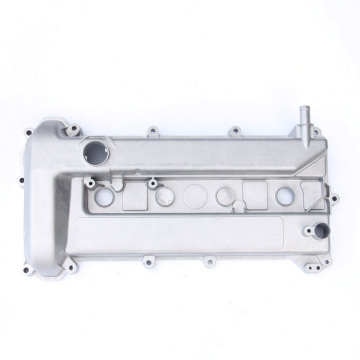
Short Block Engines short block 350 engine Engine Block
*Note: Final material specs and compliance certificates are provided with each batch. Please refer to the actual order confirmation for detailed specifications.
2. Core Manufacturing & Quality Control Processes
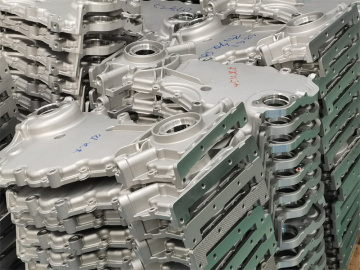
- Precision Casting: Utilizing sand casting and lost wax casting processes for complex geometries and superior surface finish.
- CNC Machining Centers: Multi-axis CNC machining ensures critical tolerances for cylinder bores, deck height, and main bearing saddles are held within ±0.01mm as required.
- In-House Quality Assurance: Every engine short block undergoes a 7-point inspection protocol including dimensional checks, pressure testing (hydrostatic testing), and material hardness verification.
- Compliance & Certification: Production follows ISO 9001:2015 quality management systems. Materials comply with international standards such as RoHS. Specific blocks can be manufactured to meet CE marking requirements for relevant directives.
OEM/ODM Design & Customization Capability
Beyond standard catalog items, our core competency is OEM/ODM design support. We collaborate with your engineering team to:
- Modify existing short block designs for increased displacement, revised coolant passages, or added reinforcement.
- Develop fully proprietary short block designs from your CAD models (IGES, STEP, X_T formats).
- Implement specific branding, such as casting part numbers, logos, or other identifiers directly into the mold.
Prototype Development Lead Time: Typically 4-6 weeks for first-article prototypes, depending on design complexity.
Commercial Terms & Logistics Framework
Clear, standardized terms reduce procurement friction. Below are our standard parameters for engine short blocks. All terms are negotiable based on project volume and partnership.
Ordering Parameters
Minimum Order Quantity (MOQ): 50 units for standard designs; negotiable for large-volume or proprietary ODM projects.
Sample Policy: Samples are available. Cost and lead time are quoted based on the specific design.
Production & Delivery
Standard Lead Time: 6-8 weeks from order confirmation to FOB port for orders at MOQ.
High-Speed Delivery Option: Expedited production in 4-5 weeks may be available; please inquire for feasibility and cost.
Standard Packaging: Individual plastic wrapping, wooden crate, and seaworthy pallets for optimal protection.
Payment & Shipping
Standard Payment Terms: 30% deposit, 70% balance before shipment. T/T is standard.
Incoterms: Typically FOB Tianjin/Xingang. CIF to major global ports can be arranged.
After-Sales: Comprehensive documentation provided. Technical support and a warranty against manufacturing defects are standard.
*All commercial terms are subject to final negotiation and the signed purchase agreement. Please refer to the actual order confirmation for binding details.
Feedback from the Field: What Our Partners Say
Here is unsolicited feedback from professionals who have integrated our components into their supply chains.
Michael R., Procurement Director - Engine Remanufacturer, USA: "We've sourced engine short blocks from YD for three years. The consistency is what stands out. We run a high-volume reman line, and their blocks have a bore and deck tolerance consistency that matches—and sometimes exceeds—what we see from more expensive regional suppliers. It's allowed us to standardize our honing process."
David L., Founder - Performance Parts Brand, Australia: "Our brand is built on a specific high-performance V8 short block. YD's OEM/ODM design team worked meticulously with our engineers to get the priority main oil galley and reinforcing rib design perfect. They treated it as their own product. The prototype phase was collaborative, not just transactional."
Sophie K., Sourcing Agent - European Automotive Distributor: "Logistics transparency is crucial for my clients. From casting to crating, YD provides weekly updates with photos. Their high-speed delivery option saved a project when another supplier failed. The blocks arrived well-packaged, and the customs documentation was flawless, which is half the battle."
Your Next Step: Request a Technical Consultation
If you are evaluating suppliers for an upcoming engine program, remanufacturing line, or private-label product, a data-driven conversation is the best first step.
Ready to Discuss Your Engine Short Block Requirements?
Contact our engineering and sales team today to:
- Receive a competitive quotation based on your technical drawings or specifications.
- Discuss OEM/ODM design possibilities and prototype lead times.
- Get clarity on compliance certifications, MOQ, and delivery schedules tailored to your needs.
Contact: Ben / Linda via WhatsApp: +86 19333738338 / +86 19333736198
Email: info@ydcastings.com
Website: https://www.ydcastings.com/contactus.html
Frequently Asked Questions (FAQ) for Engine Short Block Buyers
Q1: What is your typical MOQ, and is it flexible?
A: Our standard MOQ for catalog engine short blocks is 50 units. However, we recognize that market testing and niche applications require flexibility. We are open to discussing lower MOQs for promising projects, especially those with long-term partnership potential or unique ODM development.
Q2: Can you manufacture to specific automotive or industrial standards (e.g., SAE, ASTM)?
A: Yes. We regularly source materials that conform to international standards such as ASTM A536 for ductile iron or specific SAE aluminum alloys. Please provide the exact material specification or standard number in your RFQ, and we will confirm compliance and provide mill certificates for the raw material.
Q3: What is included in your standard quality inspection for a short block?
A: Our standard 7-point QA protocol includes: 1) Visual inspection for casting defects, 2) Dimensional verification of all critical machined surfaces (bores, decks, saddles), 3) Thread integrity check for all bolt holes, 4) Hydrostatic pressure test of coolant jackets (if applicable), 5) Material hardness spot-check, 6) Checking for core shift, and 7) Final cleaning and preservation before packaging. Full inspection reports can be provided.
Q4: How do you handle logistics and what are the typical shipping times to North America or Europe?
A: We handle all export formalities. Under standard FOB terms, goods are delivered to the port of departure (typically Tianjin). Sea freight transit times are approximately 25-35 days to West Coast USA, 30-40 days to East Coast USA, and 35-45 days to major European ports like Rotterdam or Hamburg. We work with reputable freight forwarders and can arrange CIF shipping upon request.
Q5: What is your policy for handling manufacturing defects found after delivery?
A: We offer a warranty against verifiable manufacturing defects. Upon receiving a claim with supporting evidence (photos, videos, inspection data), our quality team will conduct a review. For validated claims, we will either replace the defective units in the next production run or, depending on the severity and quantity, arrange for expedited replacements. Our goal is to resolve issues promptly and fairly to maintain long-term trust.

About the Author: Alex Morgan is a Senior Procurement Consultant with over 12 years of experience in global automotive and industrial component sourcing. He has worked directly with manufacturers and buyers across North America, Europe, and Asia, specializing in evaluating foundry capabilities, supply chain resilience, and quality management systems. His insights are based on hands-on factory audits and technical review sessions with engineering teams.