Centrifugal Pump Impeller Types: A Complete B2B Buyer's Guide for 2026

If you are sourcing centrifugal pump impeller types for your next project, you already know that the wrong impeller leads to lost efficiency, premature wear, and costly downtime. As an import manager or brand owner, you need clarity: Which impeller geometry suits your fluid? What material handles your operating conditions? And which supplier delivers consistent quality at scale? This guide covers the five major impeller types—closed, semi-open, open, vortex, and channel—with technical comparisons, application data, and real sourcing parameters (MOQ, lead time, OEM support) so you can make a confident procurement decision.
Why Impeller Type Determines Pump Performance
In centrifugal pumps, the impeller is the rotating component that converts mechanical energy into kinetic energy and then into pressure. Selecting the correct centrifugal pump impeller type directly impacts:
- Hydraulic efficiency — energy cost over the pump's lifecycle
- Wear resistance — especially when handling abrasive or corrosive fluids
- Clogging risk — critical for wastewater, pulp, or slurries
- NPSH requirements — affects suction performance and cavitation margin
- Maintenance intervals — directly influences total cost of ownership
For B2B buyers, matching the impeller design to your application is not optional—it is a specification that should be locked before you issue a PO.
The 5 Major Centrifugal Pump Impeller Types You Need to Know
1. Closed Impeller (Shrouded Impeller)
Best for: Clean fluids, high-pressure applications, and maximum efficiency.
A closed impeller has a front shroud (cover plate) and a rear shroud, enclosing the vanes between them. This design eliminates recirculation losses at the vane tips, delivering the highest hydraulic efficiency—typically 80–92% depending on specific speed and surface finish.
Typical applications: Boiler feed pumps, chemical process pumps, irrigation booster sets, oil refining.
Material options at YD: Cast iron (HT250, HT300), ductile iron (QT450-10, QT500-7), stainless steel (CF8, CF8M, 316L), aluminum (A356, 6061).
2. Semi-Open Impeller
Best for: Fluids with small solids or fibrous content, moderate efficiency.
A semi-open impeller has a rear shroud but no front shroud. The vanes are open on the suction side. This design sacrifices some efficiency (typically 70–82%) but offers better tolerance for small particles and easier cleaning. The clearance between the vanes and the pump casing volute is critical—maintaining a 0.25–0.50 mm gap is standard.
Typical applications: Food processing (fruit pulp, vegetable slurries), light slurry handling, drainage pumps.
3. Open Impeller
Best for: Heavily contaminated fluids, large solids, and viscous media.
An open impeller has no shrouds—only vanes attached to a central hub. Efficiency ranges from 60–75%, but the design offers maximum clearance for solids passage. Open impellers are the standard choice for municipal wastewater, sludge, and mining slurries. They are also easier to repair: worn vanes can be built up with weld overlay and re-machined.
Typical applications: Sewage pumps, dredging pumps, pulp and paper stock pumps.
4. Vortex Impeller (Recessed Impeller)
Best for: Large, stringy, or fragile solids with minimal contact.
A vortex impeller is recessed into the pump casing, creating a vortex that moves fluid without the solids passing directly through the impeller vanes. Efficiency is lower (45–60%), but this design handles large solids (up to 100 mm+), long fibers, and shear-sensitive materials without clogging or degradation.
Typical applications: Wastewater lift stations, fish pumping, food waste handling, chemical sumps.
5. Channel Impeller (Single- or Multi-Channel)
Best for: Wastewater and effluent with moderate solids, balancing efficiency and clog resistance.
Channel impellers feature one or more wide passages (channels) that allow solids to flow through. They achieve higher efficiency than vortex designs (65–78%) while still passing solids up to 50–80 mm. Single-channel impellers are simpler and more cost-effective; multi-channel versions offer better hydraulic balance and lower vibration.
Typical applications: Municipal sewage, industrial effluent, stormwater pumping.
Quick-Reference Comparison Table
| Impeller Type | Efficiency Range | Solids Handling | Typical Max Pressure | Relative Cost |
|---|---|---|---|---|
| Closed | 80–92% | None (clean fluids) | Up to 250 bar | $$$ |
| Semi-Open | 70–82% | Small solids ≤10 mm | Up to 80 bar | $$ |
| Open | 60–75% | Large solids ≤80 mm | Up to 40 bar | $$ |
| Vortex | 45–60% | Large solids ≤100 mm+ | Up to 20 bar | $$$ |
| Channel | 65–78% | Solids ≤50–80 mm | Up to 30 bar | $$–$$$ |
*Efficiency and pressure values are typical ranges. Actual performance depends on pump design, speed, fluid properties, and operating conditions. Please refer to the actual order confirmation for guaranteed parameters.
How to Select the Right Impeller for Your Application
When evaluating centrifugal pump impeller types for a procurement project, consider these factors in order of priority:
- Fluid composition: Clean water → closed impeller. Slurry with abrasives → open or semi-open. Stringy solids → vortex or channel.
- Operating pressure and temperature: High-pressure systems require closed impellers with precise clearances and stronger materials (ductile iron or stainless steel).
- Efficiency target: If energy cost is a primary concern, closed impellers are the clear winner. For wastewater applications where reliability matters more than efficiency, vortex or channel designs are preferred.
- NPSH margin: Semi-open and open impellers generally have lower NPSH requirements, making them suitable for suction lift or low inlet pressure scenarios.
- Maintenance philosophy: Open and semi-open impellers are easier to inspect and repair. Closed impellers require full disassembly for vane access.
If you are unsure, YD's engineering team can review your pump curve, fluid data, and operating conditions to recommend the optimal impeller geometry and material combination—at no cost during the quotation phase.
Why Global Buyers Choose Hebei Yuanda Trade Co., Ltd. for Impeller Castings
Founded in 2006, Hebei Yuanda Trade Co., Ltd. has supplied precision impeller castings to pump manufacturers, distributors, and OEMs across North America, Europe, and Southeast Asia. Our 5,000 m² facility in Shijiazhuang, China, houses a complete foundry and machining center capable of producing impellers from 50 mm to 800 mm in diameter.
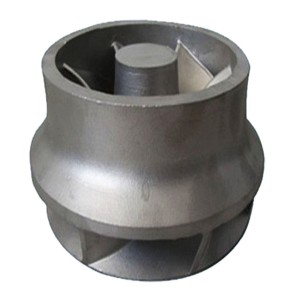
impeller pump types centrifugal pump impeller impeller pump centrifugal
Manufacturing Capabilities
| Casting Processes | Sand casting (green sand, resin sand), investment casting (lost wax), die casting |
| Materials | Cast iron (HT200–HT350), ductile iron (QT400–QT700), stainless steel (304, 316, 316L, duplex), aluminum alloys (A356, 6061, ADC12), brass, bronze |
| Impeller Weight Range | 0.5 kg to 500 kg |
| Surface Finish | Ra 3.2–12.5 µm (as-cast); Ra 0.8–3.2 µm (machined) |
| Balancing Grade | ISO 1940 G6.3 (standard), G2.5 (on request) |
Quality Assurance & Certifications
- ISO 9001:2015 certified quality management system
- Chemical composition analysis (spectrometer) and mechanical testing (tensile, hardness) for every heat
- Dimensional inspection via CMM (coordinate measuring machine) and go/no-go gauges
- Hydrostatic pressure testing for closed impellers (up to 1.5× working pressure)
- Static and dynamic balancing available per ISO 1940
- Material certifications (mill test reports) provided with each shipment
*Certifications and test methods are subject to customer agreement. Please refer to the actual order confirmation for scope of supply.
Commercial Terms for B2B Buyers
| MOQ (Minimum Order Quantity) | 50 pieces per design (for sand casting); 500–1,000 pieces for die casting. Sample orders (5–10 pcs) accepted for evaluation. |
| Lead Time | Tooling: 15–25 days. First sample: 10–15 days after tooling approval. Production: 30–45 days for standard orders (depending on quantity and complexity). |
| OEM/ODM Support | Full design-for-manufacturing (DFM) feedback, 2D/3D drawing creation, pattern/tooling design, and prototype validation. Customer branding and packaging available. |
| Packaging & Logistics | Export-grade wooden crates (ISPM 15 compliant), steel pallets, or custom packaging per customer specification. FOB/CIF/EXW available. Sea freight from Tianjin or Qingdao ports. |
| Payment Terms | T/T (30% deposit, 70% before shipment), L/C at sight, or negotiable for long-term contracts. |
What Our Global Buyers Say
"We were struggling with inconsistent impeller quality from two different Indian suppliers. YD provided samples of a closed impeller in CF8M for our chemical process pumps. The dimensional accuracy was within ±0.2 mm on the vane profile, and the surface finish was better than our US-based supplier. We placed our first production order for 1,200 pieces in 2024."
— Mark Thompson, Procurement Manager, Great Lakes Pump Supply (USA)
"As a brand owner in the wastewater sector, I needed vortex impellers that could handle rags and debris without clogging. YD's channel impeller design was actually better than our existing supplier's. The lead time was 32 days from order to port—10 days faster than our previous source. The cost savings were 18% with better performance."
— James Rodriguez, Director of Operations, AquaFlow Municipal (Canada)
"I've been sourcing impellers for agricultural irrigation pumps for 12 years. YD's semi-open impellers in ductile iron have outlasted every other supplier's product in our sand-laden water conditions. The hardness (HB 220–260) and consistent vane geometry mean we replace them 40% less often. Their engineering team also helped us optimize the vane angle for our flow rate."
— Robert Chen, Sourcing Agent, Asia-Pacific Irrigation Equipment (Australia)
"We are a medium-sized pump manufacturer in the UK. YD has been our OEM partner for closed impellers in cast iron for three years. Their quality is consistent, they respond to technical queries within 24 hours, and they have never missed a shipping deadline. That reliability is worth more than a 5% price difference."
— Sarah Mitchell, Supply Chain Director, Prestige Pump Systems (UK)
"I visited YD's factory in Shijiazhuang in 2023. The foundry is well-organized with separate molding, pouring, and finishing areas. They have a dedicated QC lab with a spectrometer and tensile tester. I was impressed by their pattern storage system—they kept our tooling in climate-controlled conditions. This is a professional operation."
— Michael van der Berg, Import Manager, Dutch Industrial Supply (Netherlands)
Frequently Asked Questions from B2B Buyers
Q: What is the typical MOQ for a custom impeller design?
A: For sand casting, our standard MOQ is 50 pieces per design. For investment casting, 100–200 pieces. Die casting requires 500–1,000 pieces due to tooling cost. However, we accept sample orders (5–10 pieces) for performance testing and qualification before you commit to volume. Contact us with your target quantity for a tailored quotation.
Q: Can you supply impellers with balancing certification?
A: Yes. We provide static and dynamic balancing per ISO 1940. Standard balancing grade is G6.3. For high-speed pumps (3,600 RPM+), we recommend G2.5, which we can achieve with our balancing machine. Balancing reports are included with each shipment upon request.
Q: Do you provide material certifications?
A: Absolutely. Every heat of material is tested with a spectrometer, and we provide a mill test report (MTR) with chemical composition and mechanical properties. Third-party inspection (SGS, Bureau Veritas) can be arranged at the buyer's cost.
Q: What is the typical lead time for a first order?
A: Tooling (if new pattern is required): 15–25 days. First sample: 10–15 days after tooling approval. Production: 30–45 days for standard quantities (50–500 pieces). For repeat orders with existing tooling, lead time is 25–35 days. We also offer expedited service for urgent orders.
Q: Can you match an existing impeller design from a drawing or sample?
A: Yes. We work from customer drawings (2D/3D), samples, or even reverse-engineer from a worn impeller. Our engineering team provides DFM feedback to optimize the design for casting without compromising performance. We can also create 3D models and core prints for complex vane geometries.
Ready to Source Your Impeller Castings?
Whether you need a standard centrifugal pump impeller type or a custom design for a specialized application, Hebei Yuanda Trade Co., Ltd. has the engineering expertise, manufacturing capacity, and supply chain efficiency to deliver.
What you get when you contact us:
- Free technical review of your impeller requirements
- Quotation within 48 hours (including tooling cost if applicable)
- Sample delivery within 25 days for most designs
- Full OEM/ODM support with confidentiality agreement
Or contact us directly:
Tel: +86-311-808-126-83
WhatsApp: +8619333738338 (Ben) | +8619333736198 (Linda)
Email: info@ydcastings.com
Add: No.563 Xinhua Road, Shijiazhuang City, Hebei Province, P.R. China
Disclaimer: All technical data, performance ranges, and commercial terms provided in this article are for general reference and informational purposes only. Actual specifications, capabilities, and terms may vary based on project-specific requirements, material availability, and order quantities. Please refer to the actual order confirmation and contract for binding specifications. Hebei Yuanda Trade Co., Ltd. reserves the right to update product specifications without prior notice.