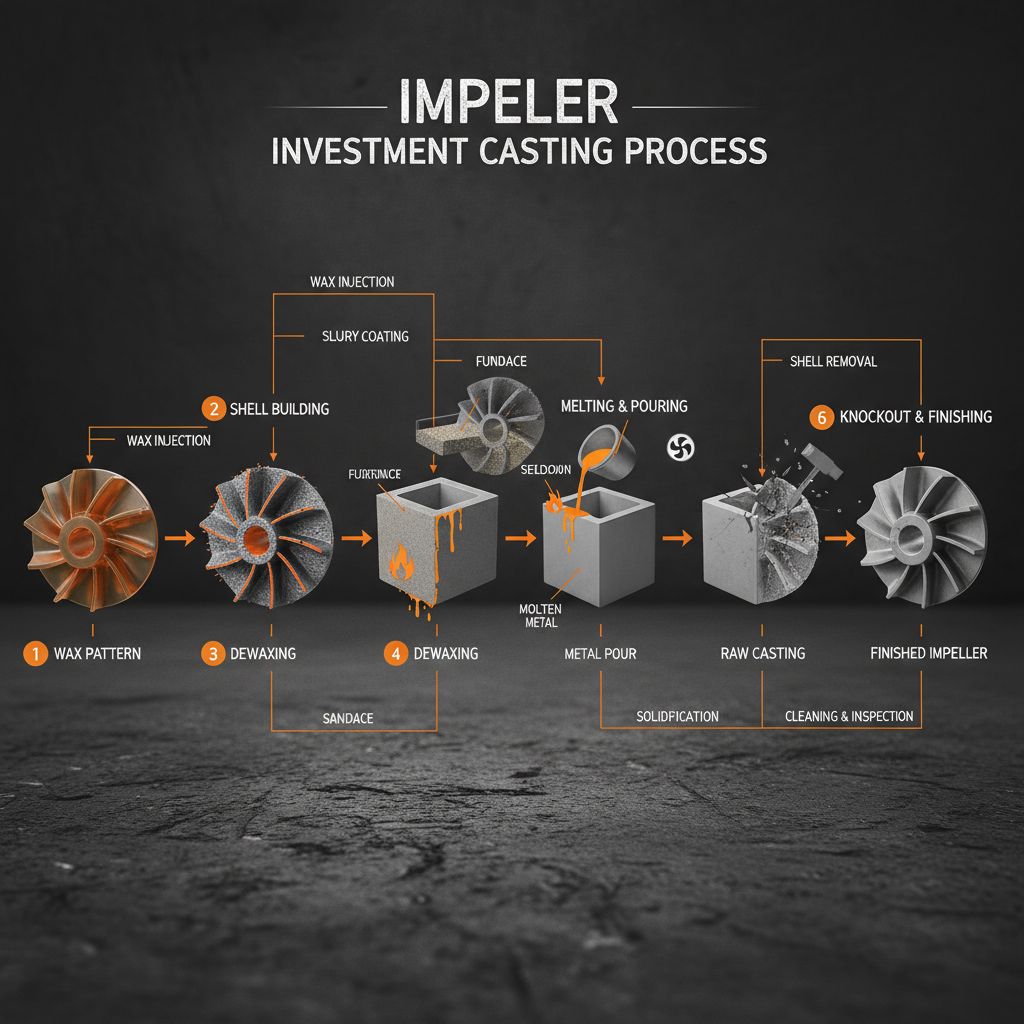
You know, lately everyone's talking about miniaturization, right? Everything has to be smaller, lighter, more efficient. It’s driving a lot of innovation in the impeller for motor world, but honestly, it’s also a pain. Smaller means tighter tolerances, more expensive materials... it’s a balancing act. I spent two weeks at a pump manufacturer in Jiangsu last month, and they were struggling to get the casting quality up on a new impeller design. Just getting the sand core right was a nightmare.
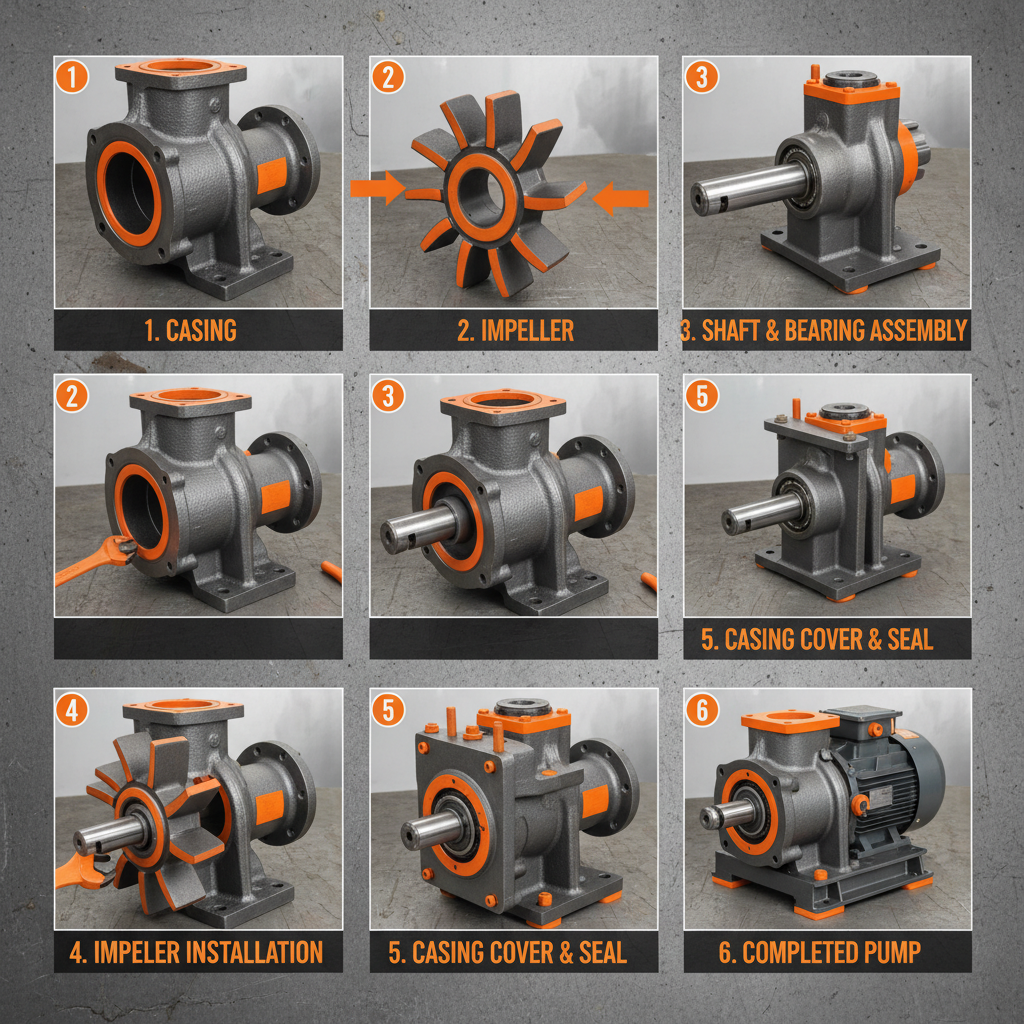
And you wouldn’t believe how many designers forget about real-world installation. They spec these beautiful, complex impellers, then the maintenance guys are cursing because they can’t even get a wrench on the mounting bolts. Have you noticed that? It’s always the same story. Form over function, every single time. I encountered this at a water treatment plant in Chengdu last time, a nightmare to service.
Anyway, I think the biggest shift is moving away from traditional cast iron, slowly but surely. Now, a lot of impellers are being made from stainless steel – 316, usually. It’s tougher, more corrosion resistant. But man, is it a bear to machine. It galls so easily, you go through cutting tools like water. We're also seeing more and more bronze alloys, especially for pumps handling aggressive fluids. Bronze has that... earthy smell, doesn't it? I always feel like I've been digging in the garden after handling it. It's surprisingly heavy, though.
The Current Landscape of impeller for motor
To be honest, the demand for high-efficiency impellers is through the roof, especially with everyone trying to cut energy costs. It’s not just about the pump itself, it’s the entire system – the motor, the piping, the control system. Everything has to work together. Strnagely enough, though, a lot of clients still focus solely on the upfront cost, ignoring the long-term savings. It’s frustrating, believe me.
I’m seeing a real push for impellers designed for variable frequency drives (VFDs). VFDs allow you to adjust the pump speed to match the demand, which saves a ton of energy. But it also puts more stress on the impeller, so the design has to be robust enough to handle the varying loads.
Design Pitfalls and Practical Considerations
One thing I've learned after years on construction sites: keep it simple. Overly complex impeller designs look great on paper, but they’re a nightmare to manufacture and even harder to maintain. I’ve seen impellers with so many tiny vanes and intricate curves that the casting process itself is a joke. The tolerances are impossible to hold, and you end up with a lot of rejects.
Another big issue is cavitation. It’s when vapor bubbles form inside the impeller due to low pressure, and then collapse, causing erosion. It sounds technical, but it basically means your impeller gets eaten away from the inside. Proper blade angles and surface finish are crucial to prevent cavitation, but a lot of designers just don’t pay enough attention to it.
And then there’s the whole issue of balancing. An unbalanced impeller will vibrate like crazy, which can damage the pump and even the motor. We always do dynamic balancing on all our impellers, but you’d be surprised how many smaller companies skip that step to save a few bucks.
Material Selection: A Hands-On Perspective
As I mentioned, stainless steel is becoming increasingly popular for impeller for motor applications, but it’s not a one-size-fits-all solution. Different grades of stainless steel have different properties, and you need to choose the right one for the specific application. For example, 304 stainless is good for general purpose use, but 316 is much more resistant to corrosion from seawater or harsh chemicals.
Polymer impellers are also gaining traction, particularly for low-flow applications. They’re lightweight, corrosion-resistant, and relatively inexpensive. But they’re not as strong as metal impellers, and they can be susceptible to wear and tear. I was at a chemical processing plant recently, and they were using polymer impellers for a pump handling dilute acid. It worked okay for a while, but eventually, the impeller started to degrade, and they had to replace it.
We’ve also been experimenting with composite materials – combining polymers with fibers like carbon fiber or glass fiber. These materials offer a good balance of strength, stiffness, and corrosion resistance. Later... Forget it, I won't mention the headache we had getting the resin injection process dialed in.
Testing and Real-World Performance of impeller for motor
Lab tests are fine and dandy, but they don’t tell you the whole story. You need to test these impellers in real conditions. We have a test rig at our factory where we can simulate the actual operating conditions of a pump – flow rate, pressure, temperature, fluid type. We run the impellers for hundreds of hours, and we monitor them for any signs of wear, cavitation, or vibration.
But even that’s not enough. I like to get the impellers out into the field and put them to work in actual applications. I’ve spent weeks at power plants, water treatment facilities, and chemical plants, observing how our impellers perform under real-world conditions. That’s where you really learn what works and what doesn’t.
Impeller Performance Metrics
User Applications and Unexpected Use Cases
Most people think of impellers in pumps, and that's fair enough. But I've seen them used in all sorts of surprising applications. Like, we had a customer who was using our impellers in a mixing system for concrete. Apparently, the impeller design helped to ensure a more homogeneous mix, which improved the strength of the concrete.
I also came across a company that was using impellers to create a vortex in a wastewater treatment tank. The vortex helped to separate solids from liquids, which improved the efficiency of the treatment process. It's always amazing to see how creative people can get with these things.
Advantages, Disadvantages, and Customization Options
The biggest advantage of a well-designed impeller for motor is efficiency. A more efficient impeller uses less energy to pump the same amount of fluid, which saves you money on electricity bills. And a more efficient impeller also runs cooler, which extends the life of the pump.
But there are also disadvantages. High-efficiency impellers can be more expensive to manufacture, and they may be more susceptible to damage if the fluid contains abrasive particles. And sometimes, you just can't beat the simplicity of a basic, robust design.
Customization is key. Last month, that small boss in Shenzhen who makes smart home devices insisted on changing the interface to , and the result was a three-week delay because we had to redesign the entire mold. It looked fancy, but it wasn’t worth the hassle. Anyway, I think we can handle pretty much any customization request, within reason, of course.
A Customer Story & Key Performance Indicators
We track a few key performance indicators (KPIs) internally: surface finish, dimensional accuracy, impeller efficiency, and cavitation resistance. But those are just numbers. What really matters is how the impeller performs in the real world.
Here’s a quick table summarizing some typical performance ranges:
Ultimately, whether this thing works or not, the worker will know the moment he tightens the screw.
Key Performance Indicators for impeller for motor
| KPI Category |
Metric |
Typical Range |
Importance Level (1-5) |
| Efficiency |
Hydraulic Efficiency |
75% - 90% |
5 |
| Durability |
Cavitation Resistance |
Rating 1-10 (8+) |
4 |
| Manufacturing |
Dimensional Accuracy |
+/- 0.1mm |
4 |
| Material |
Surface Roughness |
Ra
|
3 |
| Performance |
Flow Rate |
Variable (application-dependent) |
5 |
| Reliability |
Mean Time Between Failures |
> 5000 hours |
4 |
FAQS
Stainless steel (304, 316) are workhorses due to corrosion resistance. Bronze alloys offer good wear properties, especially for abrasive fluids. Polymers are gaining ground for specific applications where weight and cost are critical. The ‘feel’ of the material often tells you a lot - stainless should be cold and solid, bronze a bit heavier, polymers...well, they feel like plastic, I guess.
Proper blade design is key – smooth curves and optimized angles. Maintaining adequate inlet pressure is vital. Also, ensuring the fluid is clean and free of air bubbles helps. It's a tricky problem, honestly. We often recommend a surface finish polishing to reduce nucleation sites for bubble formation.
Lifespan varies wildly depending on the application. Clean water pumps can see 10+ years. Pumps handling abrasive slurries might only last a year or two. Factors like fluid velocity, temperature, and maintenance all play a role. It’s a good idea to have a regular inspection schedule.
Absolutely. We can adjust the material, blade design, and surface finish to optimize performance for different fluids. For example, a pump handling highly corrosive fluids might require a more exotic alloy like Hastelloy or a specialized polymer coating.
Dynamic balancing minimizes vibration, which reduces wear and tear on the pump and motor. It also improves efficiency and extends the lifespan of the entire system. You'll notice a smoother, quieter operation. Believe me, you will notice.
It depends on the required flow rate and head (pressure). There are formulas you can use, but it's best to consult with a pump expert. They’ll consider the system’s characteristics and recommend the optimal impeller size for your specific application.
Conclusion
So, there you have it. From the latest material trends to the practicalities of on-site installation, designing and manufacturing impeller for motor is a complex process. It’s a constant balancing act between cost, performance, and reliability. Keeping it simple and focusing on the real-world application are, in my experience, the most important factors.
The industry is always evolving, and we’re constantly learning new things. But one thing remains constant: a well-designed and manufactured impeller is essential for any pumping system. Ultimately, whether this thing works or not, the worker will know the moment he tightens the screw.