English

Mobile:+86-311-8081-2683
Email:info@ydcastings.com
English
Exploring Advanced Techniques in Metal Casting for Improved Quality and Efficiency
Metal Casting Techniques An Overview
Metal casting is a pivotal manufacturing process that involves pouring molten metal into a pre-shaped mold to produce complex metal components. This technique dates back thousands of years and has evolved significantly, becoming an indispensable part of modern manufacturing across multiple industries, including automotive, aerospace, and industrial machinery. This article explores various metal casting techniques, their processes, advantages, and applications.
1. Sand Casting
Sand casting is one of the most commonly used metal casting techniques. It involves creating a mold using fine sand mixed with a binding agent, usually clay. The mold is formed into two halves, which are assembled to create a cavity that reflects the desired part's shape. Once the mold is prepared, molten metal is poured into the cavity, and after solidification, the mold is broken apart to retrieve the cast.
Advantages - Flexibility in producing both large and small parts. - Cost-effective for low to medium production volumes. - Capability to cast complex shapes.
Applications Sand casting is widely used to produce engine blocks, pump housings, and numerous agricultural machinery components.
2. Investment Casting
Investment casting, also known as lost-wax casting, is a more precise technique that produces high-quality parts with excellent surface finish and tight tolerances. In this method, a wax pattern is created and coated with a ceramic material. The assembly is heated to remove the wax, leaving a hollow ceramic mold. Molten metal is then poured into this mold.
Advantages - Exceptional accuracy and intricate detail. - Reduced need for further machining. - Suitable for high-temperature alloys.
Applications Investment casting is commonly employed in aerospace components, medical devices, and jewelry.
3. Die Casting
Die casting involves forcing molten metal into a mold cavity under high pressure, resulting in durable and precise parts. This technique is predominantly used for non-ferrous metals like aluminum, zinc, and magnesium. There are two primary types of die casting hot-chamber and cold-chamber, each suitable for different metals and applications.
metal casting techniques
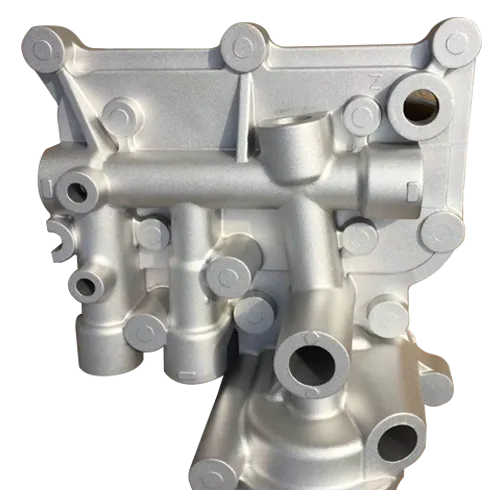
Advantages - High production rates with good dimensional accuracy. - Excellent surface finish, reducing the need for additional processing. - Ideal for mass production of parts.
Applications Die casting is used extensively in the automotive industry for producing engine parts, transmission cases, and other components.
4. Shell Casting
Shell casting is similar to investment casting, but instead of a wax pattern, a thin shell of sand and resin is created around a pattern. This technique is suitable for producing large components with a smooth surface finish. After the shell is cured, it is baked to harden, and then molten metal is poured into the shell.
Advantages - Produces thin-walled casts with high precision. - Good surface finish is achievable. - Efficient for producing larger parts.
Applications Shell casting is commonly used in the production of industrial equipment and large machinery components.
5. Continuous Casting
Continuous casting is a modern method where molten metal is poured into a mold and allowed to solidify into a continuous strand, which is then cut to size. This technique is primarily used for producing metals in large quantities and is highly efficient.
Advantages - Reduces material wastage. - Streamlined production process. - Lower cost per unit for large quantities.
Applications Continuous casting is predominantly used in steelmaking and other metal industries for producing billets, slabs, and other semi-finished materials.
Conclusion
Metal casting techniques play a crucial role in modern manufacturing, enabling the production of complex and high-quality metal components. Each technique has its unique advantages and is suited to specific applications, making metal casting an essential process in various industries. As technology advances, the efficiency and precision of these techniques continue to improve, ensuring that metal casting remains a vital part of manufacturing for years to come. Whether it’s sand casting for flexibility or investment casting for precision, each technique contributes uniquely to the evolution of metalworking.
-
Choosing an Engine Storage Crate Cover for Material and EnvironmentNewsNov.23,2026
-
Cylinder Head Chamber Buyers: Check the Casting Specification FirstNewsNov.17,2026
-
How Impeller Casting Manufacturers Match Material, Process and EquipmentNewsNov.15,2026
-
Valve body vs. intake air chamber: Which casting fits your assembly?NewsNov.02,2026
-
Air Intake Chamber FAQ: Specifications, Ordering and Support QuestionsNewsOct.28,2026
-
Motorcycle Accessories FAQ: Specifications, Ordering and Support QuestionsNewsOct.24,2026










