English

Mobile:+86-311-8081-2683
Email:info@ydcastings.com
English
Selecting the Best Materials for Die Casting Mold Construction and Performance
Understanding Die Casting Mold Materials
Die casting is a highly efficient manufacturing process commonly used for producing metal parts with excellent dimensional accuracy and surface finishes. The quality of the final product is significantly influenced by the choice of die casting mold materials. This article delves into the various materials used for die casting molds, their properties, advantages, and their impact on the overall production process.
Importance of Mold Materials in Die Casting
The mold used in die casting must withstand high temperatures and pressures, as molten metal is injected into it at speeds that can exceed 80 meters per second. As a result, the mold material must possess several key properties high strength, thermal conductivity, wear resistance, and the ability to maintain dimensional stability under varying temperatures. Additionally, the material should allow for easy machining and have a good lifespan to minimize production costs.
Common Die Casting Mold Materials
1. Steel Alloys Steel, particularly tool steel, is one of the most common materials used for die casting molds. Due to their high strength and durability, steels such as H13, P20, and S7 are frequently employed. H13 steel, with its exceptional thermal shock resistance, is particularly well-suited for high-pressure die casting applications. P20, on the other hand, is often used for medium-volume production because of its balance between cost and performance.
2. Aluminum Alloys For certain applications, aluminum alloys can be utilized for die casting molds. They are lighter than steel and have good thermal conductivity, facilitating quicker cooling of the cast product. While they might not offer the same wear resistance and deformation resistance as steel, aluminum molds can be advantageous in low-volume, high-speed production scenarios.
die casting mold material
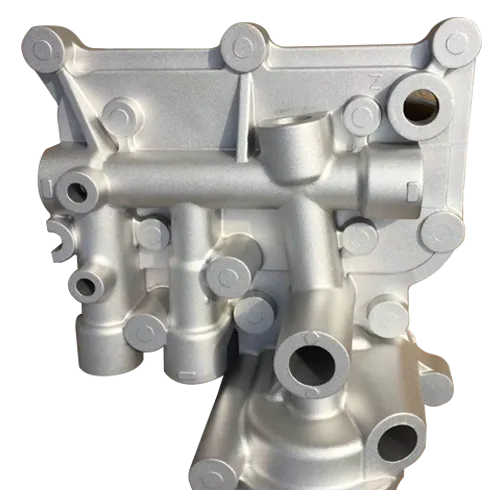
3. Copper Alloys Copper molds are known for their outstanding thermal conductivity, which helps in reducing cycle times by enabling quicker cooling of the cast parts. While they are not as durable as steel molds, they are sometimes used in combination with other materials to enhance performance in specific casting scenarios, particularly for intricate designs where precision cooling is essential.
4. Temperature-Resistant Composites Advanced composite materials are gaining popularity for die casting applications due to their ability to withstand high temperatures and corrosive environments. These composites can be engineered to provide specific properties, including increased wear resistance and reduced oxidation, making them suitable for specialized casting processes.
Advantages of Choosing the Right Mold Material
Selecting the appropriate die casting mold material can yield numerous advantages, including
- Enhanced Product Quality High-quality mold materials lead to better surface finishes and dimensional accuracy, reducing the need for post-processing. - Increased Production Efficiency Materials with excellent thermal conductivity can shorten cycle times, resulting in higher productivity and reduced operational costs. - Extended Mold Lifespan Durable materials minimize wear and tear, prolonging the lifespan of molds and reducing the frequency of replacements.
Conclusion
The choice of die casting mold material plays a pivotal role in determining the efficiency, quality, and cost-effectiveness of the manufacturing process. Steel alloys remain the most popular option due to their strength and durability, while aluminum and copper alloys serve specific purposes based on thermal properties. As the industry continues to evolve, the development of advanced materials and composites promises to enhance the capabilities of die casting, paving the way for innovation in product design and production methodologies. Understanding these materials and their unique properties will enable manufacturers to make informed decisions, ensuring optimal outcomes for their die casting endeavors.
-
Choosing an Engine Storage Crate Cover for Material and EnvironmentNewsNov.23,2026
-
Cylinder Head Chamber Buyers: Check the Casting Specification FirstNewsNov.17,2026
-
How Impeller Casting Manufacturers Match Material, Process and EquipmentNewsNov.15,2026
-
Valve body vs. intake air chamber: Which casting fits your assembly?NewsNov.02,2026
-
Air Intake Chamber FAQ: Specifications, Ordering and Support QuestionsNewsOct.28,2026
-
Motorcycle Accessories FAQ: Specifications, Ordering and Support QuestionsNewsOct.24,2026










