English

Mobile:+86-311-8081-2683
Email:info@ydcastings.com
English
Efficient Metal Casting Facilities for High-Quality Industrial Components and Solutions
The Essentials of Metal Casting Factories A Comprehensive Overview
Metal casting is a process that has been utilized for centuries, leading to the creation of intricate and robust metal components used in various industries. With the ever-increasing demand for high-quality metal parts, metal casting factories play a pivotal role in modern manufacturing. This article delves into the workings of metal casting factories, the techniques involved, and the significance of this process in today’s industrial landscape.
At its core, metal casting is the process of pouring molten metal into a mold to create a desired shape. The history of this technique dates back to ancient civilizations, where artisans employed basic methods to craft tools and ornaments. Today, metal casting factories have evolved significantly, integrating advanced technologies and practices to enhance efficiency and precision in production.
Types of Metal Casting Processes
There are several metal casting processes employed in factories, each suited for specific applications and materials
. Some of the most common methods include1. Sand Casting This is one of the most traditional and widely used methods. In sand casting, a mixture of sand and a binding agent is formed into a mold, which is then filled with molten metal. Once the metal cools and solidifies, the sand mold is broken apart to reveal the cast part. This method is particularly effective for producing large and complex shapes.
2. Investment Casting Also known as precision casting or lost-wax casting, this method involves creating a wax pattern that is coated with a ceramic material to form a mold. The wax is melted away, leaving a cavity for the molten metal. Investment casting is renowned for producing highly detailed parts with excellent surface finishes, making it ideal for intricate applications such as aerospace and medical components.
3. Die Casting This process is used for manufacturing high volumes of metal parts with tight tolerances. In die casting, molten metal is injected into a metal mold under pressure. This method is particularly effective for non-ferrous metals and is widely used in the automotive and electronics industries due to its ability to produce complex shapes quickly and efficiently.
4. Permanent Mold Casting This technique employs reusable metal molds, which are preheated before molten metal is poured in. Permanent mold casting is advantageous for producing parts with a smooth surface finish and dimensional accuracy. It is commonly used for components that require a combination of strength and lightweight characteristics.
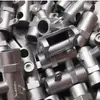
metal casting factory
Importance of Metal Casting Factories
Metal casting factories are integral to a multitude of sectors, including automotive, aerospace, construction, and consumer goods. The ability to produce customized and durable metal parts allows for innovation in design and functionality. Factories leverage cutting-edge technologies such as computer-aided design (CAD) and computer numerical control (CNC) machining to enhance the accuracy and efficiency of the casting process.
Moreover, as industries continue to evolve, so do the materials used in metal casting. Factories are increasingly adopting sustainable practices by utilizing recycled metals and reducing waste during production. This commitment to sustainability not only minimizes the environmental impact but also meets the growing consumer demand for eco-friendly manufacturing practices.
Challenges and Future Trends
While metal casting factories are essential for modern manufacturing, they face challenges such as fluctuating raw material prices and the need for continuous innovation to remain competitive. Additionally, the skilled labor shortage poses a significant hurdle, as experienced personnel are crucial for maintaining quality and efficiency in the casting process.
Looking ahead, the future of metal casting factories seems promising. Advances in additive manufacturing, or 3D printing, are set to revolutionize the industry by enabling the production of complex geometries that were previously impossible to achieve. As technology progresses, factories are likely to incorporate more automation and robotics, leading to increased production speed and reduced costs.
Conclusion
Metal casting factories are at the forefront of manufacturing, providing essential services across various industries. Understanding the different casting processes and their applications highlights the importance of this age-old technique in shaping our modern world. As the industry continues to innovate and adapt, the role of metal casting factories will remain vital in meeting the demands of an ever-changing marketplace.
-
Choosing an Engine Storage Crate Cover for Material and EnvironmentNewsNov.23,2026
-
Cylinder Head Chamber Buyers: Check the Casting Specification FirstNewsNov.17,2026
-
How Impeller Casting Manufacturers Match Material, Process and EquipmentNewsNov.15,2026
-
Valve body vs. intake air chamber: Which casting fits your assembly?NewsNov.02,2026
-
Air Intake Chamber FAQ: Specifications, Ordering and Support QuestionsNewsOct.28,2026
-
Motorcycle Accessories FAQ: Specifications, Ordering and Support QuestionsNewsOct.24,2026










