English

Mobile:+86-311-8081-2683
Email:info@ydcastings.com
English
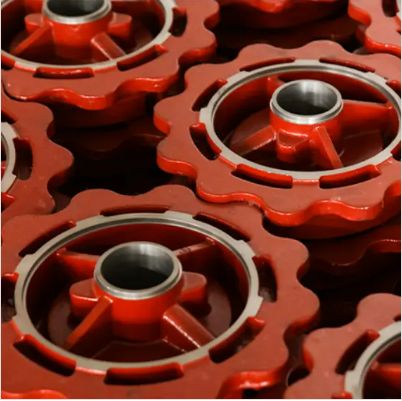
impeller on pump
Understanding the Role of Impellers in Pumps An Overview
The impeller is a crucial component in the operation of various types of pumps, playing a vital role in the movement of fluids. At its core, an impeller is a rotating device that transfers energy to the fluid, converting mechanical energy from a motor into kinetic energy in the fluid. This article delves into the significance of impellers in pumps, their types, and their impact on hydraulic performance.
The Function of Impellers
At the heart of every centrifugal pump lies the impeller, which typically consists of a series of blades designed to impart velocity to the fluid. When the motor drives the impeller, the blades push the fluid outward from the center, creating a low-pressure area at the eye of the impeller. This pressure difference forces more fluid into the impeller, maintaining a continuous flow. The energy transferred to the fluid not only increases its velocity but also raises its pressure, enabling it to be efficiently moved through pipelines and into the intended applications.
Types of Impellers
Impellers come in various designs, each tailored to specific applications and fluid characteristics. The two main types of impellers are
1. Closed Impellers These consist of two shrouds (the top and bottom) that encapsulate the blades. This design minimizes fluid leakage and is highly efficient, making it suitable for high-pressure applications. Closed impellers are commonly used in standard centrifugal pumps for water and wastewater management.
2. Open Impellers These have no shrouds, which allows more flexibility in handling fluids with suspended solids or viscous materials. Although they may be less efficient than closed impellers, their ability to handle unconventional fluids makes them a preferred choice in industries like food processing and mining.
There are also semi-open impellers, which combine features of both closed and open impellers, providing a compromise between efficiency and the ability to handle challenging fluids.
impeller on pump
Factors Influencing Impeller Design
Several factors influence the design and selection of an impeller. These include
- Fluid Properties The viscosity, density, and temperature of the fluid play essential roles in determining the impeller type. For example, thicker fluids may benefit from open impellers to reduce clogging.
- Required Flow Rate and Pressure Different applications necessitate varying flow rates and pressure levels. Understanding these requirements is crucial in selecting the appropriate impeller design to achieve optimal pump performance.
- Pump Size and Configuration The overall size and layout of the pump influence the size and style of the impeller. For instance, larger industrial pumps may employ larger, more robust impellers to accommodate higher flow rates.
The Impact of Impeller on Pump Efficiency
The efficiency of a pump largely depends on the design and condition of the impeller. An improperly designed or worn impeller can lead to reduced performance, energy losses, and increased operational costs. Therefore, regular maintenance and inspection are critical. Factors such as cavitation—a condition where vapor bubbles form and collapse within the fluid—can significantly damage the impeller and degrade performance. Understanding the operational limits of the pump can help mitigate these risks.
Conclusion
In summary, the impeller is a central element of pump functionality, critical for achieving the desired flow and pressure in fluid handling systems. The choice of impeller type and design is essential for optimizing pump performance and addressing specific application needs. By understanding the dynamics of impellers, engineers and operators can make informed decisions that enhance efficiency, reduce costs, and prolong equipment lifespan. As industries continue to evolve and adapt, the importance of effective impeller design and pump operation remains paramount in meeting modern fluid transfer challenges.
-
Choosing an Engine Storage Crate Cover for Material and EnvironmentNewsNov.23,2026
-
Cylinder Head Chamber Buyers: Check the Casting Specification FirstNewsNov.17,2026
-
How Impeller Casting Manufacturers Match Material, Process and EquipmentNewsNov.15,2026
-
Valve body vs. intake air chamber: Which casting fits your assembly?NewsNov.02,2026
-
Air Intake Chamber FAQ: Specifications, Ordering and Support QuestionsNewsOct.28,2026
-
Motorcycle Accessories FAQ: Specifications, Ordering and Support QuestionsNewsOct.24,2026










