English

Mobile:+86-311-8081-2683
Email:info@ydcastings.com
English
exhaust housing turbo
Understanding Exhaust Housing in Turbochargers
Turbochargers have become an integral part of modern automotive engines, allowing for increased power and efficiency by utilizing exhaust gases to force more air into the combustion chamber. One of the critical components of a turbocharger is the exhaust housing, which plays a vital role in the overall performance and efficiency of the system. In this article, we will explore the function, design considerations, and technological advancements related to exhaust housings in turbochargers.
What is Exhaust Housing?
The exhaust housing, sometimes referred to as the turbine housing, is the part of a turbocharger that contains the turbine wheel. It receives exhaust gases from the engine and directs them toward the turbine blades. As the gases pass through the housing, they spin the turbine, which is connected via a shaft to the compressor side of the turbocharger. This action compresses the incoming air, allowing for a denser mix of air and fuel to enter the engine, ultimately enhancing power output.
Function and Importance
The primary function of the exhaust housing is to facilitate efficient gas flow to the turbine. An optimally designed exhaust housing ensures minimal turbulence and back pressure, allowing the turbocharger to spool up quickly, providing a rapid response to throttle inputs. This responsiveness is crucial, particularly in high-performance applications, where drivers demand instantaneous power.
Moreover, the volume and shape of the exhaust housing influence the turbocharger's overall performance characteristics. A smaller housing can provide quicker spooling at lower RPMs, while a larger housing typically allows for better performance at higher RPMs but may introduce turbo lag. Therefore, manufacturers often tailor the exhaust housing design to match specific engine requirements and driving conditions.
Materials and Design Considerations
exhaust housing turbo
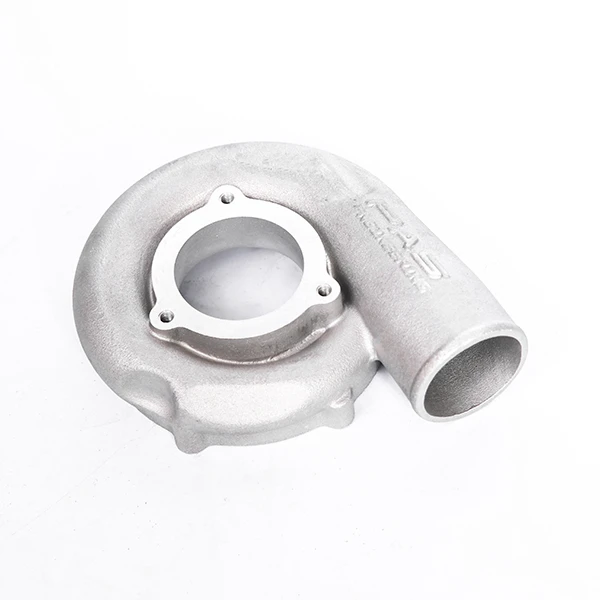
Exhaust housings must withstand extreme temperatures and pressures, leading manufacturers to utilize materials that can endure these harsh conditions. Common materials include cast iron and various alloys that offer high thermal resistance and durability. Recent advancements have introduced composite materials that provide reduced weight without compromising strength, aiding in overall performance and efficiency.
The design of the exhaust housing can also greatly impact engine performance. Variations such as divided housings or twin-scroll designs have been developed to optimize exhaust flow and minimize interference between the exhaust pulses from different cylinders. This can enhance the turbine’s efficiency and reduce turbo lag, leading to smoother power delivery.
Innovations in Exhaust Housing Technology
In pursuit of greater efficiency and performance, the automotive industry continues to innovate in turbocharger design, particularly concerning exhaust housings. Variable geometry turbochargers (VGT) utilize adjustable vanes within the exhaust housing, allowing for optimum flow characteristics at various engine speeds. This adaptability minimizes lag and provides improved power delivery across the RPM range.
Additionally, advancements in computational fluid dynamics (CFD) have enabled engineers to simulate and analyze exhaust flow through various housing designs. This has led to more optimized shapes and sizes that can maximize performance while maintaining reliability.
Conclusion
The exhaust housing is a crucial component of turbochargers, greatly influencing performance, efficiency, and response time. As automotive technology evolves, so too does the design and functionality of exhaust housings, with innovations paving the way for more powerful and efficient engines. Understanding the significance of exhaust housing in turbocharging systems enables us to appreciate the complexities of modern automotive engineering and the relentless pursuit of performance excellence.
-
Choosing an Engine Storage Crate Cover for Material and EnvironmentNewsNov.23,2026
-
Cylinder Head Chamber Buyers: Check the Casting Specification FirstNewsNov.17,2026
-
How Impeller Casting Manufacturers Match Material, Process and EquipmentNewsNov.15,2026
-
Valve body vs. intake air chamber: Which casting fits your assembly?NewsNov.02,2026
-
Air Intake Chamber FAQ: Specifications, Ordering and Support QuestionsNewsOct.28,2026
-
Motorcycle Accessories FAQ: Specifications, Ordering and Support QuestionsNewsOct.24,2026










