English

Mobile:+86-311-8081-2683
Email:info@ydcastings.com
English
Techniques and Benefits of Casting Aluminum for Various Applications and Industries
Casting Aluminum A Versatile Process for Modern Manufacturing
Casting aluminum is a widely used manufacturing process that involves pouring molten aluminum into a mold to create complex shapes and components. This technique has gained immense popularity in various industries due to its versatility, efficiency, and cost-effectiveness. Aluminum casting serves as a foundation for producing a variety of products ranging from automotive parts to household items.
Casting Aluminum A Versatile Process for Modern Manufacturing
The aluminum casting process typically involves several methods, including sand casting, die casting, and investment casting. Sand casting is one of the oldest and most commonly used techniques. It involves creating a mold from sand and then pouring molten aluminum into the mold to form the desired shape. This method is favored for its low cost and ability to produce large, complex parts. Die casting, on the other hand, utilizes high pressure to force molten aluminum into a mold, resulting in a smoother finish and tighter tolerances. This method is ideal for high-volume production where precision is paramount.
casting aluminum
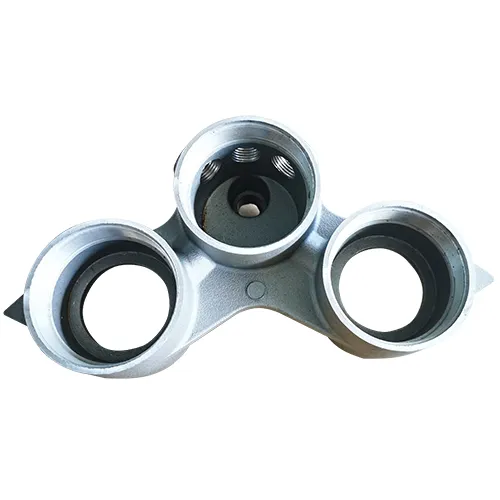
Investment casting, also known as lost-wax casting, is another technique that allows for intricate designs and fine details. In this process, a wax pattern is coated with a ceramic material, which is then heated to remove the wax, leaving a precise mold for pouring molten aluminum. This method is particularly beneficial for producing parts in industries such as aerospace and medical devices, where quality and detail are critical.
Moreover, aluminum casting is highly recyclable, making it an environmentally friendly option. The recycling process requires significantly less energy compared to producing new aluminum from ore. This feature aligns with the growing trend toward sustainability in manufacturing, encouraging companies to adopt more eco-friendly practices.
In recent years, advancements in technology have further enhanced aluminum casting processes. Innovations such as computer-aided design (CAD) and simulation software allow manufacturers to optimize designs and predict potential issues before production. Additionally, the development of new alloys and metal treatments has improved the mechanical properties of cast aluminum parts, expanding their applications even further.
In conclusion, aluminum casting is a crucial process in modern manufacturing, offering numerous benefits such as lightweight properties, diverse methods, recyclability, and technological advancements. As industries continue to evolve, aluminum casting will remain a vital technique, driving innovation and sustainability across various sectors.
-
Choosing an Engine Storage Crate Cover for Material and EnvironmentNewsNov.23,2026
-
Cylinder Head Chamber Buyers: Check the Casting Specification FirstNewsNov.17,2026
-
How Impeller Casting Manufacturers Match Material, Process and EquipmentNewsNov.15,2026
-
Valve body vs. intake air chamber: Which casting fits your assembly?NewsNov.02,2026
-
Air Intake Chamber FAQ: Specifications, Ordering and Support QuestionsNewsOct.28,2026
-
Motorcycle Accessories FAQ: Specifications, Ordering and Support QuestionsNewsOct.24,2026










