English

Mobile:+86-311-8081-2683
Email:info@ydcastings.com
English
Understanding the Role of Impellers in Pump Performance and Efficiency
Understanding the Role of Impellers in Pumps
Pumps are essential components in various industrial, agricultural, and municipal applications. Among the critical components of any pump system is the impeller, which plays a fundamental role in the movement of fluids. This article delves into the significance of impellers in pumps, their types, working principles, and applications.
What is an Impeller?
An impeller is a rotating component found within a pump, designed to transfer energy from a motor to the fluid being pumped. It consists of blades or vanes that efficiently propel the fluid through the pump system. By converting rotational kinetic energy into hydrodynamic energy, impellers can move fluids from one location to another, increase pressure, and facilitate a wide range of fluid handling applications.
Types of Impellers
Impellers can be categorized based on various criteria, primarily the design and application. The main types of impellers include
1. Closed Impellers These consist of two parallel disks with blades situated between them. Closed impellers are widely employed due to their high efficiency and are commonly used in centrifugal pumps. They provide better sealing and reduce fluid leakage.
2. Open Impellers Open impellers have blades that are directly attached to the hub and do not feature the side disks found in closed impellers. They are easier to clean and are better suited for applications involving viscous fluids or those with larger solid particles.
3. Semi-Open Impellers These combine features of both open and closed impellers, having a cover plate on one side while remaining open on the other. They balance efficiency and the ability to handle solids in the fluid.
4. Vortex Impellers Designed to handle fluids with suspended solids, vortex impellers create a vortex that helps keep particles in suspension. They are commonly used in wastewater treatment applications.
Working Principle of Impellers
impeller in a pump
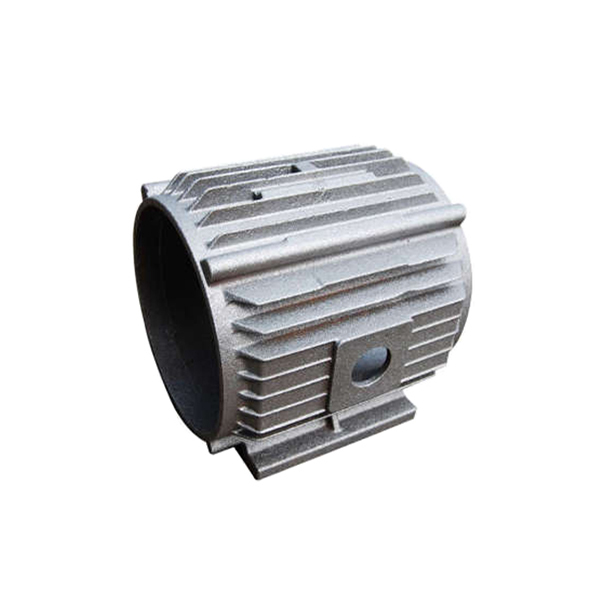
The operation of an impeller is relatively straightforward. When the motor of the pump activates, it spins the impeller at high speed, generating centrifugal force. This force acts on the fluid within the pump, moving it from the center of the impeller to the outer edge. As the fluid exits the impeller, it gains velocity and pressure, resulting in the flow of the fluid through the discharge of the pump.
The design and shape of the impeller blades significantly influence the pump's performance. For instance, the curvature and angle of the blades can determine the flow rate and efficiency of the pump. Engineers must carefully select the appropriate impeller design based on the specific fluid properties and application requirements.
Applications of Impellers
Impellers are used in various pumping applications across multiple industries, including
1. Water Supply and Distribution Impellers are crucial in municipal water supply systems, where they help in the transportation of water to homes and businesses.
2. Agriculture In irrigation systems, impellers are used in pumps to distribute water efficiently to crops.
3. Chemical Processing Many chemical plants utilize impeller-driven pumps for handling corrosive and viscous fluids essential for production processes.
4. Wastewater Management Impellers play a vital role in the transportation and treatment of wastewater, ensuring that contaminants are effectively managed.
5. HVAC Systems Heating, ventilation, and air conditioning systems often rely on impeller pumps to circulate water for cooling and heating purposes.
Conclusion
The impeller is a crucial component in pump systems, influencing their efficiency and effectiveness in a wide range of applications. Understanding the types of impellers, their working principles, and their applications helps engineers and operators optimize their pump systems to meet specific needs. Whether in industrial processes or everyday water supply systems, impellers ensure that fluids are moved efficiently, making them indispensable in modern engineering. As technology continues to evolve, advancements in impeller design and materials promise to further enhance pump performance and reliability in the years to come.
-
Choosing an Engine Storage Crate Cover for Material and EnvironmentNewsNov.23,2026
-
Cylinder Head Chamber Buyers: Check the Casting Specification FirstNewsNov.17,2026
-
How Impeller Casting Manufacturers Match Material, Process and EquipmentNewsNov.15,2026
-
Valve body vs. intake air chamber: Which casting fits your assembly?NewsNov.02,2026
-
Air Intake Chamber FAQ: Specifications, Ordering and Support QuestionsNewsOct.28,2026
-
Motorcycle Accessories FAQ: Specifications, Ordering and Support QuestionsNewsOct.24,2026










