English

Mobile:+86-311-8081-2683
Email:info@ydcastings.com
English
Different Types of Molds Used in Casting Processes for Manufacturing
Types of Molds in Casting
Casting is a fundamental manufacturing process that involves pouring liquid material into a mold to create a desired shape. The choice of mold plays a crucial role in determining the quality, accuracy, and complexity of the final product. In this article, we will explore the various types of molds used in casting, highlighting their characteristics, advantages, and applications.
1. Sand Molds
Sand molds are among the most commonly used molds in metal casting. Composed of a mixture of sand, clay, and water, these molds are prized for their ability to withstand high temperatures and their flexibility in design. There are two main types of sand molds green sand molds and dry sand molds.
Green Sand Molds This type of mold is made from moist sand, which allows it to be easily shaped and reused. The moisture content helps bind the sand together while retaining sufficient permeability for gases generated during the casting process to escape. Green sand molding is usually employed for large-scale production of ferrous and non-ferrous metal castings.
Dry Sand Molds These molds are made from sand that has been dried and hardened. They offer better surface finish and dimensional accuracy than green sand molds but require more complex preparation. Dry sand molds are suitable for casting intricate parts with fine details.
2. Investment Molds
Also known as lost-wax casting, investment molds are utilized for producing high-precision and intricate components. This method involves creating a wax pattern, which is encased in a ceramic shell. Once the shell has hardened, the wax is melted away, leaving a cavity that is filled with molten metal.
Investment casting is particularly favored in industries such as aerospace, automotive, and jewelry, where dimensional accuracy and surface finish are critical. Although the production costs can be higher than other methods, the quality of the final product often justifies the investment.
3. Shell Molds
types of molds in casting
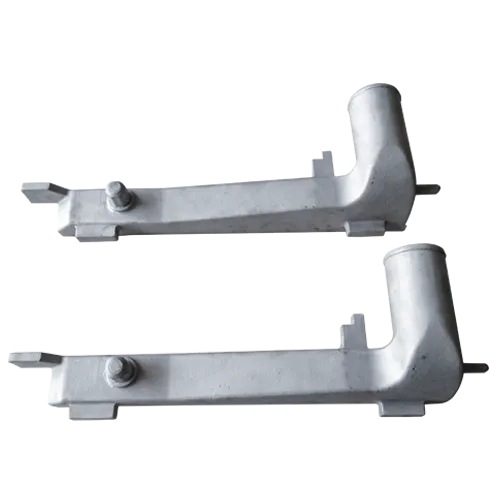
Shell molding is a casting process that uses a thin shell of sand-thermosetting resin mixture to form a mold. This technique combines the benefits of sand molds and precision foundry methods. The process begins with the creation of a pattern, usually made from metal, which is heated and coated in the sand-resin mixture. As the mixture cures, it forms a strong mold.
Shell molds offer excellent dimensional control and a smooth surface finish, making them ideal for applications where precision is paramount. They are commonly used in the automotive industry for producing engine components, brackets, and housings.
4. Permanent Molds
Permanent molds are reusable molds made from metal, typically steel or iron, that can withstand the rigors of repeated heating and cooling cycles. This type of mold is ideal for producing high-volume production runs of components with relatively simple geometries.
Permanent mold casting is especially advantageous for non-ferrous metals like aluminum, copper, and magnesium. The high thermal conductivity of metal molds results in faster solidification, which improves mechanical properties and surface finishes.
5. Composite Molds
Composite molds are constructed from layers of different materials to combine their beneficial properties. Typically, these are made of a mix of polymer resins reinforced with fibers such as glass or carbon to enhance strength and thermal stability.
This type of mold is becoming increasingly popular in industries such as aerospace and automotive, where lightweight yet durable components are desired. Composite molds can be tailored to specific applications, allowing for versatility in design and manufacturing.
Conclusion
The choice of mold in casting is vital to the success of the manufacturing process. Each type of mold, whether sand, investment, shell, permanent, or composite, has its unique advantages and applications. Understanding these different mold types enables manufacturers to select the most appropriate method for their specific production needs, ultimately leading to higher quality and more efficient production outcomes. As technology advances, the exploration of new mold materials and techniques will likely yield even more refined methods for producing complex cast components across various industries.
-
Choosing an Engine Storage Crate Cover for Material and EnvironmentNewsNov.23,2026
-
Cylinder Head Chamber Buyers: Check the Casting Specification FirstNewsNov.17,2026
-
How Impeller Casting Manufacturers Match Material, Process and EquipmentNewsNov.15,2026
-
Valve body vs. intake air chamber: Which casting fits your assembly?NewsNov.02,2026
-
Air Intake Chamber FAQ: Specifications, Ordering and Support QuestionsNewsOct.28,2026
-
Motorcycle Accessories FAQ: Specifications, Ordering and Support QuestionsNewsOct.24,2026










