English

Mobile:+86-311-8081-2683
Email:info@ydcastings.com
English
types of metal casting processes
Types of Metal Casting Processes
Metal casting is a manufacturing process that involves pouring molten metal into a mold to create a desired shape. This process is fundamental in the production of a wide variety of components across multiple industries, including automotive, aerospace, and construction. There are several types of metal casting processes, each with its unique characteristics, advantages, and applications. In this article, we will explore the most common types of metal casting processes.
1. Sand Casting
Sand casting is one of the oldest and most widely used metal casting methods. In this process, a mold is made from a mixture of sand and a binding agent. The mold is created by compacting the sand around a pattern that represents the desired object. Once the pattern is removed, molten metal is poured into the cavity formed by the mold. After the metal cools and solidifies, the mold is broken apart to retrieve the cast part.
The advantages of sand casting include its low cost and the ability to produce large and complex parts. Additionally, sand casting can accommodate a variety of metals, including aluminum, iron, and bronze. Despite its advantages, sand casting may have lower dimensional accuracy and a rough surface finish compared to other methods.
2. Investment Casting
Investment casting, also known as lost-wax casting, is a precision casting method that produces highly accurate and intricate parts. This process involves creating a wax pattern that is coated with a ceramic shell. Once the shell hardens, the wax is melted and drained away, leaving a cavity in the shape of the desired part. Molten metal is then poured into the cavity to create the final product.
Investment casting is particularly suitable for complex shapes and thin-walled components. It also provides excellent dimensional accuracy and a smooth surface finish, making it ideal for parts used in aerospace and medical applications. However, the process can be more expensive and time-consuming than sand casting.
3. Die Casting
Die casting is a high-pressure metal casting process that involves forcing molten metal into a mold, or die, under high pressure. This method is primarily used for non-ferrous metals, such as aluminum, zinc, and magnesium. Die casting produces parts with excellent dimensional accuracy and surface finish, making it a popular choice for mass production.
types of metal casting processes
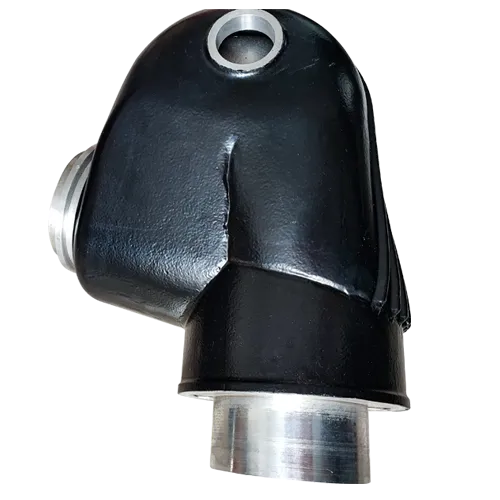
There are two main types of die casting hot chamber and cold chamber. Hot chamber die casting involves keeping the metal molten and using it to fill the mold, while cold chamber die casting requires the metal to be heated in a separate chamber before being injected into the mold. Die casting is advantageous for producing large quantities of parts with intricate designs efficiently.
4. Continuous Casting
Continuous casting is a process used primarily for producing long lengths of metal shapes, such as rods, sheets, and tubes. In this method, molten metal is poured into a mold in a continuous strand, allowing it to solidify as it is drawn out of the mold. This process is highly efficient and can produce large volumes of material with uniform properties.
Continuous casting is commonly used in the steel and aluminum industries, providing a cost-effective means of producing raw materials. It offers good control over chemical composition and microstructure, crucial for achieving high-quality end products.
5. Shell Molding
Shell molding is a variation of sand casting that uses a thin shell of sand and resin to form the mold. The process involves heating a pattern to a high temperature and applying a mixture of sand and resin to create a shell around the pattern. Once the shell cures, it is removed and filled with molten metal.
Shell molding offers improved dimensional accuracy and a better surface finish than traditional sand casting. It is suitable for producing medium-sized parts with complex shapes, particularly in the automotive and machinery industries.
Conclusion
Metal casting processes are diverse and continually evolving to meet the needs of various industries. Each method offers distinct advantages and limitations, making it essential for manufacturers to choose the appropriate casting process based on the specific requirements of their applications. From sand casting and investment casting to die casting and continuous casting, understanding these processes enables better decision-making in the production of high-quality metal components.
-
Choosing an Engine Storage Crate Cover for Material and EnvironmentNewsNov.23,2026
-
Cylinder Head Chamber Buyers: Check the Casting Specification FirstNewsNov.17,2026
-
How Impeller Casting Manufacturers Match Material, Process and EquipmentNewsNov.15,2026
-
Valve body vs. intake air chamber: Which casting fits your assembly?NewsNov.02,2026
-
Air Intake Chamber FAQ: Specifications, Ordering and Support QuestionsNewsOct.28,2026
-
Motorcycle Accessories FAQ: Specifications, Ordering and Support QuestionsNewsOct.24,2026










