English

Mobile:+86-311-8081-2683
Email:info@ydcastings.com
English
Exploring Different Categories of Aluminum Casting Techniques and Their Applications
Types of Aluminium Casting An Overview
Aluminium casting is a widely utilized manufacturing process that involves pouring molten aluminium into a mold to create a specific shape or part. This technique has gained popularity due to aluminium's unique properties—lightweight, corrosion-resistant, and capable of being easily cast into complex shapes. In this article, we will explore the various types of aluminium casting methods, their characteristics, and applications.
1. Sand Casting
Sand casting is the most common and traditional method of aluminium casting. In this process, a pattern is made from the desired design, and a mold is formed using a mixture of sand and bonding agents. The molten aluminium is then poured into the mold, allowing it to cool and solidify.
Advantages Sand casting is highly versatile, capable of producing large and intricate parts. It is ideal for low to medium production volumes and can accommodate larger cast components.
Applications Commonly used in the automotive and aerospace industries, sand casting is also suitable for manufacturing engine blocks, housings, and large components used in machinery.
2. Die Casting
Die casting involves forcing molten aluminium into a mold under high pressure. This method can produce precise and detailed parts at high production rates. The molds, known as dies, can be made of steel and are reusable, making this method efficient for large production runs.
Advantages Die casting offers high dimensional accuracy, smooth surface finishes, and the ability to produce complex shapes with thin walls.
Applications This method is often used in the production of automotive parts, electronic housings, and consumer goods such as kitchen appliances. It is preferred for high-volume production because of its consistency and efficiency.
3. Investment Casting
Investment casting, also known as lost-wax casting, involves creating a wax pattern that is coated with a refractory material. Once the coating hardens, the wax is melted away, leaving a precise mold for molten aluminium.
Advantages Investment casting allows for intricate designs and features superior surface quality and dimensional accuracy, making it suitable for parts requiring complex geometries.
Applications This technique is widely applied in the aerospace, military, and medical sectors, particularly for components like turbine blades, valves, and specialized machinery parts.
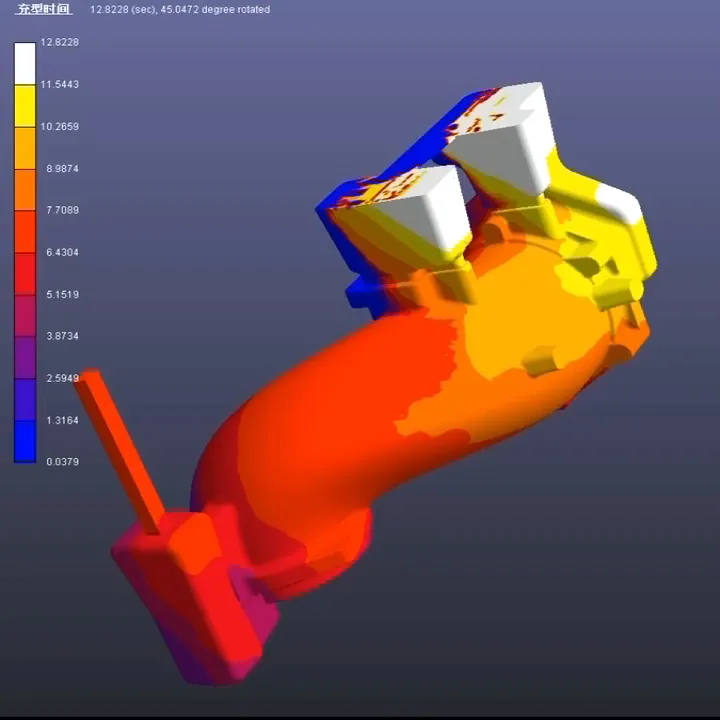
types of aluminium casting
4. Permanent Mold Casting
In permanent mold casting, molten aluminium is poured into reusable metal molds, which can withstand high temperatures and pressure
. This method offers a good balance of production efficiency and part quality.Advantages It provides good surface finish and dimensional stability. The reuse of molds results in lower costs for high-volume production runs.
Applications Permanent mold casting is utilized for producing components such as transmission cases, tool housings, and various automotive parts. It's particularly effective for medium-sized parts.
5. Gravity Die Casting
Gravity die casting, also known as gravity casting, is similar to permanent mold casting, but it relies on gravity to fill the mold rather than external pressure. The molten aluminium is poured into the mold and allowed to fill based on gravitational force.
Advantages This method is less complicated compared to die casting and involves lower initial costs due to simpler equipment. It also results in parts with good surface finishes.
Applications Gravity die casting is often used to manufacture automotive engine components, frames, and heavy machinery parts.
6. Squeeze Casting
Squeeze casting is a hybrid process that combines casting and forging. In this method, molten aluminium is poured into a mold and then subjected to high pressure. This process results in high density, superior mechanical properties, and minimal porosity in the final product.
Advantages Squeeze casting produces components with excellent strength and integrity. It minimizes defects and allows for complex shapes.
Applications Commonly found in the automotive industry for critical components such as suspension parts and structural items where enhanced mechanical properties are required.
Conclusion
Aluminium casting encompasses various methods, each with its unique advantages and applications. From the traditional sand casting to advanced techniques like squeeze casting, manufacturers can select the most suitable process based on production requirements, part complexity, and material properties. The growing demand for lightweight and durable components in industries like automotive, aerospace, and consumer goods continues to drive advancements in aluminium casting technologies, ensuring its relevance in the modern manufacturing landscape.
-
Choosing an Engine Storage Crate Cover for Material and EnvironmentNewsNov.23,2026
-
Cylinder Head Chamber Buyers: Check the Casting Specification FirstNewsNov.17,2026
-
How Impeller Casting Manufacturers Match Material, Process and EquipmentNewsNov.15,2026
-
Valve body vs. intake air chamber: Which casting fits your assembly?NewsNov.02,2026
-
Air Intake Chamber FAQ: Specifications, Ordering and Support QuestionsNewsOct.28,2026
-
Motorcycle Accessories FAQ: Specifications, Ordering and Support QuestionsNewsOct.24,2026










