English

Mobile:+86-311-8081-2683
Email:info@ydcastings.com
English
Innovative Steel Investment Casting Techniques for Enhanced Manufacturing Efficiency and Precision
Steel Investment Casting An Optimal Solution for Precision Manufacturing
Steel investment casting, also known as lost-wax casting, is a highly versatile manufacturing process that offers exceptional dimensional accuracy and surface finish. This process has gained significant attention in various industries, including automotive, aerospace, and medical devices, due to its ability to produce intricate shapes with minimal material waste. This article explores the fundamentals of steel investment casting, its advantages, applications, and future prospects.
Understanding Steel Investment Casting
The investment casting process begins with the creation of a detailed wax model that represents the final product. This model is coated with a ceramic shell that hardens and forms a mold. Once the shell is set, the wax is melted away, leaving a precise cavity in the shape of the desired part. Molten steel is then poured into this cavity to create the final component. This method allows for the casting of complex geometries, which are often challenging to achieve using traditional casting techniques.
Advantages of Steel Investment Casting
1. Precision and Accuracy One of the most significant benefits of steel investment casting is its ability to produce parts with tight tolerances. This level of precision is essential in industries like aerospace and medical, where even minor deviations can lead to significant issues.
2. Versatile Material Options While steels are a principal choice for investment casting, the process also accommodates various alloys, including stainless steel, carbon steel, and tool steel. This versatility enables manufacturers to select materials that best suit their applications, ensuring optimal performance under various conditions.
3. Complex Geometries Investment casting can produce intricate designs that may be impossible or prohibitively expensive to create with other methods. This capability allows for lightweight structures that do not compromise strength or performance.
4. Reduced Waste The process is known for its efficiency, as it generates very little waste material. The ability to utilize near-net shapes minimizes secondary machining, thus lowering manufacturing costs and environmental impact.
5. Excellent Surface Finish Steel investment castings typically require minimal finishing work due to their smooth surfaces. This characteristic reduces labor costs and accelerates the production timeline, making it a cost-effective solution in the long run.
steel investment casting
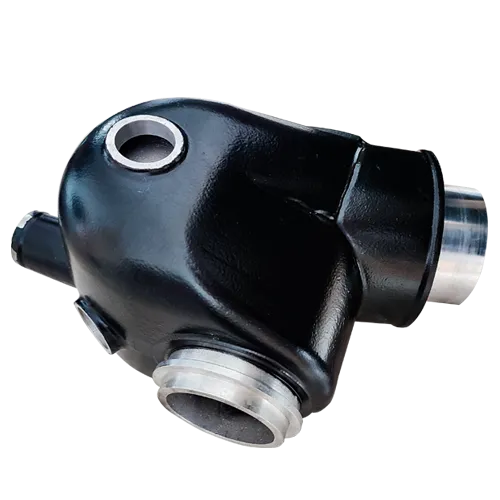
Applications of Steel Investment Casting
Steel investment casting has a wide range of applications across various sectors
- Aerospace Components such as turbine blades, housings, and structural parts benefit from the precision and lightweight characteristics of investment casting. - Automotive Critical engine components, transmission parts, and suspension components are often manufactured using this process to ensure durability and performance.
- Medical Surgical instruments, orthopedic implants, and other medical devices require high-strength components, often produced via steel investment casting for their reliability and precision.
- General Industry Various industrial applications, including valves, pumps, and fittings, utilize investment casting to achieve complex designs and functionality.
Future Prospects
As the manufacturing landscape evolves, the demand for more precise and efficient production methods continues to grow. Innovations in materials science and casting technologies promise to enhance the capabilities of steel investment casting further. The integration of additive manufacturing techniques alongside traditional casting processes may lead to hybrid methods, offering even greater complexity and customization.
Similarly, advancements in simulation software enable manufacturers to optimize casting designs and processes, reducing lead times and costs while improving the quality of the final product. As industries increasingly prioritize sustainability, the reduced waste and efficient energy consumption associated with steel investment casting position it as a favored method moving forward.
Conclusion
Steel investment casting stands out as an effective solution for producing high-quality, precision components across multiple industries. Its unique advantages, coupled with ongoing innovations, ensure its relevance in the future of manufacturing. As technology progresses and new challenges arise, investment casting is well-equipped to evolve, making it a pivotal process in meeting the demands of modern engineering and design.
-
Choosing an Engine Storage Crate Cover for Material and EnvironmentNewsNov.23,2026
-
Cylinder Head Chamber Buyers: Check the Casting Specification FirstNewsNov.17,2026
-
How Impeller Casting Manufacturers Match Material, Process and EquipmentNewsNov.15,2026
-
Valve body vs. intake air chamber: Which casting fits your assembly?NewsNov.02,2026
-
Air Intake Chamber FAQ: Specifications, Ordering and Support QuestionsNewsOct.28,2026
-
Motorcycle Accessories FAQ: Specifications, Ordering and Support QuestionsNewsOct.24,2026










