English

Mobile:+86-311-8081-2683
Email:info@ydcastings.com
English
Design and Analysis of Squirrel Cage Impeller for Enhanced Fluid Dynamics Efficiency
Understanding the Squirrel Cage Impeller
The squirrel cage impeller is a crucial component used in various engineering applications, particularly in the field of fluid dynamics and within the design of fans and blowers. Its unique structure and operational efficiency make it an interesting study in both mechanical engineering and fluid mechanics. This article will delve into the design, working principle, advantages, applications, and potential challenges associated with squirrel cage impellers.
Design and Structure
The squirrel cage impeller is named for its resemblance to a squirrel cage, a structure commonly used to keep small animals active and engaged. Its design typically consists of a series of blades or vanes arranged around a central hub, creating a robust framework. These blades are radially mounted, allowing for the efficient transport of fluid, whether it be gases or liquids.
The impeller is often enclosed in a casing, which helps to channel the flow of the fluid and maximize efficiency. This casing can be modified based on specific application requirements, allowing the impeller to work effectively in different environments. The materials used in the construction of the squirrel cage impeller must be chosen carefully to withstand the operating conditions, including temperature, pressure, and corrosive elements.
Working Principle
Squirrel cage impellers operate on the principle of centrifugal force. When the impeller rotates, it accelerates the fluid outward from the central inlet towards the outer perimeter of the impeller. This outward movement generates pressure, facilitating the movement of the fluid through the system. The impeller's efficiency is primarily influenced by the design of its blades—the angle, shape, and length directly impact the flow velocity and the pressure generated.
As the fluid exits the impeller, it enters a discharge duct or volute, where its velocity is converted into static pressure. This transformation is essential for the transportation of fluids in applications such as HVAC systems, industrial processes, and various types of machinery.
Advantages of Squirrel Cage Impellers
One of the significant advantages of squirrel cage impellers is their efficiency. They can maintain high performance levels while operating at low energy costs, thereby offering an eco-friendly solution for fluid transport. Additionally, the simplicity of their design allows for easy maintenance and reduced operational downtime.
squirrel cage impeller
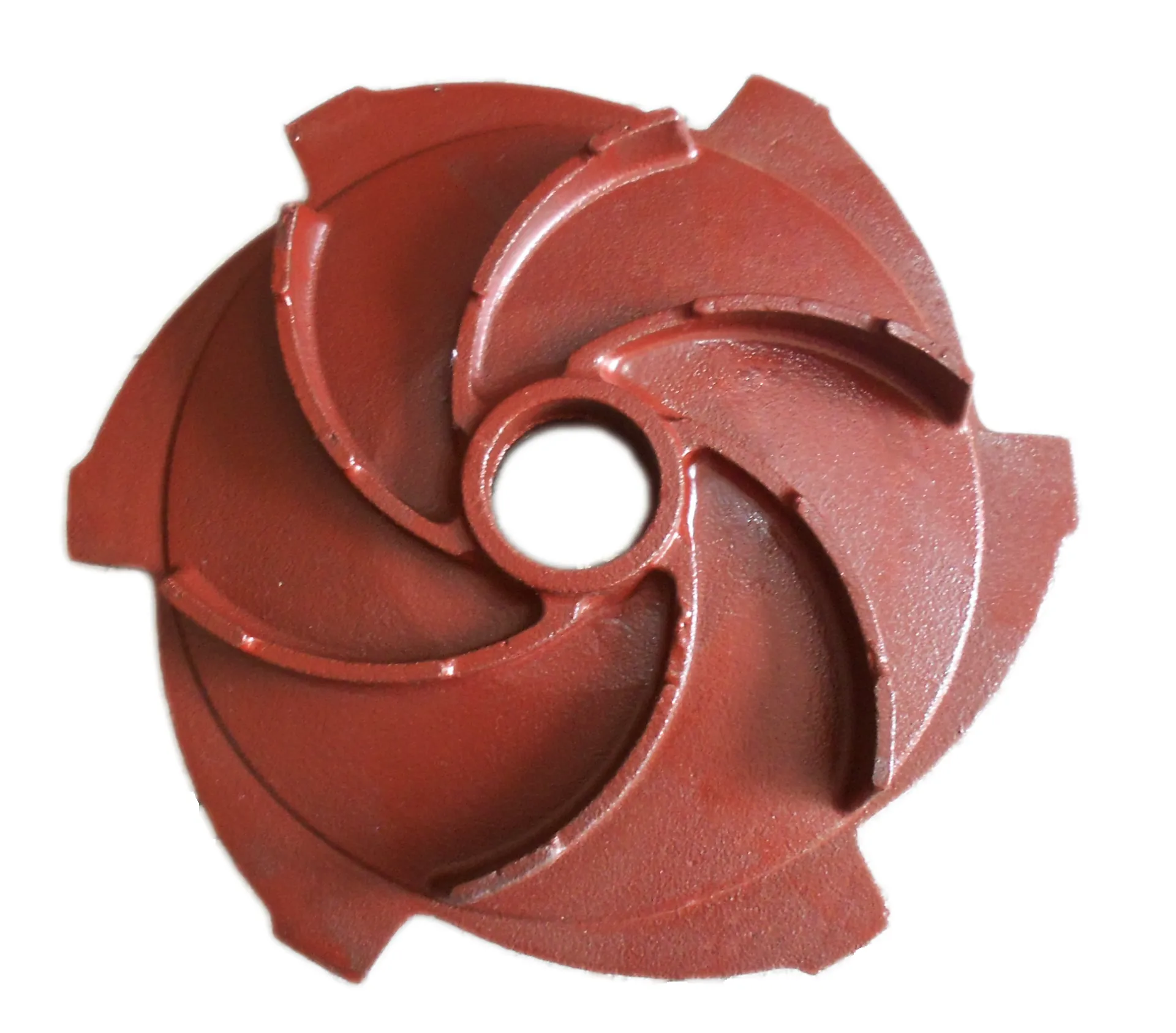
These impellers can function effectively across a wide range of flow rates and pressures, making them versatile for various applications. Their robust construction ensures a longer service life, which reduces the need for frequent replacements. Moreover, squirrel cage impellers can handle solids and particulates in the fluid, making them suitable for applications in wastewater treatment and industrial processes.
Applications
Squirrel cage impellers are widely applied in various industries. In the HVAC sector, they are used in air handling units, exhaust fans, and blowers, helping to circulate air efficiently through buildings. In the automotive industry, these impellers can be found in turbochargers, which improve engine performance by increasing the density of the air-fuel mixture.
In addition to industrial and transportation applications, squirrel cage impellers are prevalent in household appliances such as vacuum cleaners and kitchen exhaust hoods. Their ability to handle a wide range of fluid types and conditions makes them an excellent choice for industries requiring consistent and reliable fluid transport solutions.
Challenges and Considerations
Despite their many advantages, there are challenges associated with squirrel cage impellers. One potential issue is cavitation, which can occur when there is a rapid change in pressure within the fluid. Cavitation can lead to damage of the impeller and decreased efficiency. To mitigate this risk, engineers must carefully design the system to maintain appropriate pressure levels.
Another consideration is the noise generated during operation. Depending on the application, loud operation may be undesirable. Engineers must find a balance between design efficiency and acoustics to ensure that the impeller-based systems do not produce excessive noise.
Conclusion
In summary, squirrel cage impellers are integral components in various engineering applications. Their design and operational principles provide numerous advantages, including high efficiency, versatility, and durability. While there are challenges to consider, appropriate engineering practices can address these issues, ensuring that squirrel cage impellers remain a reliable choice for fluid transport solutions across multiple industries. Understanding their mechanics can lead to further advancements and innovations in fluid dynamics technology.
-
Choosing an Engine Storage Crate Cover for Material and EnvironmentNewsNov.23,2026
-
Cylinder Head Chamber Buyers: Check the Casting Specification FirstNewsNov.17,2026
-
How Impeller Casting Manufacturers Match Material, Process and EquipmentNewsNov.15,2026
-
Valve body vs. intake air chamber: Which casting fits your assembly?NewsNov.02,2026
-
Air Intake Chamber FAQ: Specifications, Ordering and Support QuestionsNewsOct.28,2026
-
Motorcycle Accessories FAQ: Specifications, Ordering and Support QuestionsNewsOct.24,2026










