English

Mobile:+86-311-8081-2683
Email:info@ydcastings.com
English
semi solid casting aluminum
The Emergence of Semi-Solid Casting in Aluminum Manufacturing
In recent years, the demand for lighter and stronger materials has escalated across various industries, particularly in automotive, aerospace, and consumer goods. Among the promising techniques to meet these demands is semi-solid casting (SSC) of aluminum, a method that combines several advantages of traditional casting and forging processes. This innovative approach has garnered significant attention for its potential to enhance the mechanical properties of aluminum components while reducing production costs and environmental impact.
The Emergence of Semi-Solid Casting in Aluminum Manufacturing
One of the primary advantages of semi-solid casting is the improvement in mechanical properties of the casted components. The globular microstructure achieved during the semi-solid stage leads to finer grain sizes and more uniform distribution of phases, which in turn enhances the strength, toughness, and fatigue resistance of the final product. As a result, manufacturers can produce components that are not only lighter but also more durable, making semi-solid casting an attractive option for sectors that prioritize safety and reliability.
semi solid casting aluminum
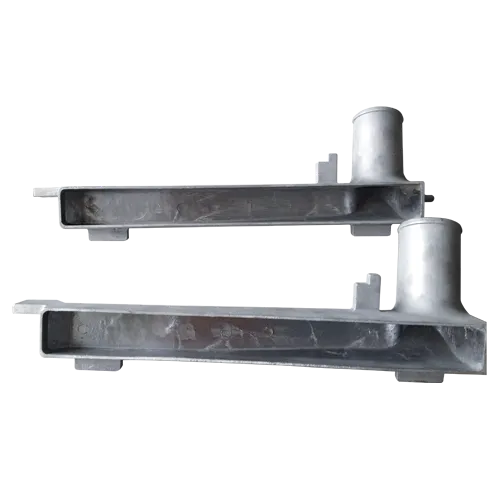
Moreover, semi-solid casting offers significant environmental benefits. Traditional aluminum casting processes are often energy-intensive and lead to substantial waste. The SSC method, however, typically requires lower energy input due to the reduced melting temperatures and shorter processing times. Additionally, the technique minimizes the generation of scrap material, further contributing to sustainability. With increasing regulatory pressures and consumer expectations regarding environmental footprints, the adoption of semi-solid casting could play a crucial role in enhancing the overall sustainability of aluminum manufacturing.
The versatility of semi-solid casting also makes it suitable for a wide range of applications. Industries are increasingly utilizing this technique for producing components such as automotive engine blocks, transmission housings, and aerospace structures. The ability to manage and fine-tune the microstructure during the casting process allows for the production of complex geometries with tight tolerances, which are essential in modern engineering designs. This adaptability not only accelerates production timelines but also reduces the need for extensive post-processing, ultimately leading to cost savings.
Despite its numerous advantages, the semi-solid casting process is not without challenges. The control of microstructure during the transition from liquid to semi-solid is critical and requires precision in temperature management and timing. Additionally, the initial setup and equipment costs can be higher than traditional casting methods, posing a barrier to entry for some manufacturers. Nevertheless, ongoing advancements in technology and techniques are expected to address these challenges, paving the way for broader adoption of semi-solid casting in the aluminum industry.
In conclusion, semi-solid casting of aluminum stands out as a transformative manufacturing technique with the potential to reshape how aluminum components are produced. Its ability to enhance mechanical properties, reduce environmental impact, and cater to complex designs positions it as a viable option for various sectors looking to innovate and improve production efficiency. As research and industrial practices continue to evolve, semi-solid casting is set to become a cornerstone of modern aluminum manufacturing, driving both technological advancement and sustainability in the industry.
-
Choosing an Engine Storage Crate Cover for Material and EnvironmentNewsNov.23,2026
-
Cylinder Head Chamber Buyers: Check the Casting Specification FirstNewsNov.17,2026
-
How Impeller Casting Manufacturers Match Material, Process and EquipmentNewsNov.15,2026
-
Valve body vs. intake air chamber: Which casting fits your assembly?NewsNov.02,2026
-
Air Intake Chamber FAQ: Specifications, Ordering and Support QuestionsNewsOct.28,2026
-
Motorcycle Accessories FAQ: Specifications, Ordering and Support QuestionsNewsOct.24,2026










