English

Mobile:+86-311-8081-2683
Email:info@ydcastings.com
English
Understanding the Process and Benefits of Permanent Mould Casting Techniques
Permanent Mould Casting An Overview
Permanent mould casting is a metal casting process that utilizes reusable molds made from high-quality materials, such as iron or steel. This method stands out for its ability to produce high-dimensional accuracy and excellent surface finish compared to sand casting. It is widely used in various industries, primarily for producing non-ferrous metal parts, including aluminum and magnesium components.
The Process of Permanent Mould Casting
The process begins with the creation of a permanent mold, which typically consists of two halves that can be clamped together. These molds are engineered to withstand high temperatures and repeated use, which makes them an economical choice for high-volume production runs. The notable advantage of permanent mould casting is the use of gravity to pour molten metal into the mold. This pouring technique not only improves the density of the cast product but also minimizes porosity, leading to stronger parts.
Once the mold halves are securely closed, molten metal is introduced into the mold cavity through a pouring basin and sprue. The metal fills the mold by gravity, and depending on the design of the mold, it can also be pressurized to enhance the filling process, particularly for more complex shapes. The mold is cooled, often using water channels integrated into its design, allowing for rapid heat dissipation.
After the metal solidifies, the mold halves are opened, and the casting is removed. The process can be repeated many times without the need to replace the mold, making it a cost-effective solution for mass production.
Advantages of Permanent Mould Casting
One of the most significant advantages of permanent mould casting is its ability to produce parts with excellent surface finishes
. The reusable molds tend to retain their shape and smoothness over time, resulting in castings that require minimal machining, thereby reducing production time and costs.permanent mould casting
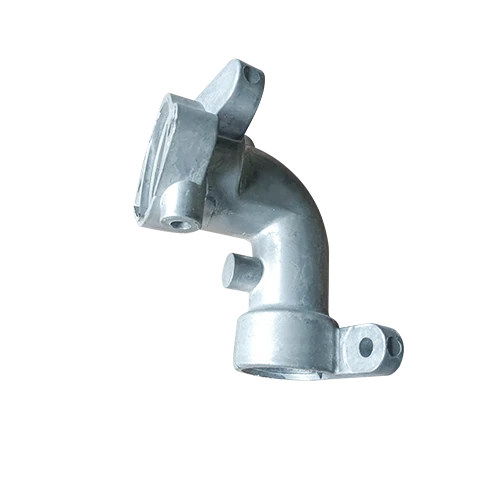
Another benefit is the high dimensional accuracy achievable with this process. Since the molds are designed and manufactured with precision, the shrinkage and distortion commonly seen in sand casting processes are minimized. This results in components that fit better and function more reliably in their applications.
Moreover, permanent mould casting provides improved mechanical properties. The slow cooling of the metal in a rigid mold contributes to a finer grain structure, enhancing the strength and durability of the final product. This makes it suitable for applications where strength is critical, such as in aerospace and automotive industries.
Limitations and Considerations
Despite its numerous advantages, permanent mould casting does have some limitations. The initial setup costs for creating high-quality permanent molds can be considerable, making this method more suitable for larger production runs where the costs can be amortized over time. Additionally, the design of the parts must consider the constraints of the molding process; for instance, intricate shapes with undercuts are more challenging to produce and may require additional tooling.
Furthermore, the materials used in permanent mould casting are typically limited to non-ferrous alloys, as ferrous metals can lead to rapid wear and degradation of the molds. This limitation narrows the scope of applications compared to other casting methods.
Conclusion
Permanent mould casting is a valuable manufacturing technique in the production of high-quality metal components, especially in high-volume scenarios. Its ability to produce parts with excellent surface finishes, high dimensional accuracy, and improved mechanical properties makes it a preferred choice in industries demanding precision and reliability. While there are limitations regarding initial costs and material usage, the advantages of this method often outweigh the drawbacks, offering an efficient solution for many casting applications. As industries continue to evolve, permanent mould casting will likely remain a critical process in producing various engineered components that support modern technology and innovation.
-
Choosing an Engine Storage Crate Cover for Material and EnvironmentNewsNov.23,2026
-
Cylinder Head Chamber Buyers: Check the Casting Specification FirstNewsNov.17,2026
-
How Impeller Casting Manufacturers Match Material, Process and EquipmentNewsNov.15,2026
-
Valve body vs. intake air chamber: Which casting fits your assembly?NewsNov.02,2026
-
Air Intake Chamber FAQ: Specifications, Ordering and Support QuestionsNewsOct.28,2026
-
Motorcycle Accessories FAQ: Specifications, Ordering and Support QuestionsNewsOct.24,2026










