English

Mobile:+86-311-8081-2683
Email:info@ydcastings.com
English
Benefits and Applications of Low Pressure Die Casting in Modern Manufacturing Processes
Understanding Low Pressure Die Casting An Overview
Low Pressure Die Casting (LPDC) is an advanced metal casting process that is widely used for producing non-ferrous metal parts, particularly aluminum and magnesium alloys. This method differs significantly from traditional high-pressure die casting, providing unique advantages that make it suitable for a variety of applications in industries like automotive, aerospace, and consumer goods. In this article, we will delve into the working principles, benefits, applications, and challenges of low-pressure die casting.
Working Principles of Low Pressure Die Casting
The low pressure die casting process operates through a methodical sequence of steps. Initially, molten metal is produced by melting the alloy in a furnace. Once the desired temperature is achieved, the molten metal is then delivered into a shot chamber. Unlike high-pressure die casting, which forces molten metal into the mold at high speeds, LPDC utilizes a lower pressure system. Typically, the molten metal is introduced into the mold at a pressure of around 0.5 to 1.5 bar (about 7 to 22 psi). This gentle pressure allows for better control over the filling process and reduces turbulence, which can lead to defects.
Once the mold is filled, the pressure is maintained for a certain period, ensuring that the metal completely fills all areas of the mold cavity, including intricate designs. After sufficient cooling, the pressure is released, and the solidified part can be ejected from the mold. This process helps in achieving high dimensional accuracy and excellent surface finishes.
Benefits of Low Pressure Die Casting
Low pressure die casting offers numerous benefits compared to other casting techniques. One of the primary advantages is the ability to produce complex shapes with thin walls and intricate features. This makes LPDC ideal for components that require a high degree of detail, such as automotive engine blocks, transmission cases, and brackets.
Another significant benefit is the reduction in porosity and other defects. Because the molten metal is introduced at lower pressures, the likelihood of air entrapment and turbulence is diminished. This results in parts that exhibit superior mechanical properties and a longer service life.
Moreover, LPDC is highly efficient in terms of material usage. The process generates less scrap material compared to traditional methods, which is both cost-effective and environmentally friendly. Additionally, the energy consumption is lower, contributing to greener manufacturing practices.
low pressure die casting
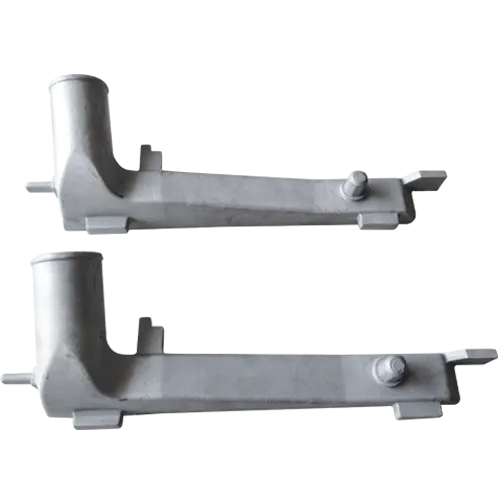
Applications of Low Pressure Die Casting
Low pressure die casting is utilized in diverse industries, particularly where lightweight and durable components are required. The automotive sector is a prominent user, leveraging LPDC for producing various parts such as wheel rims, engine components, and structural parts. The aerospace industry also employs this technology for manufacturing components that require high strength-to-weight ratios.
Beyond these sectors, LPDC finds applications in the production of consumer goods, electrical housings, and sporting equipment. As industries continue to advance, the versatility and efficiency of low pressure die casting make it an increasingly popular choice for manufacturers seeking to optimize their production processes.
Challenges of Low Pressure Die Casting
Despite its many advantages, low pressure die casting is not without its challenges. One of the major hurdles is the initial investment cost. The equipment required for LPDC can be expensive, and smaller manufacturers may find it difficult to justify the financial commitment. Additionally, designing suitable molds for LPDC can be a complex task, requiring skilled engineers to ensure that they meet the precise requirements for the casting process.
Another challenge is the limited range of materials. While LPDC is excellent for aluminum and magnesium alloys, it is not as effective for other materials, which restricts its applicability. Furthermore, achieving the optimal cooling rate and maintaining temperature control are critical for ensuring the quality of the finished product, and any deviation can lead to defects.
Conclusion
In conclusion, low pressure die casting is a significant manufacturing technology that combines efficiency with precision. By producing complex geometries with minimal defects, LPDC stands out as a favored choice among industries looking for quality and reliability. Despite challenges related to cost and material limitations, the ongoing advancements in technology continue to enhance its viability, ensuring its place as a key player in the world of metal casting. As manufacturers strive for higher performance and sustainability, the relevance of low pressure die casting is only expected to grow.
-
Choosing an Engine Storage Crate Cover for Material and EnvironmentNewsNov.23,2026
-
Cylinder Head Chamber Buyers: Check the Casting Specification FirstNewsNov.17,2026
-
How Impeller Casting Manufacturers Match Material, Process and EquipmentNewsNov.15,2026
-
Valve body vs. intake air chamber: Which casting fits your assembly?NewsNov.02,2026
-
Air Intake Chamber FAQ: Specifications, Ordering and Support QuestionsNewsOct.28,2026
-
Motorcycle Accessories FAQ: Specifications, Ordering and Support QuestionsNewsOct.24,2026










