English

Mobile:+86-311-8081-2683
Email:info@ydcastings.com
English
lost foam aluminum casting
Lost Foam Aluminum Casting An Innovative Method for Precision Engineering
Lost foam aluminum casting is a sophisticated and efficient manufacturing process that has garnered significant attention in various industries. This technique involves the creation of cast metal components by using a foam pattern that is coated with a refractory material, which is then filled with molten aluminum. This article aims to explore the fundamentals of lost foam casting, its advantages, applications, and future prospects.
The Process of Lost Foam Casting
The lost foam casting process begins with the creation of a foam pattern made from polystyrene or similar materials. This pattern is designed to replicate the final part's dimensions and features with high accuracy. The foam pattern is then coated with a thin layer of refractory material, forming a shell that will eventually shape the molten aluminum. Following this, the coated foam is placed into a mold, often made from sand.
Once the setup is complete, molten aluminum is poured into the mold. The heat from the molten aluminum causes the foam pattern to vaporize and escape, leaving behind a cavity that is an exact replica of the original foam. The aluminum fills the void, solidifying to form the final component. This process allows for the production of complex shapes and intricate designs that may be challenging to achieve with traditional casting methods.
Advantages of Lost Foam Casting
The lost foam aluminum casting process offers several advantages over other manufacturing techniques
1. Complex Geometries One of the most significant benefits of lost foam casting is its capability to create intricate designs and geometries. This method allows for the production of parts with complex internal features that are difficult to achieve with conventional casting methods.
2. Reduce Material Waste The lost foam process minimizes material waste because the foam pattern is entirely consumed during the casting, and there is no need for extensive machining to achieve the desired final dimensions.
lost foam aluminum casting
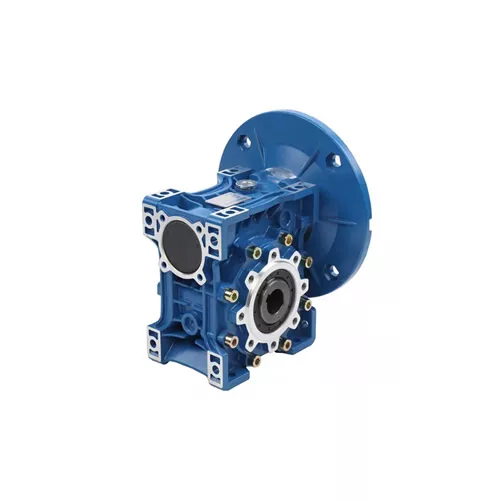
4. High Precision and Surface Finish The lost foam technique produces parts with excellent dimensional accuracy and a high-quality surface finish, which is beneficial for applications requiring tight tolerances.
5. Less Post-Processing Since the components produced have minimal excess material, the need for extensive post-processing is significantly reduced.
Applications of Lost Foam Aluminum Casting
Lost foam aluminum casting has found applications across various industries due to its versatility and efficiency. Key sectors include
- Automotive Industry It is commonly used for producing engine components, such as cylinder heads and manifolds, where complex geometry and weight reduction are critical factors. - Aerospace Components requiring high strength-to-weight ratios and precision engineering are often manufactured using lost foam casting.
- Industrial Equipment Many machinery parts that require both durability and intricate designs can also be efficiently produced using this casting method.
Future Prospects
As industries continue to demand lighter, more complex, and more efficient components, the lost foam aluminum casting process is expected to evolve. Research and technological advancements could lead to improved materials for foam patterns, better refractory coatings, and enhanced process automation. Moreover, as sustainability becomes increasingly crucial, methods to reclaim and recycle foam materials may gain traction, further reducing the environmental impact of the manufacturing process.
In conclusion, lost foam aluminum casting is an innovative and highly effective method for producing precision-engineered components. Its advantages, including the capability to create complex geometries, reduced material waste, and cost effectiveness, make it an attractive option for various manufacturing applications. As technology advances, the lost foam casting process is poised for continued growth, making it a critical player in the future of manufacturing.
-
Choosing an Engine Storage Crate Cover for Material and EnvironmentNewsNov.23,2026
-
Cylinder Head Chamber Buyers: Check the Casting Specification FirstNewsNov.17,2026
-
How Impeller Casting Manufacturers Match Material, Process and EquipmentNewsNov.15,2026
-
Valve body vs. intake air chamber: Which casting fits your assembly?NewsNov.02,2026
-
Air Intake Chamber FAQ: Specifications, Ordering and Support QuestionsNewsOct.28,2026
-
Motorcycle Accessories FAQ: Specifications, Ordering and Support QuestionsNewsOct.24,2026










