English

Mobile:+86-311-808-126-83
Email:info@ydcastings.com
English
Understanding the Differences Between Impellers and Propellers in Fluid Dynamics
The Impeller vs. The Propeller A Comparative Overview
In the realm of fluid dynamics and engineering, two essential devices often come into play the impeller and the propeller. Both are designed to promote fluid movement, but they operate under different principles and are used in various applications. Understanding the differences, similarities, and specific applications of impellers and propellers is crucial for engineers and designers working in fields ranging from maritime to aerospace to industrial machinery.
Fundamentals of Impellers and Propellers
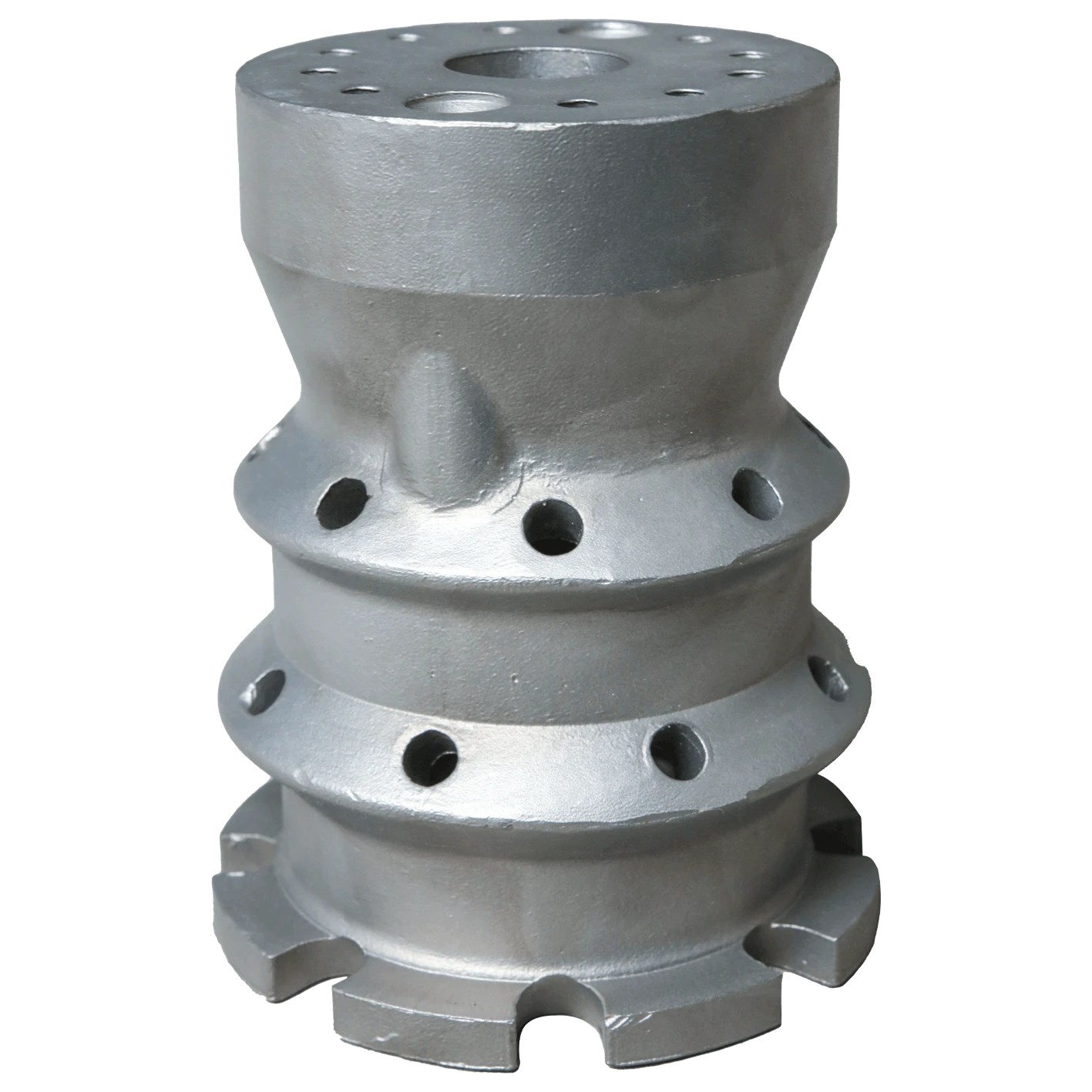
An impeller is a rotating component of a centrifugal pump or compressor, designed to move fluid through the system and increase its pressure and velocity. Impellers are typically enclosed within a casing, which aids in directing the fluid flow and provides a pathway for the increased pressure. The design often includes blades, which can be either straight or curved, influencing how effectively the impeller can convert mechanical energy into fluid motion.
Conversely, a propeller is primarily used in propulsion systems, particularly in marine and aviation applications. A propeller consists of blades attached to a hub, which is driven by an engine. Unlike impellers, propellers are designed to operate in open water or air, converting rotational motion directly into thrust. The angle of the blades and their design significantly impact the efficiency and performance of the propeller.
Operational Mechanisms
The operational mechanism of an impeller focuses on generating flow due to centrifugal force. As the impeller spins, it pushes the fluid outward, creating low-pressure areas that draw more fluid into the system. The design and arrangement of the impeller blades determine the flow characteristics, including pressure and flow rate.
In contrast, a propeller operates by creating a pressure difference between its blades. When the propeller rotates, the blades generate lift and thrust by accelerating the surrounding fluid. The angle at which a propeller meets the fluid – known as the pitch – is crucial for optimizing performance. A higher pitch provides greater thrust at higher speeds, whereas a lower pitch is more suitable for low-speed operations and better maneuverability.
impeller propeller
Applications
Impellers are widely used in various applications, including pumps for water supply, sewage treatment, and chemical processing. They are also found in hydraulic systems and turbochargers, where they facilitate the movement of fluids while increasing pressure.
On the other hand, propellers are integral to the propulsion systems of boats, ships, and aircraft. They are designed for efficiency in fuel consumption and power usage, making them essential for commercial and military vessels, as well as small aircraft. The design of propellers is highly specialized, taking into account factors such as speed, load-bearing capacity, and operating environment.
Advantages and Disadvantages
Both impellers and propellers come with their own sets of advantages and disadvantages. Impellers are advantageous due to their ability to handle viscous fluids and operate efficiently under varying flow rates. However, they can be less effective at providing thrust compared to propellers.
Propellers excel in producing thrust with relatively simple designs, making them easy to manufacture and maintain. Nevertheless, they can be less efficient at high speeds and may suffer from cavitation – a phenomenon where vapor bubbles form, potentially damaging the propeller.
Conclusion
In summary, while impellers and propellers both serve fluid movement purposes, they are distinct in their operation, design, and applications. Understanding the nuances between these two devices is essential for selecting the right equipment for specific engineering challenges. As technology evolves, ongoing innovations in both impeller and propeller designs will continue to enhance their efficiency and effectiveness in various fields.
-
Advanced Manufacturing Technologies in Modern Industrial ProductionNewsMay.22,2026
-
Engine Oil Management Tools: Essential Solutions for Clean and Efficient Automotive MaintenanceNewsMay.22,2026
-
Car Water Pump Systems: Efficiency, Cleaning Applications, and Market OverviewNewsMay.22,2026
-
Industrial Valve Castings and Flow Control Solutions in Modern EngineeringNewsMay.22,2026
-
Aluminum End Caps and Compression Solutions: A Complete Guide for Modern ApplicationsNewsMay.22,2026
-
Precision Valve Castings for Agricultural Irrigation and Fluid Control SystemsNewsMay.08,2026