English

Mobile:+86-311-808-126-83
Email:info@ydcastings.com
English
impeller for motor
Understanding Impellers for Motors A Comprehensive Overview
The impeller is a crucial component in various types of machinery, especially in motors, where it plays a key role in fluid dynamics. By understanding the structure, function, and applications of impellers used in motors, we can optimize efficiency and improve overall performance. This article explores the fundamentals of impellers, focusing on their design, working principles, and the advantages they bring to motor applications.
What is an Impeller?
An impeller is a rotating part of a machine that moves fluid or gas by converting rotational energy, usually from an electric motor, into hydrodynamic energy. Impellers can be found in various devices, including pumps, fans, and compressors. Typically, they consist of a central hub with blades that extend outward, designed to push the fluid outward as they rotate.
Types of Impellers
There are several types of impellers used in motors, each tailored for specific applications. Here are a few commonly recognized types
1. Open Impellers These have no shroud cover over the blades, allowing for easy maintenance and cleaning. They are suitable for handling fluids with larger solids.
2. Closed Impellers In contrast, closed impellers have a shroud on both the inlet and outlet side. They are more efficient in moving the fluid and are commonly used in high-pressure applications.
3. Semi-Open Impellers This type combines features of both open and closed impellers, providing a balance between efficiency and the ability to handle solids.
The choice of impeller type depends on various factors including the specific application, the nature of the fluid, and the desired performance characteristics.
Working Principle
The operation of an impeller is based on the principles of fluid mechanics. As the motor turns the impeller, the blades create a low-pressure area at the center, which draws fluid in. The design of the blades forces the fluid outward, increasing its velocity. As the fluid exits the impeller, it converts kinetic energy into pressure energy, allowing it to be transported through a system effectively.
impeller for motor
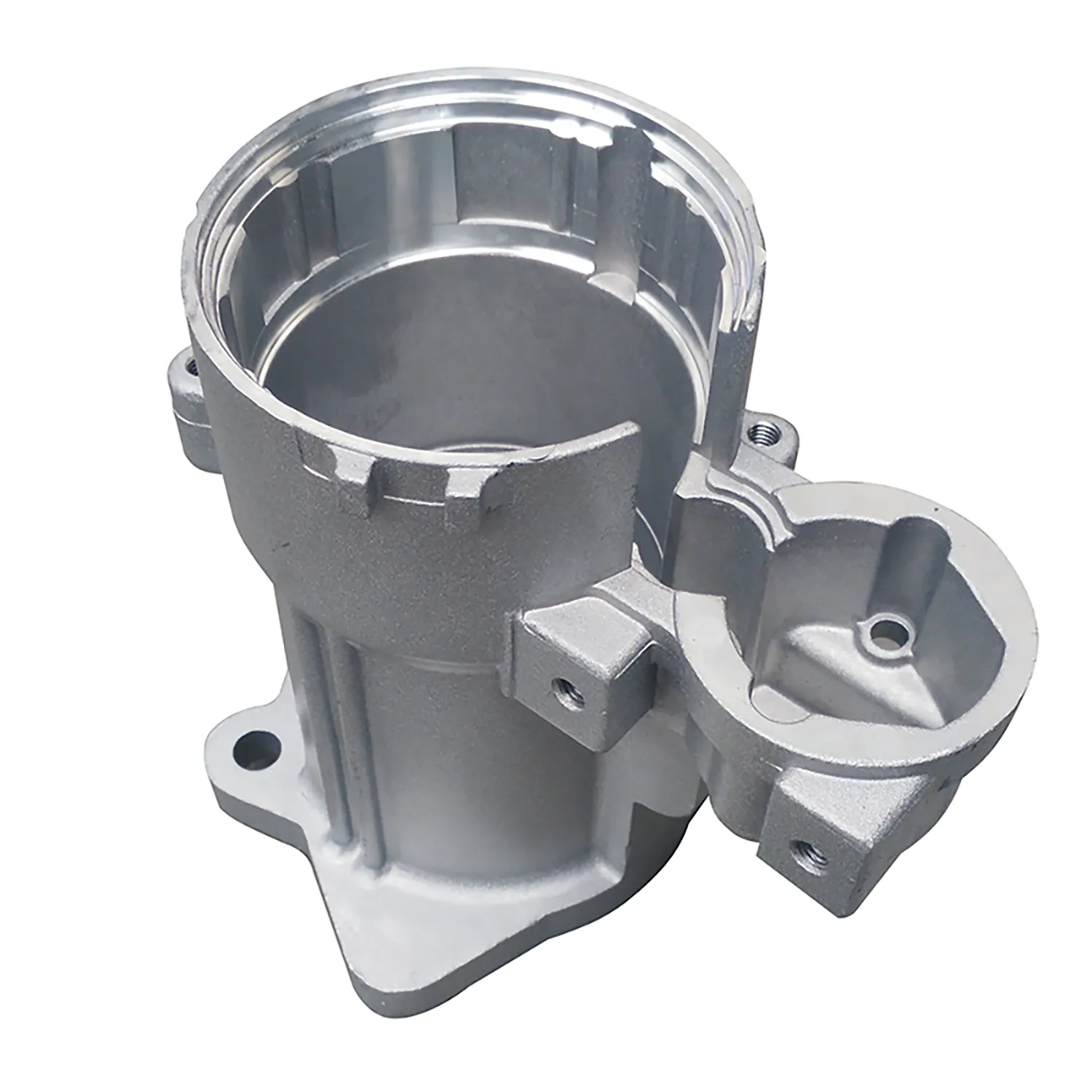
The efficiency of an impeller largely depends on its design and the angle of the blades. Manufacturers use computational fluid dynamics (CFD) simulations to optimize blade shapes and positions, thereby enhancing performance and energy efficiency.
Applications in Motors
Impellers find extensive applications in various industries, prominently in HVAC (Heating, Ventilation, and Air Conditioning) systems, water treatment plants, and chemical processing. In HVAC systems, for example, impellers are integral to fans and blowers that circulate air. In water treatment, impellers are essential in pumps that move large quantities of water through filtration systems.
Furthermore, in the automotive sector, impellers are used in turbochargers to increase engine efficiency and power output by increasing the amount of air entering the engine. In these applications, the design and efficiency of the impeller can significantly impact the performance of the entire system.
Advantages of Using Impellers
The inclusion of impellers in motor designs has numerous advantages
1. Increased Efficiency Well-designed impellers can optimize fluid flow, reducing energy consumption and operational costs.
2. Versatility Different types of impellers can handle a variety of fluids, including those with particulates or corrosive properties, making them suitable for diverse applications.
3. Easy Maintenance Open and semi-open impellers facilitate maintenance and cleaning, which is essential in applications involving dirty or viscous fluids.
4. Enhanced Performance Advanced impeller designs can significantly improve the performance of a motor, leading to higher throughput and better reliability.
Conclusion
In conclusion, impellers are essential components that enable motors to perform effectively in various applications. Understanding their design and operational principles allows engineers and manufacturers to enhance the efficiency and performance of their systems. As technology advances, the development of new impeller designs will continue to open up possibilities for innovation across industries, driving greater efficiencies and improved performance. As we move towards more sustainable industrial practices, the role of impellers in optimizing motor performance will remain ever more critical.
-
Precision Valve Castings for Agricultural Irrigation and Fluid Control SystemsNewsMay.08,2026
-
Precision Impeller and Compressor Components for Agricultural MachineryNewsMay.08,2026
-
Essential Cast Components for Agricultural Machinery: Oil Management and Motor ProtectionNewsMay.08,2026
-
High-Performance Cast Components for Agricultural Machinery: From Cooling to Exhaust SystemsNewsMay.08,2026
-
Agricultural Valve Castings: Durable Flow Control Solutions for Farm Irrigation SystemsNewsMay.08,2026
-
High-Performance Agricultural Pump Components: Precision Castings for Reliable Farm OperationsNewsMay.08,2026