English

Mobile:+86-311-8081-2683
Email:info@ydcastings.com
English
Understanding Impeller Flow Meters for Accurate Fluid Measurement and Applications
Understanding Impeller Flow Meters Functionality and Applications
In numerous industrial applications, the measurement of fluid flow is crucial for operational efficiency and safety. Among various types of flow meters, impeller flow meters stand out due to their robust design, accuracy, and ease of installation. This article delves into the functionality, benefits, and applications of impeller flow meters, highlighting their importance in fluid dynamics.
What is an Impeller Flow Meter?
An impeller flow meter is a type of mechanical flow meter used to measure the flow rate of liquids. It operates based on the principle of mechanical displacement, where the flow of the liquid causes an impeller, typically constructed of non-corrosive materials like plastic or stainless steel, to rotate. The rotational speed of the impeller is directly proportional to the flow rate; thus, by measuring this speed, the flow meter can provide an accurate reading of the fluid's volumetric flow.
Working Principle
The working principle of an impeller flow meter is relatively straightforward. As the liquid enters the meter, it impacts the blades of the impeller, causing it to spin. The flow rate can be determined by either measuring the rotational speed using a magnetic or optical sensor or by calculating the time it takes for the impeller to complete a certain number of rotations. The resulting data is then converted into a flow rate display, often shown in liters per minute (L/min) or gallons per minute (GPM).
Accuracy and Range
The accuracy of an impeller flow meter can be affected by several factors, including the viscosity of the fluid and the condition of the impeller. Generally, these meters are highly accurate for clean, low-viscosity liquids. They typically have a flow measurement range that allows them to comfortably handle both low and high-flow applications. However, it is essential to select the right model based on the specific characteristics of the fluid being measured.
Benefits of Impeller Flow Meters
1. Simplicity and Ease of Use Impeller flow meters are relatively simple to install and require minimal maintenance, making them user-friendly for various applications. 2. Cost-Effectiveness These flow meters tend to be more affordable than complex electronic or mass flow meters, providing a good balance between price and performance.
impeller flow meter
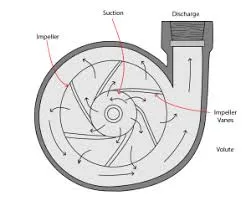
3. Durability Constructed from high-quality materials, impeller flow meters can withstand harsh environmental conditions and resist corrosion, extending their service life.
4. Wide Applicability They are suitable for various industries, including water treatment, chemical processing, and food and beverage production.
Limitations of Impeller Flow Meters
While impeller flow meters are advantageous in many respects, they also have some limitations. For instance, they are not well-suited for measuring high-viscosity fluids or fluids containing large solids, as these can hinder the movement of the impeller and lead to inaccurate readings. Additionally, they can be sensitive to changes in temperature and pressure, which may affect their performance and require calibration adjustments.
Applications in Industry
Impeller flow meters are versatile and are employed in a wide range of industries
- Water Management Used for measuring the distribution of water in municipal systems and wastewater treatment plants. - Chemical Processing They help monitor the flow of various chemicals, ensuring optimal conditions during processing. - Food and Beverage Widely used for tracking the flow of liquids in production lines, ensuring safety and compliance with health regulations. - Pharmaceuticals Critical in processes where precise fluid measurement is crucial for product quality and safety.
Conclusion
Impeller flow meters are invaluable tools in fluid measurement, offering a blend of accuracy, durability, and simplicity. Their ability to measure the flow of various liquids, coupled with their cost-effectiveness, makes them a preferred choice across many industries. By understanding the operational mechanics and appropriate applications of impeller flow meters, businesses can enhance their efficiency and maintain high standards in fluid management. As industries continue to evolve, these flow meters will undoubtedly remain a staple in the toolkit for fluid measurement and monitoring.
-
Choosing an Engine Storage Crate Cover for Material and EnvironmentNewsNov.23,2026
-
Cylinder Head Chamber Buyers: Check the Casting Specification FirstNewsNov.17,2026
-
How Impeller Casting Manufacturers Match Material, Process and EquipmentNewsNov.15,2026
-
Valve body vs. intake air chamber: Which casting fits your assembly?NewsNov.02,2026
-
Air Intake Chamber FAQ: Specifications, Ordering and Support QuestionsNewsOct.28,2026
-
Motorcycle Accessories FAQ: Specifications, Ordering and Support QuestionsNewsOct.24,2026










