English

Mobile:+86-311-808-126-83
Email:info@ydcastings.com
English
Comparison of Impellers and Turbines in Fluid Dynamics Applications
Impellers and Turbines The Heart of Fluid Mechanics
When we delve into the world of fluid mechanics, the concepts of impellers and turbines stand out as pivotal elements in various engineering applications. Both components play crucial roles in converting energy within fluids, yet they serve different purposes and are designed for different operational conditions. Understanding the distinctions and functionalities of impellers and turbines is essential for professionals in fields ranging from mechanical engineering to environmental science.
What is an Impeller?
An impeller is a rotating component found in pumps and compressors, primarily designed to enhance the movement and pressure of liquids or gases. The basic structure of an impeller consists of blades that are attached to a hub. When the hub spins, the blades create a centrifugal force that pushes the fluid outward, increasing its velocity and pressure. Impellers are used extensively in a range of applications, including water treatment facilities, chemical processing, and HVAC systems.
The efficiency of an impeller is a critical factor in determining the performance of the system it is a part of. Factors such as blade shape, angle, and number greatly influence its ability to move fluids effectively. Moreover, impellers come in various designs, including open, semi-open, and closed configurations, each suited for specific types of fluids and operating conditions.
Turbines Harnessing Energy from Fluid Flow
On the other hand, turbines are devices that convert the kinetic and potential energy available in a fluid into mechanical energy. These are typically used to generate power, most notably in hydroelectric plants, where water flows through the turbine, causing it to spin and drive a generator.
impeller and turbine
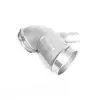
Turbines can be categorized into two main types impulse and reaction turbines. Impulse turbines, such as the Pelton wheel, work by directing high-speed jets of water onto the blades, causing them to spin. Reaction turbines, like the Kaplan and Francis turbines, utilize both the kinetic and pressure energy of flowing water to generate rotation. Each type has its own set of advantages and is suited to different hydraulic conditions.
Applications and Importance
The applications of impellers and turbines are vast and varied. In the industrial sector, they are used in processes such as mixing, aeration, and displacement of fluids. In energy production, turbines are integral to the operation of power plants, translating the flow of water, steam, or gas into electricity, thereby contributing significantly to global energy supply.
Moreover, these components have implications in environmental sustainability. Innovative designs and materials are being developed to create more efficient and eco-friendly impellers and turbines, minimizing energy loss and reducing adverse environmental impacts.
Conclusion
In summary, while impellers and turbines may appear similar by virtue of their rotational motion and their association with fluid dynamics, they serve distinct purposes within mechanical systems. Impellers focus on moving fluids, increasing their pressure and flow rate, while turbines are engineered to generate energy from fluid movement. Understanding these differences is crucial for engineers and designers who seek to optimize performance in applications where fluid dynamics is key. As technology advances, the evolution of these components will continue to influence energy efficiency and sustainability in engineering practices worldwide.
-
Materials Used in Manufacturing Cap End Pipe FittingsNewsNov.24,2025
-
Material Properties of CF8M CastingNewsNov.24,2025
-
How to Inspect Pump Cap Ends for DamageNewsNov.21,2025
-
Backward Curved Impeller – Efficient Airflow Solutions for Industry | YD CastingsNewsNov.21,2025
-
Automobile Water Pump - Efficient, Quiet, Durable & ElectricNewsNov.21,2025
-
Impeller for Pumps – High-Efficiency, Durable, OEM-ReadyNewsNov.21,2025