English

Mobile:+86-311-8081-2683
Email:info@ydcastings.com
English
impeller wheel
The Impeller Wheel A Marvel of Engineering
The impeller wheel is a crucial component in many mechanical systems, particularly in pumps and turbines. Its primary function is to convert rotational energy into fluid flow, making it a vital part of various applications, from industrial machinery to aerodynamics.
At its core, an impeller wheel operates on the principle of centrifugal force. When the wheel, which is usually shaped like a disk with curved blades, spins at high velocities, it throws fluid outward from the center. This action creates a low-pressure area at the center, drawing more fluid into the wheel. The effectiveness of an impeller is significantly influenced by its design, including the shape, number of blades, and the angle of attack.
Different types of impellers serve specific purposes. For instance, open impellers have blades that are not enclosed by a shroud, making them suitable for pumping fluids with suspended solids. In contrast, closed impellers feature blades that are shrouded on both sides, which enhances efficiency and is ideal for clear fluids. Semi-open impellers combine elements from both designs, offering versatility in handling various fluid types.
impeller wheel
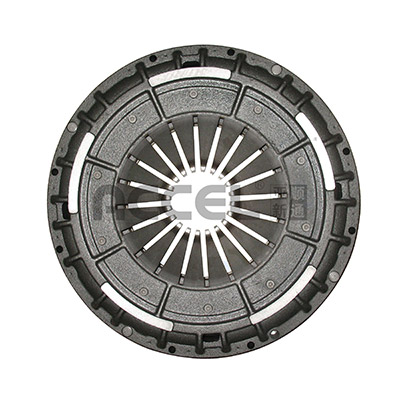
In the field of aerodynamics, impeller wheels play a critical role in turbochargers and superchargers. These systems enhance the performance of internal combustion engines by forcing more air into the combustion chamber, leading to increased power output. The design of the impeller in these applications must be optimized to balance efficiency and boost pressure.
Modern advancements in computational fluid dynamics (CFD) have revolutionized the design of impeller wheels. Engineers can now simulate fluid flow within the impeller, allowing for the optimization of blade shapes and angles before physical prototypes are created. This enhances performance, efficiency, and longevity, minimizing the trial-and-error process traditionally associated with mechanical design.
Impeller wheel designs also find applications in renewable energy, particularly in the development of wind and hydro turbines. By harnessing natural forces, they contribute to environmentally friendly energy solutions, emphasizing the importance of innovative engineering in tackling global energy challenges.
In conclusion, the impeller wheel is more than just a mechanical part; it is an engineering marvel that exemplifies the fusion of design and functionality. Whether improving industrial processes, enhancing vehicle performance, or contributing to sustainable energy sources, the impeller wheel’s impact is far-reaching and continues to evolve with technological advancements. Its role in fluid dynamics underscores the importance of efficient engineering solutions in modern society.
-
Choosing an Engine Storage Crate Cover for Material and EnvironmentNewsNov.23,2026
-
Cylinder Head Chamber Buyers: Check the Casting Specification FirstNewsNov.17,2026
-
How Impeller Casting Manufacturers Match Material, Process and EquipmentNewsNov.15,2026
-
Valve body vs. intake air chamber: Which casting fits your assembly?NewsNov.02,2026
-
Air Intake Chamber FAQ: Specifications, Ordering and Support QuestionsNewsOct.28,2026
-
Motorcycle Accessories FAQ: Specifications, Ordering and Support QuestionsNewsOct.24,2026










