English

Mobile:+86-311-8081-2683
Email:info@ydcastings.com
English
Different Types of Fan Impellers and Their Applications in Various Industries
Understanding Fan Impeller Types A Comprehensive Overview
Fans are essential components in numerous industrial and commercial applications, playing a crucial role in ventilation, cooling, and air circulation. At the heart of every fan lies the impeller, a critical element responsible for the movement of air. The design and type of impeller can significantly affect the performance, efficiency, and application suitability of the fan. In this article, we explore the various types of fan impellers, their characteristics, and their suitable applications.
1. Axial Impellers
Axial impellers are one of the most common types used in fans. These impellers work by moving air parallel to the axis of rotation. As the blades rotate, they push air in a straight line, which results in high airflow rates at lower pressure. Axial impellers can be manufactured in various designs, including reversible flow, which allows air to move in either direction. This flexibility makes axial fans ideal for general ventilation applications, including cooling towers, greenhouses, and exhaust systems.
One of the main advantages of axial impellers is their efficiency in moving large volumes of air with minimal energy consumption. However, they are less effective in generating high static pressure, limiting their use in applications requiring significant air resistance.
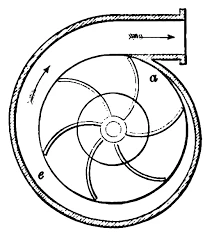
Centrifugal impellers, on the other hand, generate airflow by directing air radially outward from the center. As the impeller rotates, it converts kinetic energy into pressure, allowing it to overcome resistance in duct systems effectively. This characteristic makes centrifugal fans the preferred choice for applications requiring high static pressure, such as HVAC systems, dust collection, and pneumatic conveying.
Centrifugal impellers can be further categorized into several sub-types, including forward-curved, backward-curved, and radial. Forward-curved impellers are designed to move air efficiently at lower speeds, making them suitable for low-pressure applications. Backward-curved impellers, conversely, are suited for high-pressure applications due to their ability to handle higher airflow rates while consuming less power.
3. Mixed Flow Impellers
fan impeller types
Mixed flow impellers combine the principles of both axial and centrifugal designs. They move air both parallel and perpendicular to the impeller axis, resulting in a hybrid airflow that combines the benefits of high airflow rates and high pressure. Mixed flow impellers are commonly used in applications such as air conditioning systems, automotive cooling fans, and industrial ventilation where both airflow and pressure are critical.
These impellers typically feature a more compact design compared to traditional axial or centrifugal impellers, allowing for installations in space-constrained environments without compromising performance.
4. Bladeless Impellers
A less conventional type of impeller is the bladeless impeller, which uses innovative designs to create airflow without conventional blades. This technology often utilizes oscillation or vibration to move air efficiently. Bladeless fans, popularized in consumer products, have drawn attention for their aesthetic appeal and safety, especially in households with children or pets.
While suitable for low-noise applications, bladeless impellers typically deliver lower airflow rates compared to traditional impeller designs, making them less effective for high-demand industrial applications.
Conclusion
The choice of fan impeller type is crucial for achieving optimal performance in various applications. Axial impellers excel at moving large volumes of air at low pressure, making them ideal for ventilation. Centrifugal impellers offer high static pressure, making them suitable for HVAC and dust collection systems. Mixed flow impellers bridge the gap between the two, providing versatility in applications requiring both airflow and pressure.
Understanding the differences in impeller designs helps industries select the proper fan system, ensuring efficiency and effectiveness in their operations. As technology advances, we can expect to see further innovations in fan impeller designs, leading to even greater efficiencies and applications across various sectors.
-
Choosing an Engine Storage Crate Cover for Material and EnvironmentNewsNov.23,2026
-
Cylinder Head Chamber Buyers: Check the Casting Specification FirstNewsNov.17,2026
-
How Impeller Casting Manufacturers Match Material, Process and EquipmentNewsNov.15,2026
-
Valve body vs. intake air chamber: Which casting fits your assembly?NewsNov.02,2026
-
Air Intake Chamber FAQ: Specifications, Ordering and Support QuestionsNewsOct.28,2026
-
Motorcycle Accessories FAQ: Specifications, Ordering and Support QuestionsNewsOct.24,2026










