English

Mobile:+86-311-8081-2683
Email:info@ydcastings.com
English
Optimizing Electric Motor Performance with Advanced Impeller Designs and Technologies
The Electric Motor Impeller A Key Component in Modern Technology
In today's world, electric motors play an essential role in various applications, from household appliances to industrial machinery. One crucial component that significantly enhances the efficiency and effectiveness of electric motors is the impeller. This article delves into the function, design, and applications of electric motor impellers, shedding light on their importance in modern technology.
An impeller is a rotating component found in various types of machinery, particularly in pumps and turbines. Its primary purpose is to convert rotational energy from an electric motor into kinetic energy in the fluid it moves, usually either a liquid or gas. By spinning, impellers create a pressure differential that allows for the efficient movement of fluids, making them invaluable in numerous applications.
Functionality of Impellers
The functionality of an impeller is primarily determined by its design. Most impellers consist of blades arranged around a central hub. The shape, number, and orientation of these blades are critical factors that influence the performance of the impeller. When the electric motor rotates the impeller, the blades impart energy to the fluid, causing it to accelerate and move in the desired direction.
In centrifugal pumps, for example, the impeller plays a critical role in moving water or other fluids through the system. As the impeller spins, it draws fluid into the center, where it is then flung outward by the blades due to centrifugal force. This process creates a vacuum at the center of the impeller, allowing more fluid to be drawn in and ensuring a continuous flow.
Design Considerations
When designing an impeller for an electric motor, several factors must be taken into consideration. The material of the impeller is crucial as it must withstand the forces exerted on it during operation. Common materials include stainless steel, plastic, and composite materials, each offering different benefits regarding weight, strength, and resistance to corrosion.
Moreover, the size and shape of the impeller must match the specific requirements of the application. For instance, larger impellers are often used in high-flow applications, while smaller ones may be necessary for systems that require precise flow control. The design should also account for the rotational speed of the electric motor, as higher speeds demand impellers that can handle increased stress without failure.
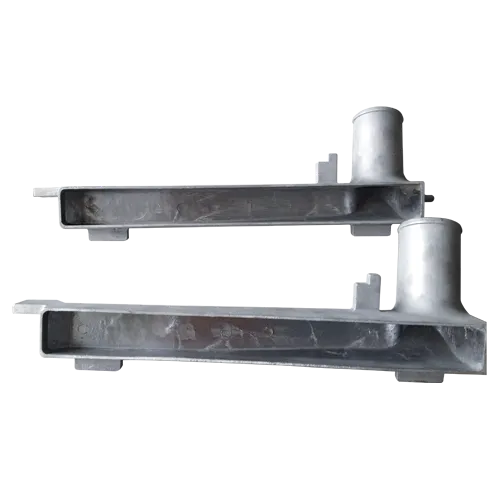
electric motor impeller
Applications of Electric Motor Impellers
Electric motor impellers are widely utilized across various industries. In the water and wastewater industry, impellers are a crucial component of pumps that help in the distribution and treatment of water. In HVAC systems, impellers are employed in fans and blowers to circulate air effectively. The automotive industry also utilizes impellers in fuel pumps and cooling systems, ensuring vehicles operate efficiently and safely.
Furthermore, electric motor impellers find significant applications in the food and beverage industry. They are used in mixers and blenders to achieve uniform mixtures and emulsions, crucial for product quality. The pharmaceutical industry similarly relies on impellers for precise mixing and fluid transfer during drug production.
Future Trends and Innovations
As technology advances, the design and functionality of electric motor impellers continue to evolve. Innovations such as computational fluid dynamics (CFD) allow engineers to simulate and optimize impeller designs for greater efficiency and performance. Additionally, developments in materials technology are leading to lighter and more durable impellers, which can withstand higher operational demands.
Moreover, with the rise of renewable energy and electric vehicles, the demand for efficient and reliable electric motor impellers is expected to grow. As industries strive for sustainability, impellers that enhance energy efficiency will play a pivotal role in reducing overall energy consumption.
Conclusion
In summary, electric motor impellers are indispensable components in a wide range of applications across various industries. Their ability to efficiently convert electrical energy into kinetic energy makes them vital for fluid movement and management in modern technology. As we look to the future, continued advancements in design and materials will ensure that electric motor impellers remain at the forefront of innovation, contributing to enhanced efficiency and sustainability in numerous fields.
-
Choosing an Engine Storage Crate Cover for Material and EnvironmentNewsNov.23,2026
-
Cylinder Head Chamber Buyers: Check the Casting Specification FirstNewsNov.17,2026
-
How Impeller Casting Manufacturers Match Material, Process and EquipmentNewsNov.15,2026
-
Valve body vs. intake air chamber: Which casting fits your assembly?NewsNov.02,2026
-
Air Intake Chamber FAQ: Specifications, Ordering and Support QuestionsNewsOct.28,2026
-
Motorcycle Accessories FAQ: Specifications, Ordering and Support QuestionsNewsOct.24,2026










