English

Mobile:+86-311-8081-2683
Email:info@ydcastings.com
English
diffuser casing
Understanding Diffuser Casings A Critical Component in Fluid Dynamics
In the realm of fluid dynamics, the efficiency and effectiveness of various systems hinge upon several critical components. One such component is the diffuser casing, which plays a pivotal role in enhancing the performance of pumps, turbines, and compressors. Understanding the intricacies of diffuser casings is essential for engineers and designers aiming to optimize these systems.
What is a Diffuser Casing?
A diffuser casing is a device that helps convert the kinetic energy of a fluid into pressure energy. Located downstream of a rotor in pumps and turbines, the diffuser consists of a series of diverging passages that allow the fluid to expand. As the fluid flows through these passages, its velocity decreases while its pressure increases. This process is fundamental in applications where high pressure is required and is often a crucial part of achieving efficient energy transfer.
The Role of Diffuser Casings in Energy Conversion
In centrifugal pumps, for example, the rotor imparts kinetic energy to the fluid, causing it to flow at high velocity. However, if this kinetic energy is not efficiently converted into pressure energy, the performance of the pump decreases significantly. Here, the diffuser casing becomes indispensable. By allowing the fluid to expand in a controlled manner, the diffuser facilitates a smooth transition from kinetic energy to pressure energy, thus optimizing the overall efficiency of the system.
Similarly, in turbines, where the process is reversed, the diffuser plays a critical role in collecting the fluid exiting the rotor
. The design of the diffuser casing directly impacts the system’s ability to extract work from the fluid, ultimately determining the efficiency of energy generation.Design Considerations for Diffuser Casings
The design of a diffuser casing is a complex process that involves multiple considerations. Engineers must take into account the fluid dynamics involved, including the flow rate, fluid properties, and operating conditions. Key aspects of diffuser design include
diffuser casing
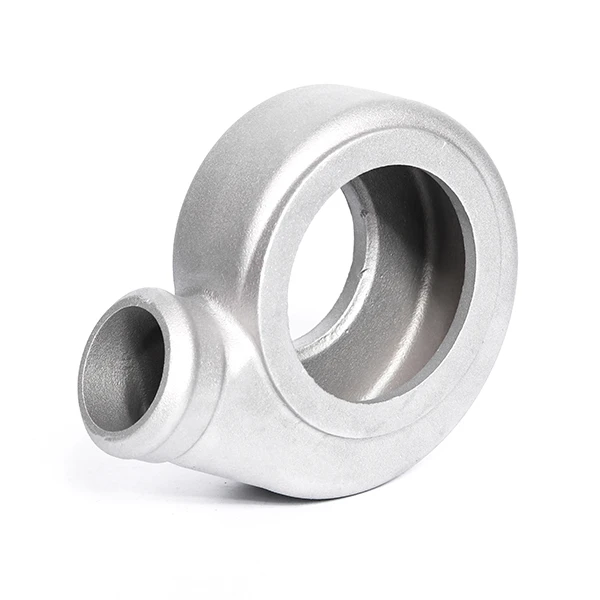
1. Geometry The shape and dimensions of the diffuser casing significantly influence its performance. An optimal diffuser will have a gradual expansion to minimize energy losses and prevent flow separation, which can lead to turbulence and inefficiency.
2. Material Selection The choice of materials used in constructing the diffuser is crucial, especially in high-pressure and high-temperature applications. Materials need to withstand the operating conditions while providing durability and performance.
3. Flow Configuration Diffuser casings can be designed in various configurations, including single or multiple stages. Each configuration has its advantages and is selected based on the specific requirements of the application.
4. Manufacturing Techniques Advances in manufacturing technologies, such as 3D printing and computer-aided design, have enabled the creation of complex diffuser geometries that were previously impossible to produce. These advancements allow for more precise control over the flow paths and performance characteristics of the diffuser.
Future Outlook and Innovations
As industries continue to innovate and push the boundaries of efficiency, the role of diffuser casings is becoming increasingly significant. Research is focusing on enhancing the design and materials used in diffuser casings to improve performance in renewable energy systems, such as wind turbines.
Moreover, the integration of computational fluid dynamics (CFD) has transformed the design process, allowing for simulations that predict performance and streamline the development of new designs. As these technologies evolve, the field is expected to see further enhancements in diffuser casing designs, leading to more efficient fluid management systems across various industries.
Conclusion
In conclusion, the diffuser casing is more than just a passive component; it is an essential element that significantly influences the performance and efficiency of fluid dynamics systems. Its ability to convert kinetic energy into pressure energy effectively determines the success of pumps, turbines, and compressors. As engineering practices continue to advance, the ongoing innovation in diffuser design will play a crucial role in meeting the demands for efficiency and performance in an ever-evolving technological landscape. Understanding this component’s significance is vital for engineers and practitioners aiming to create robust and efficient fluid systems in the future.
-
Choosing an Engine Storage Crate Cover for Material and EnvironmentNewsNov.23,2026
-
Cylinder Head Chamber Buyers: Check the Casting Specification FirstNewsNov.17,2026
-
How Impeller Casting Manufacturers Match Material, Process and EquipmentNewsNov.15,2026
-
Valve body vs. intake air chamber: Which casting fits your assembly?NewsNov.02,2026
-
Air Intake Chamber FAQ: Specifications, Ordering and Support QuestionsNewsOct.28,2026
-
Motorcycle Accessories FAQ: Specifications, Ordering and Support QuestionsNewsOct.24,2026










