English

Mobile:+86-311-8081-2683
Email:info@ydcastings.com
English
Design and Optimization of Spiral Impeller for Enhanced Fluid Flow Efficiency
The Significance of Spiral Impellers in Modern Engineering
In the realm of fluid mechanics and engineering, spiral impellers play a crucial role in the design and functionality of various machinery, including pumps, turbines, and compressors. Their unique geometry and operational principles make them a popular choice for applications that require efficient fluid movement and mixing. This article delves into the importance of spiral impellers, their working mechanisms, and their advantages in modern engineering.
Understanding Spiral Impellers
Spiral impellers, characterized by their helical-shaped blades, are designed to impart energy to a fluid. The term impeller refers to a rotor used to increase the pressure and flow of a fluid, typically within a pump or turbine. The spiral shape allows for a continuous flow path, promoting efficient fluid dynamics. By creating a centrifugal force, spiral impellers move fluids from the center to the outer edges, effectively increasing the fluid's kinetic energy and pressure.
Working Mechanism
The functionality of spiral impellers is based on the principles of fluid dynamics. When fluid enters the impeller near its center, it encounters the spiral blades that are angled to push the fluid outward. As the impeller rotates, the helical blades convert angular momentum into fluid momentum. This action effectively accelerates the fluid, which is then expelled at a high velocity from the periphery of the impeller.
By varying the design parameters such as blade angle, number of blades, and diameter, engineers can tailor spiral impellers to specific applications. This customization allows for optimized performance, whether it’s in a high-pressure pump or a low-flow mixing system.
Applications of Spiral Impellers
Spiral impellers have a wide range of applications across various industries. In wastewater treatment facilities, they are used in aeration systems to mix air with water, promoting the growth of beneficial microorganisms. This process enhances the degradation of organic pollutants, thereby improving the quality of treated water.
spiral impeller
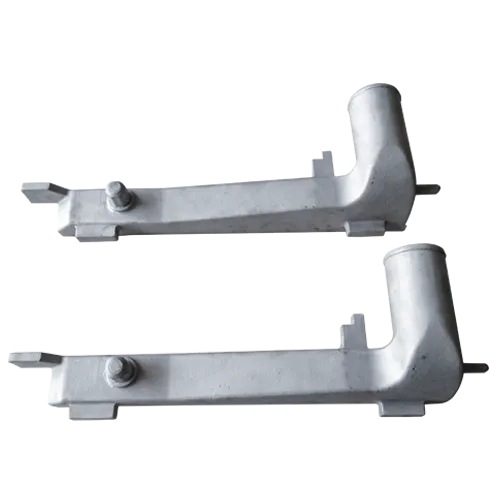
In chemical processing, spiral impellers play a vital role in mixing different substances, ensuring uniformity and consistency in product formulation. The ability to handle viscous materials makes them indispensable in industries that deal with polymers, paints, and food products, where effective blending is critical.
Additionally, spiral impellers are used in HVAC systems to enhance air circulation, improving energy efficiency and maintaining comfortable indoor environments. By facilitating optimal airflow, they contribute to better heating, cooling, and ventilation processes.
Advantages of Spiral Impellers
One of the primary advantages of spiral impellers is their efficiency in handling complex fluid flows. Their design minimizes turbulence, allowing for smoother operation and reduced energy consumption. This efficiency translates into cost savings and improved sustainability, as lower energy use leads to decreased environmental impact.
Furthermore, spiral impellers are engineered for durability, capable of withstanding harsh operating conditions, including corrosive fluids and high temperatures. This robustness reduces the frequency of maintenance and repairs, contributing to overall operational reliability.
Spiral impellers also offer versatility. Their adaptable design can be modified to suit various flow rates and pressure requirements, making them suitable for both industrial and residential applications. This versatility ensures that engineers can deploy them effectively across diverse sectors.
Conclusion
In conclusion, spiral impellers represent a vital component in modern engineering and fluid dynamics. Their innovative design and operational efficiency not only improve the performance of various systems but also contribute to sustainable practices within numerous industries. As technology evolves, the importance of optimizing fluid movement will only grow, ensuring that spiral impellers remain a key player in the future of engineering applications. Their ability to combine functionality with efficiency makes them indispensable in a world increasingly focused on sustainability and performance. Whether in pumps, turbines, or mixers, spiral impellers continue to shape the landscapes of engineering, offering solutions that meet the demands of modern society.
-
Choosing an Engine Storage Crate Cover for Material and EnvironmentNewsNov.23,2026
-
Cylinder Head Chamber Buyers: Check the Casting Specification FirstNewsNov.17,2026
-
How Impeller Casting Manufacturers Match Material, Process and EquipmentNewsNov.15,2026
-
Valve body vs. intake air chamber: Which casting fits your assembly?NewsNov.02,2026
-
Air Intake Chamber FAQ: Specifications, Ordering and Support QuestionsNewsOct.28,2026
-
Motorcycle Accessories FAQ: Specifications, Ordering and Support QuestionsNewsOct.24,2026










