English

Mobile:+86-311-8081-2683
Email:info@ydcastings.com
English
cutter impeller
Understanding Cutter Impellers Design, Function, and Applications
Cutter impellers play a crucial role in various mechanical systems, particularly in pumps and mixers utilized in diverse industries such as wastewater treatment, pharmaceuticals, and food processing. As a key component, the performance of a cutter impeller directly impacts the efficiency of the equipment it is integrated into. In this article, we will explore the design, functionality, and applications of cutter impellers, shedding light on their importance in modern engineering.
Design of Cutter Impellers
Cutter impellers are specifically engineered to handle both the fluid dynamics and the solid materials within a given environment. The design usually incorporates sharp edges or blades that are effective in slicing through various substances, thereby promoting the efficient mix and transfer of fluids. These blades are arranged in a way that enhances flow patterns, known as fluid dynamics, to optimize the movement of materials whether they are liquids, slurries, or even mixtures containing solids.
The materials utilized in the construction of cutter impellers vary based on the operational requirements and the environment in which they will be used. Stainless steel is a common choice due to its corrosion resistance and durability, particularly in chemical processing applications. However, other materials such as plastics or specialized alloys may be used in specific situations to meet the demands of different industries.
Dimensions and shapes are also tailored to the specific tasks. For instance, the blade angle, height, and overall diameter of the impeller adjust the flow rates and shear forces to meet the specific requirements of the process. A well-designed cutter impeller minimizes energy consumption while maximizing the effectiveness of cutting and mixing.
Functionality of Cutter Impellers
Cutter impellers operate on the principle of converting rotational energy from a motor into kinetic energy, which moves the fluid. As the impeller spins, the blades create a pressure differential that draws fluids into the pump or mixer, while simultaneously directing the flow of material outward.
cutter impeller
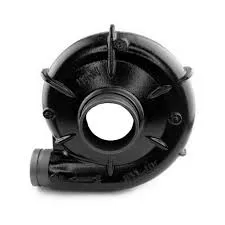
One of the primary functions of cutter impellers is to shred or cut solid materials within a liquid medium
. This capability is vital in scenarios where solids must be reduced in size, such as in sewage treatment or food processing. By breaking down larger particles, cutter impellers facilitate better mixing, enhance the chemical reactions involved, and improve the overall efficiency of the process.Additionally, cutter impellers also play a significant role in homogenization, especially in industries like pharmaceuticals and cosmetics, where consistent texture and composition are paramount. By efficiently blending different components, cutter impellers help to produce uniform formulations that meet strict industry standards.
Applications of Cutter Impellers
The applications of cutter impellers are vast and encompass several key sectors. In wastewater treatment facilities, they are essential for shredding and mixing organic materials, helping to optimize the treatment process and enhance the breakdown of waste. In food and beverage manufacturing, cutter impellers are widely used in processes such as emulsifying, blending, or dispersing ingredients to create sauces, dressings, or other food products.
The pharmaceutical industry benefits immensely from cutter impellers, particularly in the preparation of suspensions and emulsions. Here, the ability to achieve a consistent and fine mixture is critical for product quality, safety, and efficacy. The design of the cutter impeller ensures that active ingredients are evenly distributed, thereby ensuring uniformity in medication dosages.
Moreover, cutter impellers are also employed in the chemical processing sector for the mixing and homogenization of various materials, ensuring that reactions occur smoothly and efficiently. Their ability to handle both solids and liquids makes them highly suitable for a range of processes, from the production of paints to the formulation of consumer products.
Conclusion
In summary, cutter impellers are integral components in a myriad of industries, offering essential functions that enhance efficiency and effectiveness in processing liquids and solids. Their specialized design, focused on fluid dynamics and material properties, enables them to perform critical tasks ranging from cutting and shredding to homogenizing mixtures. As technological advancements continue, the evolution of cutter impeller designs will likely lead to even greater efficiencies and capabilities in industrial applications, making them a crucial area of focus for engineers and manufacturers alike.
-
Choosing an Engine Storage Crate Cover for Material and EnvironmentNewsNov.23,2026
-
Cylinder Head Chamber Buyers: Check the Casting Specification FirstNewsNov.17,2026
-
How Impeller Casting Manufacturers Match Material, Process and EquipmentNewsNov.15,2026
-
Valve body vs. intake air chamber: Which casting fits your assembly?NewsNov.02,2026
-
Air Intake Chamber FAQ: Specifications, Ordering and Support QuestionsNewsOct.28,2026
-
Motorcycle Accessories FAQ: Specifications, Ordering and Support QuestionsNewsOct.24,2026










