English

Mobile:+86-311-8081-2683
Email:info@ydcastings.com
English
Feb . 14, 2025 20:01
Back to list
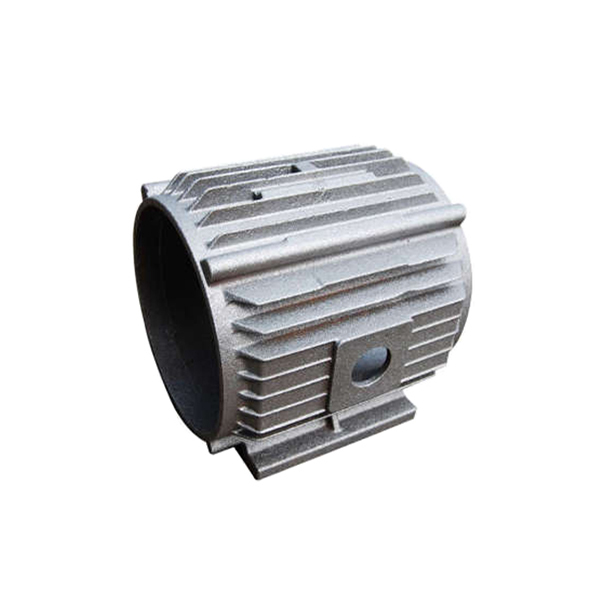
Water pump shell, worm case
Curved blade impellers are a fascinating and highly effective component in numerous industrial applications, known for enhancing fluid movement efficiency significantly compared to their straight-blade counterparts. Their design intricacies, optimization, and applications are critical areas that draw interest from engineers and industry specialists alike. This article delves into the uniqueness, functionality, and industry-specific applications of curved blade impellers, focusing on delivering expert insights and credible information to readers seeking deep understanding.
In the realm of wastewater management, the role of curved blade impellers is equally significant. They are capable of moving large volumes of fluid with varying particle sizes, ensuring thorough treatment and efficient chemical mixing. Their ability to maintain consistent flow rates under pressure variations makes them a preferred choice for wastewater treatment plants aiming for sustainable and energy-efficient operations. Expert manufacturers, drawing on years of research and development, continue to innovate in the design of curved blade impellers, pushing boundaries to enhance their efficiency and application range. The understanding and expertise invested in each design iteration demonstrate their commitment to meeting evolving industrial demands. Collaboration with engineers and industry specialists during the development phase enhances the effectiveness of these components by ensuring they meet specific performance criteria required in various applications. Maintenance of curved blade impellers, while necessary, is often straightforward due to their robust design and high-quality materials. Regular inspections are recommended to ensure peak performance and address any wear and tear before they lead to equipment failure. Using proper lubricants and adhering to operational best practices can significantly extend the lifespan of these impellers, providing value over long-term usage. In conclusion, curved blade impellers represent the pinnacle of fluid movement technology, born from a deep understanding of complex engineering principles and real-world industrial needs. Their innovative design and application versatility make them a critical component in various sectors, contributing to enhanced operational efficiency and sustainability. Trust in these impellers is warranted by the expertise and credibility of their manufacturers and the tangible benefits they bring to their respective industries.
In the realm of wastewater management, the role of curved blade impellers is equally significant. They are capable of moving large volumes of fluid with varying particle sizes, ensuring thorough treatment and efficient chemical mixing. Their ability to maintain consistent flow rates under pressure variations makes them a preferred choice for wastewater treatment plants aiming for sustainable and energy-efficient operations. Expert manufacturers, drawing on years of research and development, continue to innovate in the design of curved blade impellers, pushing boundaries to enhance their efficiency and application range. The understanding and expertise invested in each design iteration demonstrate their commitment to meeting evolving industrial demands. Collaboration with engineers and industry specialists during the development phase enhances the effectiveness of these components by ensuring they meet specific performance criteria required in various applications. Maintenance of curved blade impellers, while necessary, is often straightforward due to their robust design and high-quality materials. Regular inspections are recommended to ensure peak performance and address any wear and tear before they lead to equipment failure. Using proper lubricants and adhering to operational best practices can significantly extend the lifespan of these impellers, providing value over long-term usage. In conclusion, curved blade impellers represent the pinnacle of fluid movement technology, born from a deep understanding of complex engineering principles and real-world industrial needs. Their innovative design and application versatility make them a critical component in various sectors, contributing to enhanced operational efficiency and sustainability. Trust in these impellers is warranted by the expertise and credibility of their manufacturers and the tangible benefits they bring to their respective industries.
Latest news
-
Choosing an Engine Storage Crate Cover for Material and EnvironmentNewsNov.23,2026
-
Cylinder Head Chamber Buyers: Check the Casting Specification FirstNewsNov.17,2026
-
How Impeller Casting Manufacturers Match Material, Process and EquipmentNewsNov.15,2026
-
Valve body vs. intake air chamber: Which casting fits your assembly?NewsNov.02,2026
-
Air Intake Chamber FAQ: Specifications, Ordering and Support QuestionsNewsOct.28,2026
-
Motorcycle Accessories FAQ: Specifications, Ordering and Support QuestionsNewsOct.24,2026
Related PRODUCTS










