English

Mobile:+86-311-8081-2683
Email:info@ydcastings.com
English
centrifugal fan impeller
The Centrifugal Fan Impeller Design, Function, and Applications
Centrifugal fan impellers play a crucial role in the functionality of centrifugal fans, which are widely used in various industrial and commercial applications. Understanding the design and operation of centrifugal fan impellers can provide insights into their efficiency and effectiveness in moving air and gases.
Design and Structure
The impeller is the core component of a centrifugal fan. It consists of several blades arranged around a central hub. This design is engineered to convert the rotational energy of the impeller into kinetic energy, increasing the velocity of the air or gas being transported. The blades are typically curved and may vary in number, shape, and size, depending on the specific application of the fan.
Key design parameters include the blade angle, thickness, and spacing, which significantly influence the fan's performance. An optimal blade angle can ensure greater airflow and efficiency, while blade thickness affects the strength and aerodynamic characteristics. Additionally, impellers can be classified into two main types forward-curved, which provide high airflow at lower pressures, and backward-curved, which are more efficient at generating higher pressures.
Functioning Mechanism
When the impeller rotates, it creates a low-pressure area at the center that draws air into the fan. As the air moves through the impeller, it is accelerated by the blades, which impart energy and propel the air outward towards the discharge. This process is governed by the principles of centrifugal force, where the movement of the blades pushes the air away from the center, leading to an increase in pressure and velocity.
centrifugal fan impeller
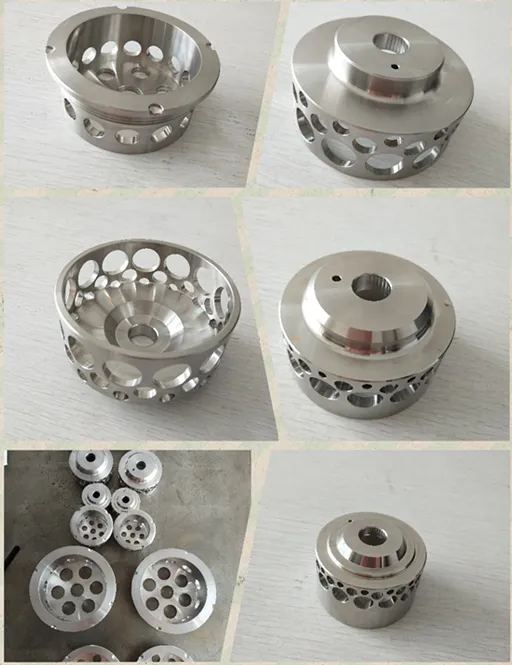
The efficiency of a centrifugal fan impeller is affected by various factors, including the speed of rotation, the geometry of the blades, and the properties of the fluid being moved. Engineers must consider these factors carefully during the design process to ensure optimal performance. Computational fluid dynamics (CFD) simulations are commonly utilized to analyze airflow patterns and refine impeller designs for improved efficiency.
Applications of Centrifugal Fan Impellers
Centrifugal fan impellers are used in a broad range of applications, from simple ventilation systems to complex industrial processes. In HVAC systems, they circulate air to maintain comfortable indoor temperatures. In manufacturing, they help in dust collection and fume extraction, providing a safe working environment.
Additionally, centrifugal fan impellers find uses in automotive applications, such as cooling systems for engines and cabin ventilation. The versatility of these impellers is evident in their ability to handle various types of air flows, including clean air, corrosive gases, and high-temperature ventilation.
In the realm of renewable energy, centrifugal fans equipped with specialized impellers are utilized in wind turbines to optimize airflow and enhance the efficiency of energy conversion.
Conclusion
Centrifugal fan impellers are pivotal components that determine the effectiveness and efficiency of centrifugal fans across a multitude of settings. Their innovative designs and operational principles allow for diverse applications, showcasing their necessity in modern engineering. As industries continue to seek energy-efficient solutions, ongoing advancements in impeller technology will likely lead to improved designs that meet the demands of the future. Understanding the nuances of centrifugal fan impellers not only sheds light on their operational significance but also on the broader context of airflow technology in various sectors.
-
Choosing an Engine Storage Crate Cover for Material and EnvironmentNewsNov.23,2026
-
Cylinder Head Chamber Buyers: Check the Casting Specification FirstNewsNov.17,2026
-
How Impeller Casting Manufacturers Match Material, Process and EquipmentNewsNov.15,2026
-
Valve body vs. intake air chamber: Which casting fits your assembly?NewsNov.02,2026
-
Air Intake Chamber FAQ: Specifications, Ordering and Support QuestionsNewsOct.28,2026
-
Motorcycle Accessories FAQ: Specifications, Ordering and Support QuestionsNewsOct.24,2026










