English

Mobile:+86-311-8081-2683
Email:info@ydcastings.com
English
Design and Functionality of Centrifugal Blower Impellers in HVAC Systems
Exploring the Centrifugal Blower Impeller Design, Functionality, and Applications
Centrifugal blowers are essential components in various industrial applications, designed to move air or gas through a system efficiently. At the heart of these blowers lies the impeller, which plays a crucial role in generating the necessary pressure to propel the airflow. Understanding the design, functionality, and applications of the centrifugal blower impeller can provide valuable insights into its importance in engineering and technology.
Design of the Centrifugal Blower Impeller
The impeller of a centrifugal blower typically consists of a series of blades that are shaped to move air radially outward from the center. These blades are mounted on a rotating disc and are designed to operate at high speeds, converting mechanical energy into kinetic energy. The design parameters, such as blade shape, size, and number, significantly affect the blower's performance.
When designing an impeller, engineers must consider factors such as the desired airflow rate, pressure rise, and efficiency. Common materials used for manufacturing impellers include aluminum, stainless steel, and composite materials, which provide durability and resistance to corrosion. Advanced computational fluid dynamics (CFD) simulations are often employed during the design phase to optimize blade shapes and predict airflow patterns, ensuring maximum efficiency.
Functionality of the Impeller
The core functionality of the centrifugal blower impeller is to intake air, accelerate it through the rotating blades, and discharge it at a higher pressure. As the impeller spins, the centrifugal force generated by the blades pushes the air outward, creating a low-pressure area near the center of the impeller. This pressure difference allows ambient air to be drawn into the inlet, where it is then rapidly accelerated and forced out through the discharge outlet.
centrifugal blower impeller
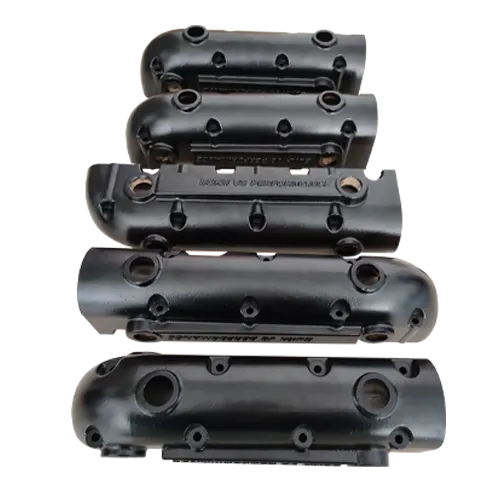
The performance of the impeller is characterized by several key parameters, including flow rate, total pressure rise, and efficiency. A well-designed impeller can achieve high efficiency, ensuring that more of the input power is converted into useful work rather than lost as heat. High-efficiency blowers are essential in applications requiring significant airflow while minimizing energy costs.
Applications of Centrifugal Blower Impellers
Centrifugal blower impellers find applications across various industries. In HVAC systems, they are crucial for maintaining air circulation and temperature control within buildings. In industrial processes, these blowers are used for material handling, dust collection, and providing combustion air for furnaces. The food processing industry also relies on centrifugal blowers for tasks such as drying and cooling, where precise airflow management is essential.
In the field of wastewater treatment, centrifugal blowers help in aeration processes, ensuring that microorganisms receive adequate oxygen for breaking down organic waste. Additionally, in the automotive sector, they are used in turbochargers to improve engine efficiency by increasing the intake air pressure.
Conclusion
The centrifugal blower impeller is a vital component that impacts the performance and efficiency of various pneumatic systems. Its design and functionality not only facilitate effective air movement but also contribute significantly to energy savings in industrial operations. As technology continues to evolve, advancements in materials and design methodologies will further enhance the capabilities of centrifugal blower impellers, expanding their applications and improving their performance in diverse fields. Understanding the intricacies of these components is essential for engineers and industries aiming to leverage air movement technologies for improved efficiency and sustainability.
-
Choosing an Engine Storage Crate Cover for Material and EnvironmentNewsNov.23,2026
-
Cylinder Head Chamber Buyers: Check the Casting Specification FirstNewsNov.17,2026
-
How Impeller Casting Manufacturers Match Material, Process and EquipmentNewsNov.15,2026
-
Valve body vs. intake air chamber: Which casting fits your assembly?NewsNov.02,2026
-
Air Intake Chamber FAQ: Specifications, Ordering and Support QuestionsNewsOct.28,2026
-
Motorcycle Accessories FAQ: Specifications, Ordering and Support QuestionsNewsOct.24,2026










