English

Mobile:+86-311-8081-2683
Email:info@ydcastings.com
English
Understanding the Manufacturing Process of Cast Iron Castings
The Cast Iron Casting Manufacturing Process
Cast iron, an alloy of iron, carbon, and silicon, has been a preferred material for various applications due to its excellent castability, wear resistance, and ability to dampen vibrations. The manufacturing process of cast iron casting involves several key stages that are crucial to producing high-quality casted products. This article will explore the primary steps involved in the cast iron casting manufacturing process.
1. Pattern Making
The first step in the cast iron casting process is pattern making. Patterns are replicas of the final product and are typically made from materials such as wood, metal, or plastic. The choice of material depends on the complexity of the design, the expected number of castings, and cost considerations. Patterns are designed with slight allowances for shrinkage and machining, as the cast iron will contract as it cools.
There are two main types of patterns solid patterns, which produce a single casting, and split patterns, which create a casting with multiple cavities. Additionally, the use of core patterns may be necessary for more complex shapes that require internal voids.
2. Molding
Once the patterns are created, the next step is molding. The process involves creating a mold cavity that will hold the molten cast iron. There are various molding techniques, but the most common ones are sand casting and shell molding.
- Sand Casting This is the most widely used molding technique. It involves mixing sand with a binding agent to create a mold. The pattern is then pressed into the sand to form the mold cavity. After the pattern is removed, the two halves of the mold are assembled and are ready for pouring.
- Shell Molding In this advanced method, a thin layer of sand bonded with thermosetting resin is applied to a heated pattern. This forms a shell-like mold that is both sturdy and precise. Shell molding is particularly advantageous for producing intricate designs with smooth surfaces.
3. Melting
Following the molding process, the cast iron needs to be melted. Scrap iron, pig iron, and other alloying elements are typically used for this purpose. The melting is done in a furnace, such as a cupola furnace or an electric induction furnace, where the materials are heated until they reach a temperature of approximately 1400°C to 1500°C.
cast iron casting manufacturing process
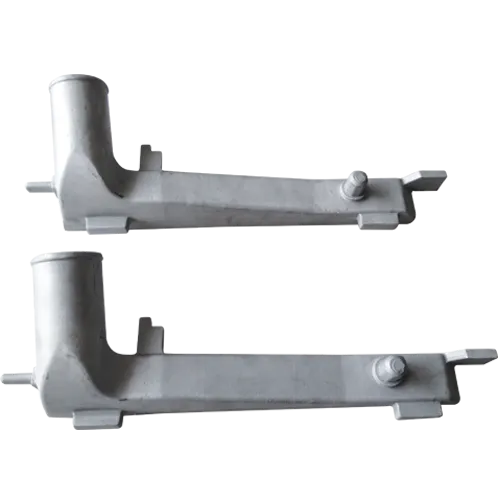
The molten iron is then analyzed for its chemical composition, and alloying elements can be added to achieve the desired properties, such as increased strength or improved machining characteristics
.4. Pouring
The next critical step is the pouring of the molten iron into the mold. This must be done carefully to avoid defects such as air pockets or inclusions. The pouring temperature and speed are essential factors that affect the quality of the cast. During this phase, the mold should be preheated if necessary, to reduce thermal shock and improve the flow of the molten metal.
5. Cooling
Once the mold is filled with molten iron, it is left to cool and solidify. The cooling time varies depending on the thickness of the casting and the mold material. Proper cooling is vital to ensure that the casting retains its mechanical properties and structural integrity.
6. Finishing
After the casting has cooled sufficiently, it is removed from the mold in a process known as shakeout. The next steps involve various finishing processes to remove any excess material, improve surface finish, and ensure dimensional accuracy. Common finishing methods include machining, grinding, and sandblasting.
7. Inspection and Testing
The final stage in the cast iron casting process is thorough inspection and testing. Castings are examined for defects such as cracks or voids. Non-destructive testing methods, such as ultrasonic testing and X-ray inspection, are often employed to assess the integrity of the cast iron products.
Conclusion
The cast iron casting manufacturing process is a complex interplay of various stages, each critical to delivering high-quality cast products. From pattern making and molding to melting, pouring, and finishing, attention to detail at every step ensures that the final cast product meets the standards required for its intended use. As industries continue to evolve, advancements in casting technologies promise even greater efficiency and improved material properties, solidifying cast iron's role in modern manufacturing.
-
Choosing an Engine Storage Crate Cover for Material and EnvironmentNewsNov.23,2026
-
Cylinder Head Chamber Buyers: Check the Casting Specification FirstNewsNov.17,2026
-
How Impeller Casting Manufacturers Match Material, Process and EquipmentNewsNov.15,2026
-
Valve body vs. intake air chamber: Which casting fits your assembly?NewsNov.02,2026
-
Air Intake Chamber FAQ: Specifications, Ordering and Support QuestionsNewsOct.28,2026
-
Motorcycle Accessories FAQ: Specifications, Ordering and Support QuestionsNewsOct.24,2026










