English

Mobile:+86-311-8081-2683
Email:info@ydcastings.com
English
Understanding the Casting Process and Its Importance in Manufacturing Industry
Understanding the Casting Process A Comprehensive Overview
Casting is a fundamental manufacturing process that has been utilized for centuries to shape metal and other materials into desired forms. This process plays a pivotal role in industries ranging from automotive to aerospace, and even in the creation of art. In this article, we will delve into the various aspects of the casting process, its types, advantages, and applications.
What is Casting?
Casting is a manufacturing process in which molten material is poured into a mold and allowed to solidify, taking the shape of the mold. This technique is primarily used for metals, but it can also be applied to plastics and ceramics. The casting process enables the production of complex shapes that would be challenging or impossible to achieve through other manufacturing methods.
The Casting Process Steps
The casting process generally involves the following steps
1. Pattern Making The first step in the casting process is creating a pattern, which is a replica of the final product. Patterns can be made from various materials like wood, plastic, or metal, depending on the complexity and requirements of the final cast.
2. Mold Making Once the pattern is ready, a mold is created around it. Molds can be made from sand, metal, or ceramic materials. The choice of mold material depends on the type of casting process being used and the properties required in the final product.
3. Melting the Material The raw material, typically metal, is heated in a furnace until it reaches a molten state. The temperature and method of melting can vary depending on the type of metal or alloy being used.
4. Pouring The molten material is poured into the prepared mold through a gating system that ensures that the material fills all cavities without trapping air. Proper pouring techniques are crucial to avoid defects in the cast.
5. Cooling and Solidification After pouring, the molten material cools and solidifies within the mold. The cooling time can vary depending on the thickness of the cast and the material used.
6. Removing the Casting Once the material has solidified, the mold is broken or removed to extract the finished casting. This step may involve various techniques depending on the type of mold used.
7. Finishing The final step involves finishing processes such as machining, grinding, or polishing to achieve the desired surface finish and dimensions.
Types of Casting Processes
casting process
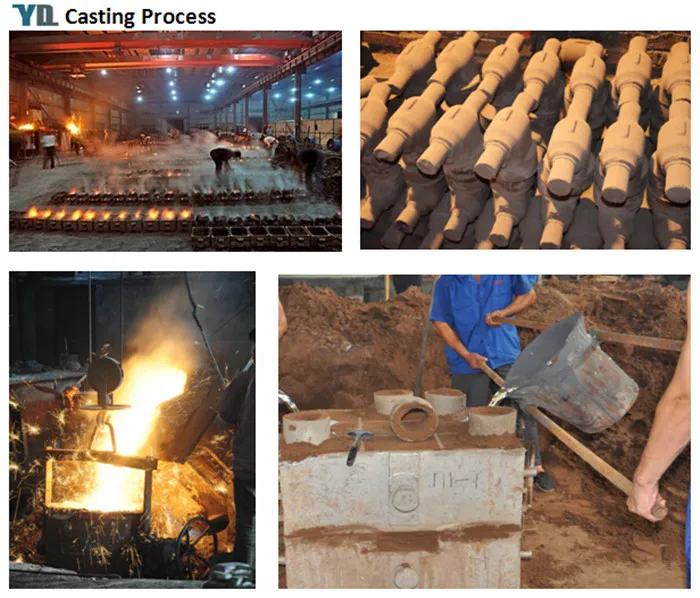
There are several types of casting processes, each with its unique advantages and applications
- Sand Casting This is one of the most common casting methods. A mixture of sand and binding agents is used to create molds. Sand casting is versatile and cost-effective, suitable for producing large and complex parts.
- Die Casting In die casting, molten metal is injected under high pressure into a reusable metal mold. This method is ideal for producing high-volume parts with excellent dimensional accuracy, often used in automotive and consumer goods.
- Investment Casting Also known as lost-wax casting, this process involves making a wax pattern that is coated with a ceramic material. Once the ceramic hardens, the wax is melted away, leaving a detailed mold for casting. This technique is favored for its ability to produce intricate designs and smooth finishes.
- Continuous Casting This process is primarily used for metals and involves continuously pouring molten material into a mold to create long shapes, such as bars or sheets. Continuous casting is efficient and minimizes waste.
Advantages of Casting
Casting offers several advantages over other manufacturing processes
- Complex Geometries Casting allows for the production of complex shapes that might be difficult or impossible to achieve through machining or other manufacturing methods.
- Material Efficiency The process can minimize waste by utilizing near-net shaping, meaning less material is wasted compared to subtractive processes.
- Cost-Effective Especially for large production runs, casting can be more economical than machining or fabrication.
- Versatility Casting can be used for a wide variety of materials, including metals, plastics, and ceramics, making it broadly applicable across industries.
Applications of Casting
The casting process is utilized across a multitude of industries. In the automotive sector, it is used to create engine blocks, transmission cases, and other critical components. The aerospace industry relies on casting for lightweight yet strong structures. Additionally, art and sculpture often involve casting techniques, allowing artists to replicate their work in various materials.
In conclusion, the casting process is a vital component of modern manufacturing. Its ability to produce intricate designs and shapes with relative cost-effectiveness makes it an indispensable technique across various industries. As technology evolves, the casting process will continue to adapt and innovate, ensuring its relevance in the ever-changing manufacturing landscape.
-
Choosing an Engine Storage Crate Cover for Material and EnvironmentNewsNov.23,2026
-
Cylinder Head Chamber Buyers: Check the Casting Specification FirstNewsNov.17,2026
-
How Impeller Casting Manufacturers Match Material, Process and EquipmentNewsNov.15,2026
-
Valve body vs. intake air chamber: Which casting fits your assembly?NewsNov.02,2026
-
Air Intake Chamber FAQ: Specifications, Ordering and Support QuestionsNewsOct.28,2026
-
Motorcycle Accessories FAQ: Specifications, Ordering and Support QuestionsNewsOct.24,2026










