English

Mobile:+86-311-8081-2683
Email:info@ydcastings.com
English
brass sand casting
Brass Sand Casting An Overview
Brass sand casting is a widely utilized manufacturing process that capitalizes on the unique properties of brass, a copper-zinc alloy known for its malleability, low friction properties, and corrosion resistance. This technique enables the production of intricate shapes and components required in various industries, including automotive, aerospace, and plumbing. This article explores the key aspects of brass sand casting, including its advantages, process, applications, and considerations for use.
What is Brass Sand Casting?
Brass sand casting is a method in which molten brass is poured into a mold made of sand. The sand mold is created by compacting a mixture of sand, clay, and water around a pattern that represents the object to be manufactured. Once the mold is set, the pattern is removed, leaving a cavity in the sand that forms the shape of the desired part.
When the molten brass is poured into the cavity, it fills the space and takes the shape of the mold. Once cooled and solidified, the sand mold is broken away to reveal the cast brass part. This method is particularly advantageous for producing complex geometries that would be difficult or uneconomical to achieve with other metalworking methods.
Advantages of Brass Sand Casting
1. Versatility Brass sand casting can produce a wide range of parts, from simple shapes to intricate designs. The process allows for considerable design flexibility, making it suitable for a variety of applications.
2. Cost-effectiveness Compared to other casting methods, sand casting is relatively inexpensive. The materials used for molds are low-cost, and the process itself requires less specialized equipment, making it accessible for small to medium-sized enterprises.
3. Large-scale production Brass sand casting is suitable for both small runs and large-scale production. Molds can be reused for multiple castings, significantly reducing production costs per part.
4. Good surface finish While not as smooth as some other casting methods, brass sand casting can produce parts with a reasonable surface finish. Additional machining processes may be applied if higher precision or surface quality is required.
5. Strong mechanical properties Brass exhibits excellent mechanical properties, including strength and ductility. Cast brass parts can withstand significant wear and tear, making them ideal for applications that require longevity and durability.
The Brass Sand Casting Process
The brass sand casting process can be broken down into several key steps
brass sand casting
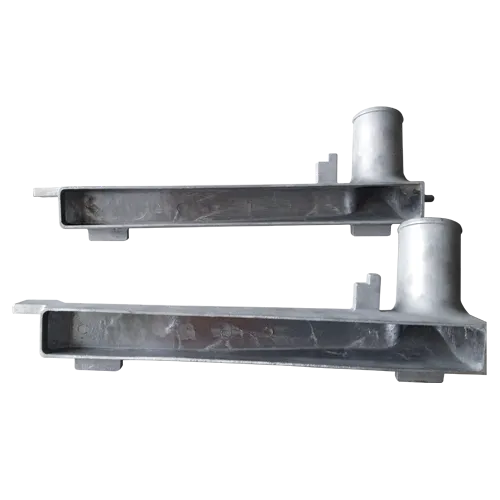
1. Pattern Creation A pattern, typically made from metal, plastic, or wood, is created to reflect the final part's dimensions.
2. Mold Making The pattern is placed in a box, and a mixture of sand, clay, and water is packed around it. Once the mixture is firm, the pattern is removed, leaving a mold cavity.
3. Melting Brass Brass is melted in a furnace at high temperatures until it reaches a molten state.
4. Pouring The molten brass is carefully poured into the prepared sand mold. It is crucial to ensure that the pouring process is steady to avoid defects in the final product.
5. Cooling The molten brass is allowed to cool and solidify within the mold. Cooling times vary depending on the thickness of the cast part.
6. Mold Removal After cooling, the sand mold is broken away to reveal the cast brass part. Any excess sand and flash are cleaned off.
7. Finishing The final part may undergo additional processes such as machining, polishing, or surface treatments to meet specific requirements.
Applications of Brass Sand Casting
Brass sand casting finds applications in numerous sectors. In the automotive industry, it is used to produce components such as engine parts, fittings, and valves. The plumbing industry also utilizes brass castings for faucets, fixtures, and connectors, capitalizing on brass's resistance to corrosion and its antimicrobial properties. Additionally, brass sand casting is applied in the production of decorative items, musical instruments, and electrical components.
Considerations and Future Trends
While brass sand casting offers numerous advantages, there are also considerations to keep in mind. The quality of the final product can be affected by the quality of the mold, the pouring technique, and cooling rates. Additionally, environmental concerns related to sand disposal and the use of certain metals require ongoing attention and innovation.
The future of brass sand casting will likely see advancements in materials and technology, including the integration of digital tools for mold design and simulation, enhancing precision and efficiency. As industries continue to evolve, brass sand casting will adapt to meet new challenges and requirements, solidifying its place in modern manufacturing.
In conclusion, brass sand casting is a vital manufacturing process that combines tradition and innovation. Its versatility, cost-effectiveness, and mechanical strength make it an indispensable process across various sectors, paving the way for continued development and application in the future.
-
Choosing an Engine Storage Crate Cover for Material and EnvironmentNewsNov.23,2026
-
Cylinder Head Chamber Buyers: Check the Casting Specification FirstNewsNov.17,2026
-
How Impeller Casting Manufacturers Match Material, Process and EquipmentNewsNov.15,2026
-
Valve body vs. intake air chamber: Which casting fits your assembly?NewsNov.02,2026
-
Air Intake Chamber FAQ: Specifications, Ordering and Support QuestionsNewsOct.28,2026
-
Motorcycle Accessories FAQ: Specifications, Ordering and Support QuestionsNewsOct.24,2026










