English

Mobile:+86-311-8081-2683
Email:info@ydcastings.com
English
Feb . 14, 2025 14:38
Back to list
impeller
An impeller plays a pivotal role in various industrial and domestic applications, serving as a critical component in the effective functioning of pumps and compressors. Its functionality is often underappreciated, yet it is indispensable in industries ranging from water treatment to chemical processing. Understanding the intricate design and operation of an impeller can significantly enhance its performance in any application.
Trust and credibility in the manufacturing process of impellers are paramount. Reputable manufacturers utilize thorough quality control measures, including rigorous testing procedures, to ensure each impeller meets the required performance and safety standards. These procedures might involve hydrostatic testing, inspection for material defects, and performance evaluations against set benchmarks. In one case study, a municipal water treatment facility faced challenges with frequent impeller breakdowns due to substandard materials and inadequate design. By consulting with industry experts, they transitioned to custom-designed stainless steel impellers, yielding a 30% increase in efficiency and a significant reduction in maintenance costs. This proves the importance of investing in high-quality components and expert insights when choosing an impeller. The authority bestowed upon an impeller in its relevant applications is not merely due to its ubiquity but its unrivaled significance in enhancing fluid dynamics. To maintain this authority, regular maintenance is imperative. Lubrication, alignment checks, and periodic inspections can prevent downtime and maintain optimal operational efficiency. For businesses looking to upgrade or maintain pump systems, partnering with a seasoned industry expert or a reputable supplier can provide a competitive edge. They offer invaluable guidance on selecting the right impeller, implementing the latest advancements in impeller technology, and ensuring compliance with industry standards. In conclusion, the impeller is a sophisticated component whose proper selection, design, and maintenance are vital for maximizing system efficiency. Grasping its intricacies provides users with profound insights into optimizing their pump systems. Investing in cutting-edge design and robust materials not only extends the lifespan of an impeller but also enhances the overall effectiveness and cost-efficiency of your operations. Such strategic decisions epitomize the balance between performance and sustainability—a benchmark for quality in modern industrial practices.

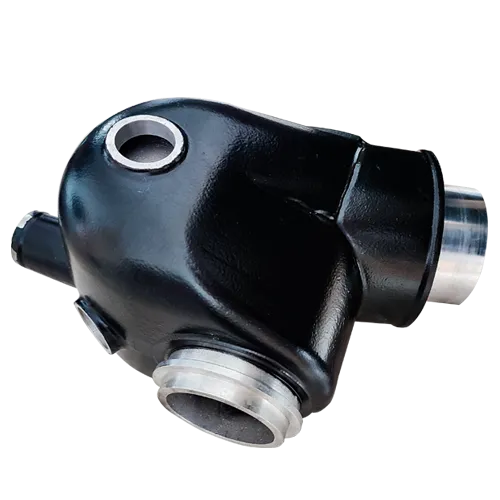
Trust and credibility in the manufacturing process of impellers are paramount. Reputable manufacturers utilize thorough quality control measures, including rigorous testing procedures, to ensure each impeller meets the required performance and safety standards. These procedures might involve hydrostatic testing, inspection for material defects, and performance evaluations against set benchmarks. In one case study, a municipal water treatment facility faced challenges with frequent impeller breakdowns due to substandard materials and inadequate design. By consulting with industry experts, they transitioned to custom-designed stainless steel impellers, yielding a 30% increase in efficiency and a significant reduction in maintenance costs. This proves the importance of investing in high-quality components and expert insights when choosing an impeller. The authority bestowed upon an impeller in its relevant applications is not merely due to its ubiquity but its unrivaled significance in enhancing fluid dynamics. To maintain this authority, regular maintenance is imperative. Lubrication, alignment checks, and periodic inspections can prevent downtime and maintain optimal operational efficiency. For businesses looking to upgrade or maintain pump systems, partnering with a seasoned industry expert or a reputable supplier can provide a competitive edge. They offer invaluable guidance on selecting the right impeller, implementing the latest advancements in impeller technology, and ensuring compliance with industry standards. In conclusion, the impeller is a sophisticated component whose proper selection, design, and maintenance are vital for maximizing system efficiency. Grasping its intricacies provides users with profound insights into optimizing their pump systems. Investing in cutting-edge design and robust materials not only extends the lifespan of an impeller but also enhances the overall effectiveness and cost-efficiency of your operations. Such strategic decisions epitomize the balance between performance and sustainability—a benchmark for quality in modern industrial practices.
Next:
Latest news
-
Choosing an Engine Storage Crate Cover for Material and EnvironmentNewsNov.23,2026
-
Cylinder Head Chamber Buyers: Check the Casting Specification FirstNewsNov.17,2026
-
How Impeller Casting Manufacturers Match Material, Process and EquipmentNewsNov.15,2026
-
Valve body vs. intake air chamber: Which casting fits your assembly?NewsNov.02,2026
-
Air Intake Chamber FAQ: Specifications, Ordering and Support QuestionsNewsOct.28,2026
-
Motorcycle Accessories FAQ: Specifications, Ordering and Support QuestionsNewsOct.24,2026
Related PRODUCTS










