English

Mobile:+86-311-8081-2683
Email:info@ydcastings.com
English
aluminium mould casting
Aluminium Mould Casting An Overview of Techniques and Applications
Aluminium mould casting is a widely adopted technique in the field of metal manufacturing, offering a versatile and efficient means of producing complex metal components. This process involves pouring molten aluminium into a pre-shaped mould, allowing it to solidify and take the desired shape. The choice of aluminium for casting is driven by its favorable properties, such as lightweight, strength, and resistance to corrosion, making it an ideal material for various applications across numerous industries.
The Casting Process
The aluminium mould casting process can be categorized into several types, including sand casting, die casting, and investment casting. Each method has its own advantages and is selected based on the specific requirements of the part being produced.
1. Sand Casting This is one of the oldest and most commonly used methods. It involves creating a mould from sand, which is then packed around a pattern of the desired object. Once the pattern is removed, molten aluminium is poured into the cavity. Sand casting is particularly advantageous for large components or low-volume production due to its cost-effectiveness and the flexibility it offers in terms of mould design.
2. Die Casting In die casting, molten aluminium is injected into a steel mould under high pressure. This method yields high precision and a smooth surface finish, making it ideal for mass production of intricate parts. Die casting is commonly used for automotive and consumer product manufacturing because it allows for rapid production rates and reduced machining times.
3. Investment Casting This technique involves creating a wax pattern, which is then coated with a ceramic material to form a shell. After the shell is heated to remove the wax, molten aluminium is poured into the cavity. Investment casting is particularly useful for producing complex geometries and tight tolerances, often used in industries such as aerospace and medical equipment.
Advantages of Aluminium Mould Casting
Aluminium mould casting offers numerous advantages that make it a preferred choice in various manufacturing scenarios
- Lightweight Aluminium is significantly lighter than other metals, making it an attractive option for industries requiring weight reduction, such as aerospace and automotive.
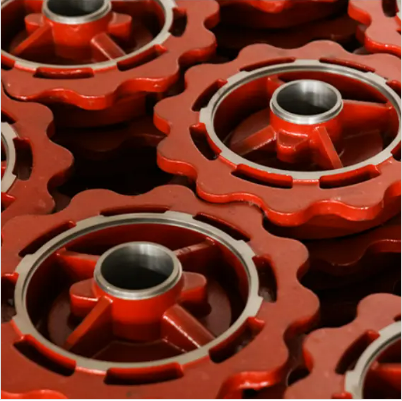
aluminium mould casting
- Corrosion Resistance Aluminium naturally forms a protective oxide layer, which helps resist corrosion, extending the life of cast parts
.- Thermal Conductivity Aluminium has excellent thermal conductivity, making it suitable for applications where heat dissipation is critical, such as heat sinks and engine components.
- Recyclability Aluminium can be easily recycled without losing its properties, making mould casting a more sustainable option and contributing to reduced material costs.
Applications of Aluminium Mould Casting
Aluminium mould casting finds applications across a variety of industries. In the automotive sector, it is used to manufacture engine blocks, transmission cases, and various structural components. The lightweight nature of aluminium enhances fuel efficiency in vehicles, making it an essential material in modern automotive engineering.
In aerospace, aluminium castings are used for aircraft components such as brackets, housings, and fittings, where weight reduction is crucial for performance and safety. Similarly, the electrical industry utilizes aluminium castings for components like enclosures and connectors, capitalizing on the metal’s excellent conductivity and lightweight properties.
Consumer products, such as appliances and electronics, also benefit from aluminium mould casting, as manufacturers aim for more aesthetically pleasing designs with intricate features. Additionally, the medical field leverages aluminium castings for equipment requiring high precision and reliability.
Conclusion
Aluminium mould casting serves as an integral part of modern manufacturing, enabling the production of complex, lightweight, and durable components for various industries. With continuous advancements in casting techniques and technologies, the versatility of aluminium will undoubtedly lead to further innovations, making it a staple material well into the future. Whether for automotive, aerospace, or consumer goods, aluminium mould casting remains a vital process in the quest for efficiency, quality, and sustainability in manufacturing.
-
Choosing an Engine Storage Crate Cover for Material and EnvironmentNewsNov.23,2026
-
Cylinder Head Chamber Buyers: Check the Casting Specification FirstNewsNov.17,2026
-
How Impeller Casting Manufacturers Match Material, Process and EquipmentNewsNov.15,2026
-
Valve body vs. intake air chamber: Which casting fits your assembly?NewsNov.02,2026
-
Air Intake Chamber FAQ: Specifications, Ordering and Support QuestionsNewsOct.28,2026
-
Motorcycle Accessories FAQ: Specifications, Ordering and Support QuestionsNewsOct.24,2026










