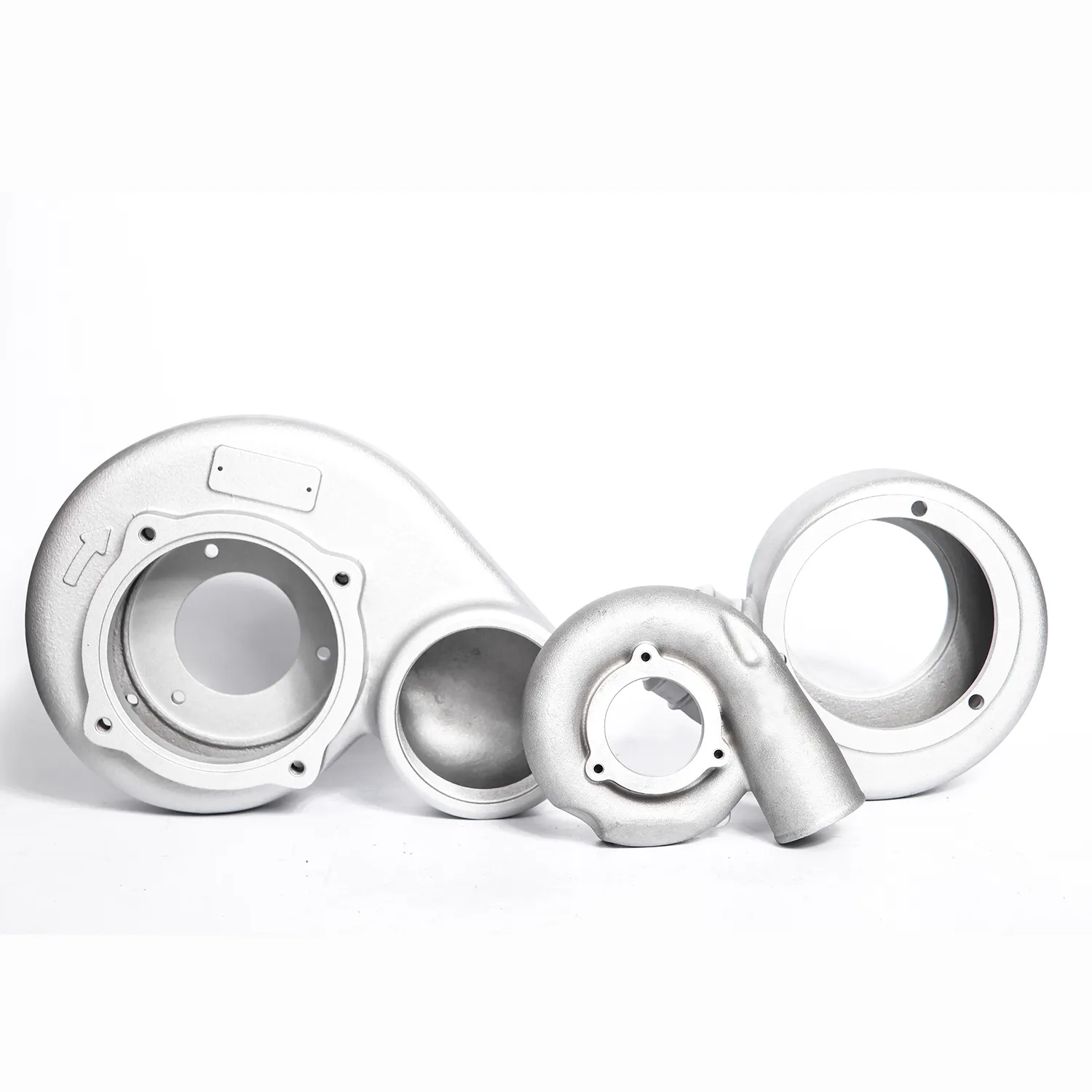
Industrial Bottom Shell Castings and gi end cap price Guide
When sourcing specialized metal components for industrial machinery or automotive engines, procurement managers often face a complex trade-off between material durability and total cost of ownership. Whether you are evaluating the gi end cap price or seeking high-performance bottom shell castings, the critical factor is how the material selection and casting process align with the operational stresses of the final application. From corrosion-resistant aluminum alloys to high-strength cast iron, the right technical specification prevents premature wear and reduces long-term maintenance overhead.
Hebei Yuanda Trade Co., Ltd. specializes in bridging the gap between complex engineering requirements and cost-effective manufacturing. By leveraging diverse foundry resources in North China, we provide customized casting solutions—ranging from sand casting to investment casting—ensuring that every part, whether it is a pump casing or a complex engine oil pan, meets precise hardness and structural standards required for global industrial deployment.

Material Science and the Technical Foundations of Industrial Bottom Shell Castings
Bottom shell castings serve as fundamental structural components in automobile engines and heavy mechanical equipment. To ensure these parts can withstand extreme thermal cycles and mechanical vibration, the choice of material is paramount. Typically, these components are fabricated from aluminum alloys or cast iron, both of which offer a high strength-to-weight ratio and excellent wear resistance. For automotive engine oil pans, the requirements are even more specific, often involving a choice between single-layer sheet steel stamping, die-casting aluminum, or advanced metal-plastic-metal sandwich composites.
The integrity of these castings is largely determined by their hardness values, which serve as the primary indicator for machining quality and service life. We utilize three primary measurement standards to ensure precision: Brinell hardness (HB), primarily used for non-ferrous metals and annealed parts up to HB450; Rockwell hardness (HRA/HRC), where HRA is reserved for high-hardness specimens like cemented carbide and HRC is used for quenched or tempered steel parts; and Vickers hardness, which is essential for evaluating thin steel plates or surface-hardened layers resulting from nitriding or carburizing processes.

Optimizing Manufacturing Processes for Customized Metal Parts
Achieving a balance between geometric complexity and structural reliability requires a strategic selection of casting processes. At Hebei Yuanda Trade Co., Ltd., we offer a versatile range of methodologies to match the specific project requirements of our global clients. For large-scale components like pump casings or civil castings, sand casting is employed, capable of producing parts up to 2000 kg. When higher precision and smoother surface finishes are required for automotive or motor housing parts, die casting or lost wax (investment) casting are the preferred routes.
Our technical team analyzes the application scenario to recommend the ideal alloy. For instance, aluminum alloys such as AC-42000 or A356 are selected for their lightness and thermal conductivity in engineering castings. Meanwhile, stainless steel alloys 304 and 316 are utilized in investment casting for components that demand superior corrosion resistance and hygiene standards. This flexibility allows us to reduce the comprehensive procurement costs for our customers by avoiding over-engineering while maintaining strict adherence to safety and performance standards.
Critical Application Scenarios and Buyer Evaluation Criteria
In the automotive and pump industry, the failure of a single casting component can lead to catastrophic system downtime. Therefore, buyers must look beyond the initial unit cost and evaluate the "total cost of quality." For engine oil pans and bottom shells, the ability to maintain a leak-proof seal under high pressure and varying temperatures is non-negotiable. This requires a casting that is free from internal porosity and possesses a consistent grain structure, which is achieved through rigorous QC and the selection of the correct molding process.
When evaluating a supplier for customized metal parts, technical buyers should focus on the following criteria:
- Material Versatility: Can the supplier provide cast iron, aluminum, and stainless steel under one roof?
- Process Range: Does the supplier offer sand, die, and investment casting to optimize for different weights and tolerances?
- Quality Verification: Are there clear protocols for Brinell, Rockwell, and Vickers hardness testing?
- Supply Chain Stability: Does the partner have a flexible resource network to ensure on-time delivery across different international markets?
Comparative Analysis of Casting Materials and Processes
| Material Type | Preferred Process | Key Technical Advantage | Typical Application |
|---|---|---|---|
| Cast Iron | Sand Casting | High Strength, High Weight (up to 2000kg) | Pump Casings, Civil Parts |
| Aluminum Alloy | Die Casting | Low Weight, High Precision | Motor Housing, Auto Parts |
| Stainless Steel | Investment Casting | Superior Corrosion Resistance | Medical, High-End Auto Parts |
| Aluminum (A356) | Sand Casting | Balanced Ductility and Weight | Engineering Castings |
| Cast Iron (Lost Foam) | Lost Foam Casting | Complex Internal Geometries | Specialized Engine Components |
Supply Chain Integration and Cost Reduction Strategies
For international buyers in America, Germany, and England, the primary challenge in procuring customized castings is the fragmentation of the supply chain. Hebei Yuanda Trade Co., Ltd. addresses this by acting as a professional one-stop solution provider. By integrating more than 50 specialized suppliers and an expert engineering team focusing on mechanical and material science, we eliminate the inefficiencies associated with managing multiple vendors.
Reducing comprehensive procurement costs is not about finding the lowest price per piece, but about optimizing the entire value chain. This includes reducing scrap rates through better mold design, optimizing shipping through consolidated logistics, and ensuring that the material grade is perfectly matched to the application. Our approach ensures that clients receive parts that are "right the first time," significantly lowering the cost of assembly and reducing the risk of field failures in critical industrial applications.
Future Trends in Industrial Metal Customization
The industry is currently shifting toward lightweighting and hybrid material integration. In the automotive sector, the move toward electric vehicles (EVs) is driving a demand for specialized aluminum castings that can handle different thermal loads compared to traditional internal combustion engines. We are seeing an increase in the use of sandwich composite parts—combining metal and plastic—to further reduce weight without sacrificing the structural integrity provided by traditional bottom shell castings.
Furthermore, the integration of digital quality tracking and tighter tolerance controls is becoming standard. Buyers are increasingly requesting detailed material certificates and hardness mapping for every batch. As a brand devoted to professional customized parts services, we continue to evolve our QC processes, ensuring that our partners stay competitive in an era where precision and sustainability are the primary drivers of industrial growth.
Frequently Asked Questions Regarding Custom Castings
What factors most significantly influence the final price of customized metal castings?
The price is primarily driven by the chosen material (e.g., stainless steel vs. cast iron), the complexity of the part geometry, the selected casting process (sand casting is generally more cost-effective for large parts, while die casting has higher initial tooling costs), and the required precision tolerances and surface finish.
How do you ensure the hardness of a bottom shell casting meets engineering specs?
We employ a three-tier testing approach using Brinell hardness for general non-ferrous parts, Rockwell hardness (HRC/HRA) for quenched steel and high-hardness materials, and Vickers hardness for thin plates or surface-hardened layers to ensure the part meets exact industrial standards.
Which casting process is best for high-volume automotive parts?
For high-volume production where precision and surface quality are critical, aluminum die casting is usually the best choice. It offers fast cycle times and excellent repeatability, making it ideal for motor housings and automotive engine components.
Can you produce very large metal components?
Yes, through our sand casting process for cast iron, we can manufacture components with a maximum weight of up to 2000 kg, making us suitable for large pump casings and heavy industrial equipment parts.
What is the difference between investment casting and sand casting in terms of application?
Sand casting is ideal for larger, heavier parts with looser tolerances. Investment casting (lost wax) is used for smaller, intricate parts that require high dimensional accuracy and a superior surface finish, such as specialized stainless steel components.
How does Hebei Yuanda Trade Co., Ltd. help reduce overall procurement costs?
We reduce costs by providing a one-stop solution that integrates material sourcing, process optimization, and quality control, reducing the need for multiple vendors and minimizing the risk of costly part rejections.
Technical References and Industry Standards
- ASTM International - Standards for Metal Castings
- ISO Standards for Quality Management in Manufacturing
- NIST - Materials Science and Engineering Guidelines
- SME - Manufacturing Engineering Resources
Selecting the right casting partner is a strategic decision that impacts the reliability of your entire product line. By focusing on material science and process precision, we ensure your components perform under pressure.
Related Industry Insights