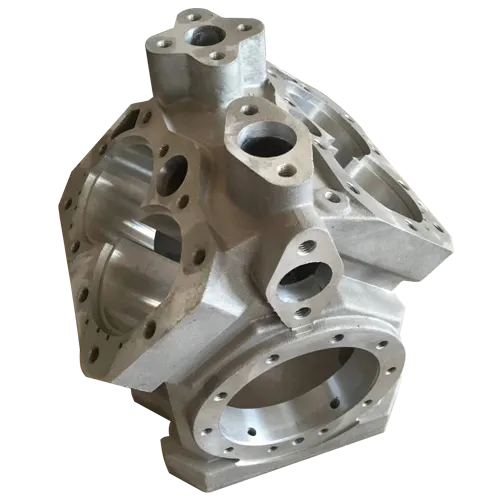
Factors Influencing High Quality Brass Impeller Price and Quality
Precision-engineered fluid handling components require a delicate balance of material durability and geometric accuracy to maintain operational efficiency. For high-performance pumps and industrial machinery, the selection of an impeller—specifically those utilizing copper-based alloys—is a critical decision that affects both the longevity of the equipment and the total cost of ownership. Understanding the factors that influence the brass impeller price involves looking beyond the raw material costs to the complexities of the casting process and the precision of final machining.
Whether applied in marine environments, chemical processing, or specialized aviation deflector systems, the integrity of the cast part determines the stability of the entire system. By leveraging advanced casting techniques such as lost-wax or sand casting, manufacturers can produce components that resist cavitation and corrosion while maintaining strict dimensional tolerances. This guide examines the technical requirements and procurement considerations for high-quality customized metal impellers and shells.

The Critical Role of Material Selection in High-Speed Fluid Components
In high-speed sports equipment, aviation, and track systems, functional components like deflector shells and impellers must withstand extreme thermal and mechanical stress. The choice of raw materials is the primary determinant of a component's structural performance. For parts requiring high temperature resistance and strength, engineers often turn to high-temperature alloy materials, including chromium and molybdenum, or specialized brass and bronze alloys for superior corrosion resistance in aqueous environments.
The density and thickness of the casting are not merely design choices but are essential for ensuring the stiffness of the part. A poorly selected material leads to thermal deformation and friction wear, which can cause catastrophic equipment failure in high-speed movement scenarios. For customized metal parts, the synergy between material grade and the specific application environment—such as saltwater exposure or high-pressure airflow—is what separates a standard part from a high-performance engineering solution.
- Thermal Stability: Reducing deformation under high-speed friction.
- Corrosion Resistance: Preventing pitting and oxidation in chemical or marine settings.
- Structural Rigidity: Ensuring the shell or impeller maintains its geometry under centrifugal force.

Advanced Casting Processes for Dimensional Accuracy and Integrity
Achieving the required precision for a functional component involves a rigorous multi-step casting sequence. It begins with 3D solid modeling, which translates complex engineering requirements into a digital blueprint. This model is used to produce molds where filler is pressed to ensure uniformity and density, eliminating potential weak points in the final structure. The melting and pouring phase is perhaps the most critical; temperature control is paramount to avoid thermal cracking and inclusions.
Post-casting, the cooling process must be managed through natural ventilation. Rapid cooling is strictly avoided as it introduces internal stresses that lead to warping or micro-cracks. Once the part is removed from the mold, it exists as a semi-finished product. Final machining and side-pressure processing are then employed to refine the surface finish and achieve the exact dimensional accuracy required for seamless integration into the larger machinery assembly.
By utilizing various methods such as sand casting, die casting, and lost-wax casting, manufacturers can optimize the balance between production volume and geometric complexity. Investment casting, for instance, is preferred for stainless steel components where intricate detail and high surface quality are non-negotiable.
Evaluating Operational Risks and Quality Control in Metal Castings
Quality assurance in metal casting focuses on the elimination of defects that could compromise safety. Common issues such as porosity, inclusions, and cracks typically stem from improper melting temperatures or unstable pressure during the pouring phase. To mitigate these risks, a strict control of parameters—including casting time and cooling rates—is implemented. For high-speed components, any surface irregularity can lead to vibration, which accelerates wear and reduces the service life of the equipment.
Furthermore, the stability of the machine tools during the final machining stage is essential. Vibration interference during the finishing process can leave microscopic ridges on the surface of the impeller or shell, creating turbulence in fluid flow or causing premature friction wear. A comprehensive QC process involving dimensional inspection and material analysis ensures that the final part meets the rigorous standards of the aviation and industrial sectors.
Technical Comparison of Casting Materials and Processes
| Material Type | Recommended Process | Key Strength | Typical Application |
|---|---|---|---|
| Cast Iron | Sand Casting | High Load Bearing | Pump Casings |
| Aluminum Alloy | Die Casting | Lightweight / Thermal | Motor Housings |
| Stainless Steel | Investment Casting | Extreme Corrosion Resistance | Valve Parts |
| Copper Alloys (Brass) | Precision Casting | Conductivity & Wear Resistance | Pump Impellers |
| High-Temp Alloys | Specialized Casting | Thermal Stability | Deflector Shells |
Procurement Strategies for Customized Industrial Castings
When sourcing customized metal parts, procurement managers must look beyond the initial quote. The true value of a supplier lies in their ability to provide a one-stop solution that integrates material science with manufacturing expertise. A supplier with a diverse resource network can offer flexible material choices—ranging from aluminum and cast iron to stainless steel—depending on the specific technical needs of the project.
Reducing comprehensive procurement costs is achieved by optimizing the process selection. For example, while die casting is efficient for high-volume aluminum parts, lost-wax casting is more cost-effective for complex, low-volume stainless steel components. Buyers should evaluate suppliers based on their engineering team's ability to recommend the most efficient molding process, thereby reducing waste and ensuring on-time delivery without sacrificing quality.
Future Trends in Industrial Metal Component Engineering
The industry is shifting toward more sustainable and high-efficiency casting methods. There is an increasing demand for alloys that offer higher strength-to-weight ratios, particularly in the automotive and aerospace sectors. This evolution is driving the adoption of more precise 3D modeling and simulation tools, which allow engineers to predict thermal deformation and fluid dynamics before the first mold is even created.
As global supply chains become more complex, the value of a partner who can manage the entire lifecycle—from material selection and casting to final precision machining—becomes indispensable. The integration of stricter quality standards and more flexible manufacturing resources will allow companies to enhance their competitiveness by reducing lead times and increasing the reliability of their industrial components.
Common Technical Questions Regarding Metal Castings
How does the casting process affect the final price of a brass impeller?
The cost is determined by the complexity of the mold, the chosen casting method (e.g., sand vs. investment casting), the grade of the alloy, and the amount of precision machining required to meet dimensional tolerances.
What are the risks of rapid cooling after the casting process?
Rapid cooling can cause uneven contraction of the metal, leading to internal stresses, thermal cracking, and geometric deformation, which compromises the structural integrity of the part.
Which material is best for components in high-corrosion environments?
Stainless steel (such as 304 or 316) and specialized copper-based alloys are generally recommended due to their inherent resistance to oxidation and chemical erosion.
What is the difference between sand casting and investment casting?
Sand casting is typically used for larger, simpler parts with higher weight tolerances, while investment casting (lost wax) is used for complex geometries requiring high precision and superior surface finish.
How can I reduce the comprehensive procurement cost of custom parts?
By partnering with a supplier who provides a one-stop solution, allowing for the optimization of material and process choices based on the specific application rather than using a one-size-fits-all approach.
What causes porosity in metal castings?
Porosity is often caused by trapped gases during the pouring process or improper melting temperatures, which can be mitigated by controlling casting pressure and time parameters.
Industry Technical References
- ASTM International - Materials Standards
- ISO - Quality Management Systems for Manufacturing
- NIST - Materials Science and Engineering
- ASME - Mechanical Engineering Standards
Selecting the right casting partner is essential for ensuring that your industrial components perform reliably under pressure. For customized solutions that balance quality, precision, and cost, contact our engineering team for a technical consultation.
Related Engineering Solutions