When evaluating the motor impeller price, procurement managers and engineers must look beyond the initial quote to understand the total cost of ownership. In the metal casting and processing industry, the cost of a motor impeller is not a fixed number but a variable resulting from material selection, geometric complexity, and the required precision of the casting process.
The primary challenge for buyers is balancing performance requirements—such as corrosion resistance and structural integrity—with budget constraints. Misjudging these factors often leads to premature component failure or unnecessary over-specification, both of which increase the long-term operational expenditure of pump and motor systems.
This analysis provides a comprehensive framework for understanding the drivers of impeller pricing, comparing material efficiencies, and establishing a criteria-based approach to selecting the right casting partner to optimize procurement costs.

Core Cost Drivers in Impeller Casting

The final motor impeller price is primarily influenced by the complexity of the internal vane structure. Impellers require precise fluid dynamics paths; the more intricate these channels are, the more complex the mold design and the higher the risk of casting defects, which directly elevates the production cost.
Furthermore, post-casting requirements such as CNC machining, dynamic balancing, and surface polishing contribute significantly to the final invoice. A casting that requires extensive manual cleaning or precision boring to meet tolerance standards will always command a higher price than a "near-net-shape" casting.
Material Impact on Production Expenses
Material choice is the most immediate variable affecting the motor impeller price. Cast iron and cast aluminum offer a cost-effective balance for general industrial applications, whereas stainless steel and specialized cast copper are priced higher due to raw material costs and the higher melting temperatures required during the pouring process.
For instance, stainless steel impellers provide superior corrosion resistance for chemical applications but require more stringent thermal control to prevent cracking. In contrast, aluminum die castings are ideal for high-volume, lightweight motor housings and impellers, reducing cost through rapid cycle times despite higher initial tooling investments.
The Role of Casting Processes in Pricing
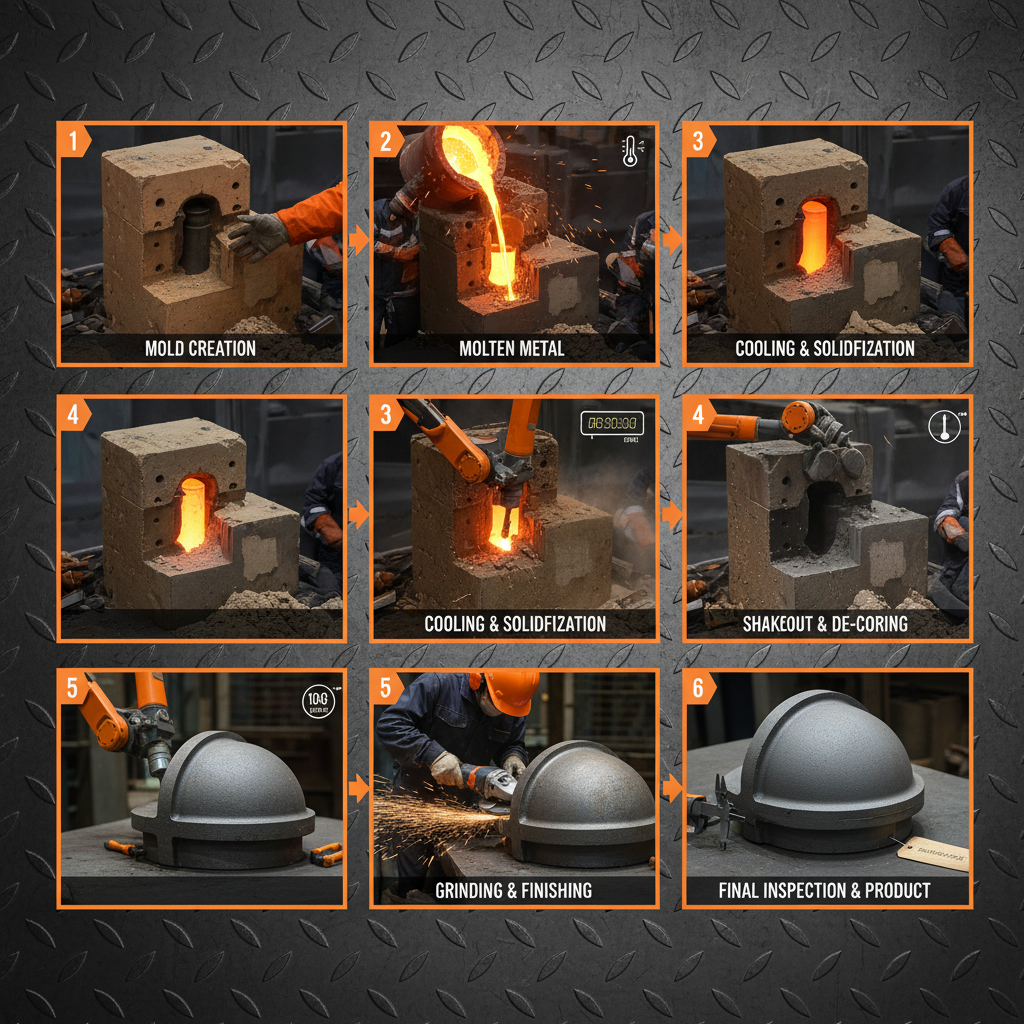
The selection of the molding process determines the balance between initial setup costs and per-unit pricing. Sand casting is typically the most economical for large, heavy impellers (up to 2000 kg) where extreme precision is not the primary driver. Lost-wax (investment) casting, however, allows for intricate geometries and smoother surfaces, which reduces machining time but increases the cost per piece.
Die casting is the most efficient route for small to medium aluminum components. While the cost of the steel die is high, the low labor requirement and high repeatability make it the lowest-cost option for high-volume OEM production. Each process shifts the cost weight between "tooling" and "production," requiring buyers to calculate the break-even point based on order volume.
Relative Cost Distribution Analysis
To understand the motor impeller price, it is helpful to analyze the relative weight of different cost components. The following conceptual framework illustrates how expenses are distributed across different production requirements, from basic sand castings to high-precision investment castings.
This illustrative data suggests that for high-precision parts, the "Post-Processing" and "Quality Control" segments occupy a larger portion of the budget. For bulk industrial parts, the "Raw Material" and "Basic Casting" costs remain the dominant factors.
Evaluating Quality vs. Unit Price
A low unit price for a motor impeller can be a hidden risk if it results in poor dimensional stability or internal porosity. In the casting industry, "cheap" often means a higher scrap rate or a lack of rigorous post-treatment, such as inadequate sand dropping or cleaning, which can lead to impeller imbalance and motor vibration.
True value is found in the "comprehensive procurement cost," which includes the cost of delivery, the rate of rejects, and the lifespan of the part in the field. Partnering with a supplier that provides a one-stop solution—integrating casting, machining, and QC—typically reduces these hidden costs by minimizing the logistics and coordination between multiple vendors.
Common Procurement Pitfalls
One frequent mistake is specifying a material that exceeds the application's needs. For example, requesting stainless steel for a low-pressure water application when cast iron would suffice unnecessarily inflates the motor impeller price. Engineers should align material properties—such as hardness and corrosion resistance—strictly with the operating environment.
Another pitfall is ignoring the impact of pouring temperatures and wall thickness on pricing. Thin-walled castings require tighter process control to prevent thermal cracking, which increases the complexity of the pour and the associated cost. Buyers should review the structural features of their designs to see if slight modifications can simplify the casting process and lower the price.
Strategic Sourcing Decision Framework
When selecting a casting partner for impellers, buyers should use a multi-dimensional matrix rather than relying on the lowest quote. The following framework compares different casting approaches based on typical industrial requirements for motor impellers.
| Casting Method | Cost Level | Precision | Best Use Case |
|---|---|---|---|
| Sand Casting | Low | Moderate | Large Pump Parts |
| Die Casting | Medium (Low Unit) | High | High-Volume Auto Parts |
| Investment Casting | High | Very High | Complex OEM Impellers |
| Lost Foam | Medium | Moderate | Intricate Iron Castings |
| Stainless Steel | High | High | Corrosive Environments |
| Aluminum Alloy | Medium | High | Lightweight Motors |
By matching the application requirement (e.g., high corrosion resistance) with the appropriate material (Stainless Steel) and process (Investment Casting), buyers can optimize the motor impeller price without compromising on critical performance metrics.
Frequently Asked Questions
The most significant factors are material selection (e.g., aluminum vs. stainless steel), the complexity of the vane geometry, the chosen casting process (sand vs. investment), and the extent of post-casting machining and balancing required.
Sand casting has low setup costs but higher per-unit labor for finishing. Die casting requires high initial tooling investment but offers the lowest per-unit cost for high volumes. Investment casting is generally the most expensive due to the detailed mold-making process.
Cast iron is typically cheaper for large, heavy-duty industrial impellers. Aluminum can be more cost-effective for smaller, high-precision parts when produced via die casting, although the raw material costs differ based on market fluctuations.
Post-treatment, including sand dropping, cleaning, heat treatment, and CNC balancing, can add 20% to 50% to the base casting cost depending on the required tolerances and surface finish standards.
Reducing costs can be achieved by optimizing the design for "near-net-shape" casting to minimize machining, selecting a material that fits the minimum required specification, and consolidating procurement through a one-stop customized parts provider.
Yes, especially for processes like die casting where the fixed cost of the mold is amortized over a larger number of units. For sand casting, the volume impact is lower, but material sourcing discounts still apply to larger orders.
Conclusion
Determining the optimal motor impeller price requires a strategic alignment of material properties, casting technology, and volume requirements. By shifting the focus from the lowest initial quote to the comprehensive procurement cost—accounting for quality, longevity, and post-processing—businesses can avoid the risks of component failure and operational inefficiency.
For organizations seeking flexible solutions for customized metal castings, Hebei Yuanda Trade Co., Ltd. provides a wide range of material and process choices to reduce comprehensive costs. Interested parties can review the available product information at www.ydcastings.com to find the most suitable casting solution for their specific application.